






Blogs
Carrying from the Grave: A Strategic Approach to "Revive" Abilities


Initially, this blog entry began as a comment to an article called “League of Legends: Beating the Revive Meta” but I quickly discovered that my response was not appropriate as a comment since I had too much to say. Thus, I am here now creating a stand-alone blog entry that should be seen as an extended discussion of what Scott 'xDespisedMVPx' Rhodes describes in his blog entry as a new “revive meta.”
With the introduction of some of the more recent champions like Zac and Aatrox—both of whom have passive abilities that allow the players to be revived upon receiving fatal damage—fellow Dignitas blogger, xDespisedMVPx, notes that there seems to be a shift towards a more revive-oriented metagame. There are many implications of such a shift and, generally speaking, I am unsure if anyone has utilized these abilities to the highest potential. As a means to explore the meanings and potential strategies formed around these revive abilities, I will review champions that have revival powers in their kit and provide a detailed description of each ability.
The Champions
To begin, all of these champions have the potential to enable some sort of function upon taking lethal damage though each champion’s abilities, as expected, works in different ways. They are presented alphabetically below:
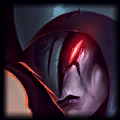 Aatrox: Blood Well
COOLDOWN: 225
Whenever Aatrox uses an ability that costs health, he stores 100% of the health cost into his Blood Well. The maximum amount of health the Blood Well can store equals 30 + (45 × level). If Aatrox has not dealt or received damage in the last 5 seconds, his Blood Well will deplete at a rate of 2% per second. Upon taking fatal damage, Blood Well activates and places Aatrox in stasis for 3 seconds. Over the stasis duration the Blood Well is emptied and Aatrox restores health equal to its contents plus 10.5 + (15.75 × level). Blood Well's activation has a static cooldown and is unaffected by cooldown reduction. Also, Aatrox passively increases his attack speed by 1% for every 2% in the Blood Well.
 Anivia: Rebirth
COOLDOWN: 240
Upon dying, Anivia will transform into an egg, restoring her to full health and giving her an armor and magic resistance modifier of −40 / −25 / −10 / +5 / +20. While Anivia is in egg form, she is unable to take any actions. If the egg survives for 6 seconds, she is reborn with the same percentage of health that her egg had left. Rebirth has a static cooldown and is unaffected by cooldown reduction.
 Karthus: Death Defied
NO COOLDOWN
Upon dying, Karthus enters a spirit form and becomes immobile and untargetable, allowing him to continue casting spells for 7 seconds. During this time, his abilities cost no mana.
 Yorick: Omen of Death
RANGE: 900
COOLDOWN: 120 / 105 / 90
COST: 100 mana
ACTIVE: Yorick conjures a Revenant in the image of one of his allies that will have a percentage of their max health and attack damage. The Revenant lasts for up to 10 seconds. If his ally dies while their Revenant is alive, the Revenant sacrifices itself to resurrect them temporarily by restoring them to full health and giving them time to enact vengeance. The resurrection will last for up to 10 seconds. During this time, the ally can use all of their abilities.
 Zac: Cell Division
COOLDOWN: 300
Each time Zac uses an ability on enemies, he sheds a chunk of himself to a nearby location. Zac can move over these chunks to reabsorb them, regaining 4% of his maximum health. Enemies may move over these chunks to destroy them. Upon taking fatal damage, Zac splits into 4 bloblets that attempt to recombine. Each bloblet has 12% of Zac's maximum health, and 50% of his armor and magic resistance. If any of these bloblets remain after 8 seconds, Zac will revive with 10-50% health depending on the health of the surviving chunks. This effect has a static cooldown and is unaffected by cooldown reduction.
 Zilean: Chrono Shift
RANGE: 780 (estimated)
COOLDOWN: 180
COST: 125 / 150 / 175 mana
ACTIVE: Zilean marks a target ally champion (or himself) with a protective time rune for 7 seconds. If the target takes lethal damage during this time the rune is activated, turning the target untargetable and invulnerable for 2 seconds, then reviving it with a set amount of health.
The Strategies
In this section, I will highlight 5 potential strategies I have concocted that is made possible by the revive abilities. Moreover, I will include a brief list of champions and their abilities that I feel is especially useful in implementing said strategy.
1. The Bait
Relevant Champions: Aatrox, Anivia, Zac, Zilean
I was first introduced to this strategy while watching William ‘Scarra’ Li’s stream, whereupon a Zac player provoked an enemy Varus to use his flash in order to “kill” the Zac. Unfortunately for the Varus, the flash was in vain as Zac regenerated safely under the middle turret. As exemplified by this case, champions such as Aatrox, Anivia, Zac, and Zilean can all feign near-death health bars in order to bait enemies into using their abilities and summoner spells. Please note, however, that there are efficient and inefficient trades. For example, Zac’s Cell Division ability has a cooldown of 300 seconds so it would be inefficient to trade his passive for an ability that has a shorter cooldown, is less impactful in enemy engagements, and so on. It is up to the player to make the call when to use this strategy; a wise thing to do beforehand is to form an idea of what you want the enemy team to use in order to get to you.
Below is a video reference to the case mentioned above. The strategy is used at around 45 seconds:
2. The (Un)Taunt
Relevant Champions: Yorick, Zilean
This strategy is slightly more nuanced than other strategies and involves piercing the psychology of the enemy team. Put simply, the ultimate abilities of both Yorick and Zilean have a powerful effect that is not normally discussed: These abilities can essentially control which champion the enemy will focus on and, by extension, not focus on during a team engagement. This in itself is an incredible tool and all too often players use these abilities as a last resort instead of as an offensive mental positioning.
That said, I do not mean to downplay the defensive use of these abilities as such a use is natural and intuitive. By casting these abilities on an ally that is about to die, a second shot of inflicting damage to the opposing team is guaranteed, especially when considering that most crowd control abilities will still probably be on cooldown until after your revival. In that sense, you could quite possibly inflict much more damage in your second life than in your first.
However, if your enemy plays correctly, they may choose to strategically kill you after the abilities effects have worn off, denying your shot at a second chance to clean up the enemy team. If you suspect the enemy team will do this, then consider the (un)taunt strategy where you use Yorick or Zilean’s ability on an ally that you do not want the enemy to focus. For instance, if the revival ability is used immediately on the attack damage carry at the start of a team fight, then there is a higher chance that the enemy team will choose to forgo bursting down that champion and instead, use their damaging attacks and abilities on another member of your team. Such a situation guarantees the attack damage carry free damage on the enemies.
3. Initiation
Relevant Champions: Aatrox, Karthus, Yorick, Zac, Zilean
Of all the strategies, initiation seems the most situational as it is seems to be the least viable of the list. In short, this strategy is the effort to give the team fight-initiating responsibilities to someone other than the primary initiator. In the case of Aatrox, Karthus, and Zac, they cannot use their revival abilities on other champions so they must be the one to initiate. At the very least, these 3 champions can ensure that a team fight be started and that, even if they are immediately killed, can still participate after their initial death. By contrast, Yorick and Zilean differ in that they can use their revival abilities on other champions so, in effect, they can have other members of their team fulfill the initiator role. Like the other champions, Yorick and Zilean ensure that their team member can still participate in the fight even if he or she is immediately killed upon initiation. The most viable situation in which to use this strategy is when your primary initiator has already been killed and that a team fight is imminent.
4. Objective Control
Relevant Champions: All
The main use of this strategy is to gain an early lead by taking down objectives, such as turrets or the dragon, when you would ordinarily be too weak to do so. For example, all of these champions can theoretically kill the dragon at a weaker level by strategically reviving an ally guaranteeing, at the very least, another body to absorb damage. Please note that though Karthus and Yorick can perform this strategy, the announcer will still declare that you have been executed by a minion as the revival from these 2 champions are temporary. If your team is attempting to sneak in a dragon kill, then it may not be intuitive to use this strategy with either Karthus or Yorick.
5. Turret Diving
Relevant Champions: All
Lastly, this strategy is probably the most commonly used. Similarly to the objective control strategy, turret diving allows your team to perform dives that your team would normally be too weak to do. By having the revival champion or target of revival spell absorb the turret shots during a dive, teammates can freely damage the target(s) of the dive. A good time to use this strategy is if allied minions are pushed all the way up to the enemy turret and the target(s) of the dive is rarely moving away from the protection of the turret. We see this strategy used frequently and for good reason: It is incredibly potent and typically successful.
In conclusion, it is important to know that this post is not intended to be a guide but a discussion about these abilities and how they may work in-game. I encourage you to add to the dialogue by posting your own comments, thoughts, opinions, or any other piece of information that may be helpful to better enrich our understanding as a whole.