




Blogs
Sixty-Forty #4: Marth vs. Fox

Marth vs. Fox has long been held as one of the most recognizable and iconic match-ups in all of Melee. In it, two of Melee’s most esteemed high tiers ‒ one noted for his agility and untempered kill power, and the other noted for his precise spacing and devastating grab game ‒ battle it out in an apparent continuation of the ever-present struggle for each character to be deemed best in the game. With both characters demanding precise tech skill at the highest level, boasting strong punish games against the other, and possessing the tools to either aggressively approach or reservedly camp the other, there is something intrinsically and uniquely “Melee” about this match-up.
The Fox vs. Marth match-up has come under particular scrutiny in recent months as Smashers such as Leffen have made claims that Fox loses the match-up, a statement which has really never been said of any of Fox’s match-ups in the past. To an extent, these claims have been hyperbolized and meme-ified by the community; I myself am not guiltless in this manner, as the rampant “60-40” memes are what inspired the title of this series. Even so, in this article I hope to examine the dynamics of this ever-prevalent match-up and determine if the Fox mains who cry “60-40” have some grounds to support their claim.
Marth
Approach Options:
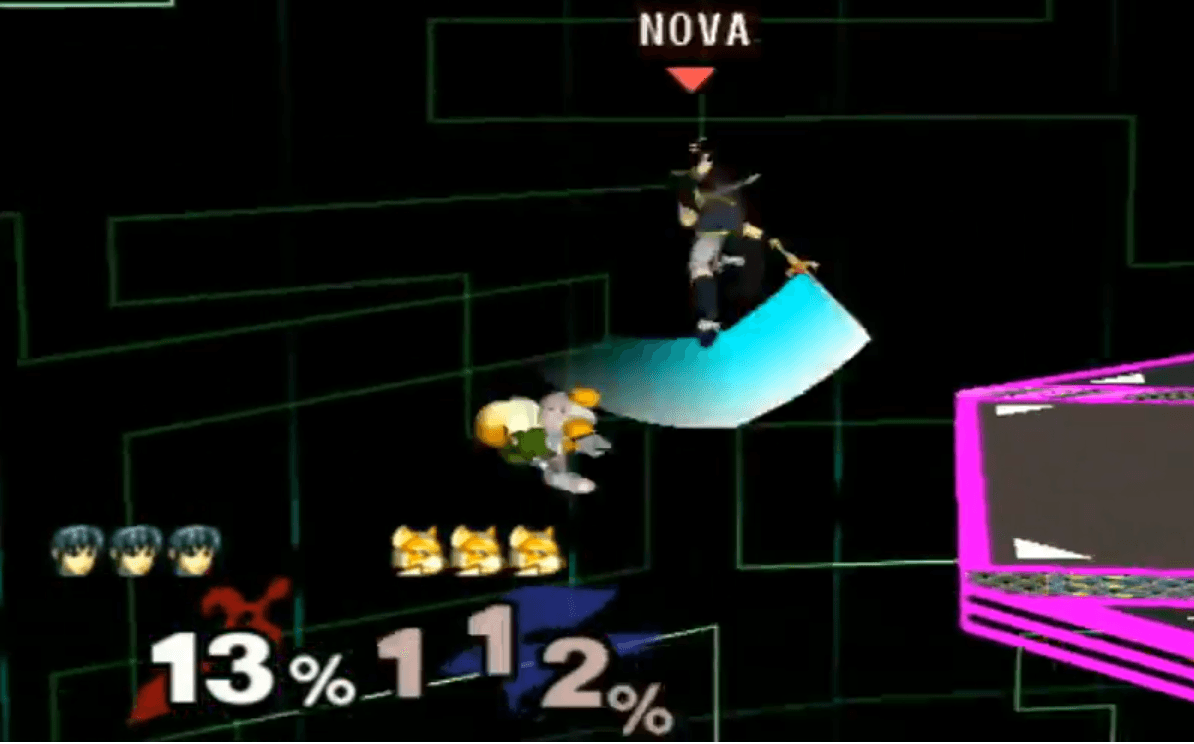
Whenever Marth is positioned above Fox, it is good for him to fall into Fox with an aerial, with forward-air, back-air, neutral-air, and down-air all fulfilling this purpose in different scenarios. He can also fall with a Shield Breaker to catch a Fox who is shielding in the neutral. Neutral-air tends to be Marth’s go-to if he’s leaping towards Fox, while forward-air is a solid option for approaching from the ledge. Of course, a rising up-air is good for approaching a Fox who is positioned above Marth, which happens to occur quite often, since Fox mains often like to retreat to platforms against Marth. As far as grounded approach options go, Marth can wavedash in with down tilt or grab, or go for a dash attack.
Neutral Play:
Marth has plenty of solid tools for keeping Fox out in the neutral. His down tilt can be used to wall out Fox’s grounded approaches, while forward-air and neutral-air can be used to intercept Fox’s aerial approaches. Neutral-air is also good to throw out in the neutral as it may allow Marth to drop down on a Fox who attempts to approach from the ground. Marth should dash dance a lot in the neutral to set up his own approaches/punishes, with occasional jumps interspersed among his dashes. Doing so can make his positioning ambiguous, while giving him opportunities to punish Fox’s attempted approaches with his own aerial attacks.
As far as general stage positioning goes, Marth generally wants to maintain center stage. Since Fox’s shine is particularly strong against Marth’s recovery, Marth should try to avoid spending time near the ledge unnecessarily. That being said, Marth does have a strong edgeguarding game against Fox himself, so he can afford to move towards the ledge so long as he’s the one making an offensive push and he doesn’t give Fox opportunities to turn the situation around.
Once Fox has begun his offense, Marth has a few options for escaping Fox’s combos. After getting jabbed by Fox, Marth can air dodge to avoid falling into another one of his combo moves. Marth should SDI to get out of Fox’s up-air combos and kill attempts, and he should tech onto nearby platforms after Fox’s up throw in order to prevent Fox from getting a free follow-up. Marth should be prepared to Amsah tech after getting hit by Fox’s down smash (or simply tech against the edge of the stage if Fox hits him with it at the ledge).
Punish Game:
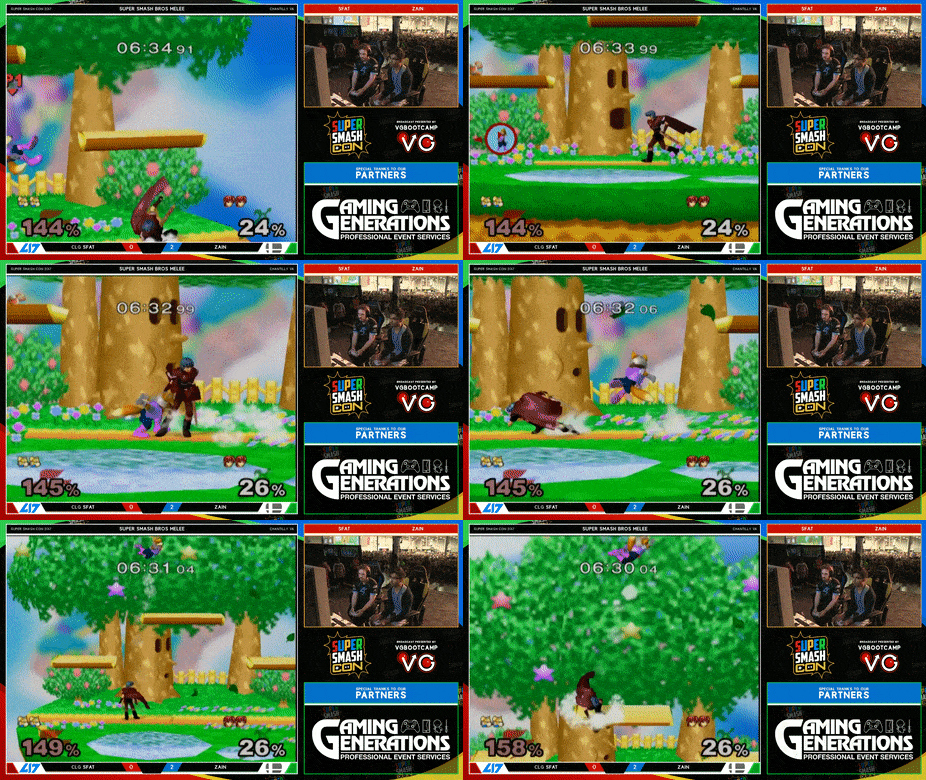
Marth’s grab game is one of his most distinct strengths in the Fox match-up; up throw is particularly devastating, as it can be used to chain grab, or to combo into moves like up-air, forward-air, neutral-air, and down-air. Marth’s other throws, though not nearly as good as up throw, do have situational uses. Back throw and forward throw, in addition to forcing Fox offstage, can start tech chases and unique combo sequences. Down throw similarly has limited, but existent, combo potential. Reverse Up-B is a particularly strong option for launching an aggressive Fox, especially if used immediately out of shield. Even a regular Up-B from Marth can act as a strong combo closer.
Almost all of Marth’s aerials are solid punish tools. Forward-air is a strong combo tool, an option for pushing Fox towards the edge of the stage, and even a kill move off the top at super high percents. Neutral-air is particularly good at high percents, where it has the potential to send Fox far offstage; at low percents, it is a decent combo move as well. Down-air is a solid combo/tech chase starter. Up-air boasts a plethora of uses: Marth can fall through a platform and use up-air to catch the Fox on the platform above; up-air is a go-to tool for juggling Fox in the air above Marth; Marth can come off the ledge with an up-air to punish Fox for Side-B’ing just above the ledge; and a short hop up-air can be used to catch Fox’s roll on the platform above Marth on Dream Land.
While it takes an up-air on Dream Land, Marth’s up tilt is sufficient for catching Fox’s roll on the platform above Marth on stages such as Battlefield and Yoshi’s Story. Forward tilt is good for pushing Fox to the ledge and has surprisingly good knockback if Marth can land the tipper hitbox. Of course, any of Marth’s tipper smashes will make for a solid punish, with forward smash being used to kill off the side, and down smash acting as a strong tech chase ender if he can catch Fox’s roll with it.
Edgeguarding:
Forward-air and back-air are Marth’s most basic, and often his most commonly used, edgeguarding tools. Landing a down-air offstage, though not always as practical as the previously mentioned, is perhaps the most satisfying of Marth’s edgeguarding moves, and an effective option in its own right. With its wide reaching arc and strong horizontal knockback, forward smash is naturally a devastating choice at the ledge. While edgeguarding, jab can be used to intercept Fox’s recovery and set up for a stronger edgeguarding move. Forward tilt can similarly intercept Fox’s recovery attempt, although it can send Fox far enough offstage to where a continued edgeguard may not be necessary.
Reverse Side-B offstage is a powerful option for catching Fox’s Up-B recovery and launching him into the blast zone. While still onstage, down tilt can be used to catch Fox if he fails to sweetspot the ledge, or to try and eat his jump immediately after he is forced offstage. If Marth Counters at the ledge, he may able to punish Fox for trying to Up-B back to the stage. And if Fox manages to Up-B over Marth, Marth can run at Fox with a dash attack to set up for an aerial follow-up, hopefully pushing Fox back off the stage. In a similar vein to his forward smash, Marth’s Neutral-B has a wide arc which can catch even a fairly high Side-B from a recovering Fox.
Stage Counterpicking:
Anyone who has ever seen Mew2King play knows that Final Destination is often the go-to counterpick for Marth mains, or more specifically, Marth mains who can chain grab. This is because the lack of platforms makes it difficult for Fox to escape Marth’s up throw chain grabs, tech chases, and other combos. Marth also enjoys Yoshi’s Story, as the tight blast zones allow for easy forward smash kills. In addition, the slant at the ledges make his down tilt particularly effective at catching a recovering Fox, giving a boost to his edgeguard game as well. Though typically the starter stage for this match-up, Battlefield also grants Marth some usable perks. Notably, the platform positioning allows him to incorporate edge cancels into his punish game, while also giving him a solid layout for juggling Fox anytime he is below Fox.
Though the above are Marth’s most solid stages in the match-up, he doesn’t struggle too badly on any of the legal stages. The neutral form of Pokémon Stadium grants Marth an FD-esque punish game, while also allowing for up tilt or up-air combos on the platforms (although Fox does have the advantage once the transformations come around). While the height of the Dream Land platforms makes juggling Fox a little different than on other triplat stages, it it still possible, with Dream Land’s platforms also allowing for the incorporation of platform ledge cancels in Marth’s punish game.
Interestingly, not a single game was played on Fountain of Dreams across all the sets I watched for research. But with my general Melee knowledge, I would wager that Marth is at the advantage on FoD, at least offensively, since he boasts stronger horizontal kill power while Fox boasts stronger vertical kill power.
Fox
Approach Options:
Fox has a wide range of tools at his disposal for approaching against Marth, giving him a certain edge when it comes to approach mix-ups. If he plans to jump in towards Marth, he can use neural-air, down-air, or back-air to varying degrees of success; if he instead wishes to fall onto Marth from above, he can approach with back-air, down-air, or up-air. When coming off of the ledge, neutral-air is a reliable option, with Side-B also acting as an effective (though somewhat riskier) option. Fox can also get in against Marth by empty hopping, then following up with an appropriate move depending on Marth’s positioning.
In addition to these air-based approaches, Fox can also execute a plethora of effective ground-based approaches. Due to his excellent ground speed, Fox can often dash right in with a move like down tilt, jab, or shine. Conversely, he can wavedash in with an up smash, shine, or grab. Such approach options are also valuable coming off of the ledge, so Fox often profits from ledgedashing in order to move from the edge of the stage. Finally, dash attack can be used to cover ground and get in against Marth effectively.
Neutral Play:
If Fox wishes to slow down the pace of the match, he can leap to a top platform (on the triple platform stages) or fade to the edges of the stage (on Final Destination). Lasers naturally behoove this kind of playstyle, and Fox can reach the given destinations by retreating from Marth while firing lasers, racking up damage even as he disengages Marth. If Fox does wish to play more aggressively, then he can dash dance in the neutral, baiting out opportunities to catch Marth’s movements with a grab.
Full hopping in the neutral gives Fox the opportunity to dodge Marth’s approach and punish him with a move like back-air. While still at low percents, Fox ought to be prepared to crouch cancel Marth’s aerial approaches and punish. If Fox gets grabbed, he should try to jump or shine out of Marth’s up throw combos; in any high pressure situation, shine acts as a good get-off-me option. Though not always possible, Fox should try to tech Marth’s edgeguard attempts whenever he can; with down-air, he may need to DI in towards the stage to be able to tech against the stage/ledge.
Punish Game:
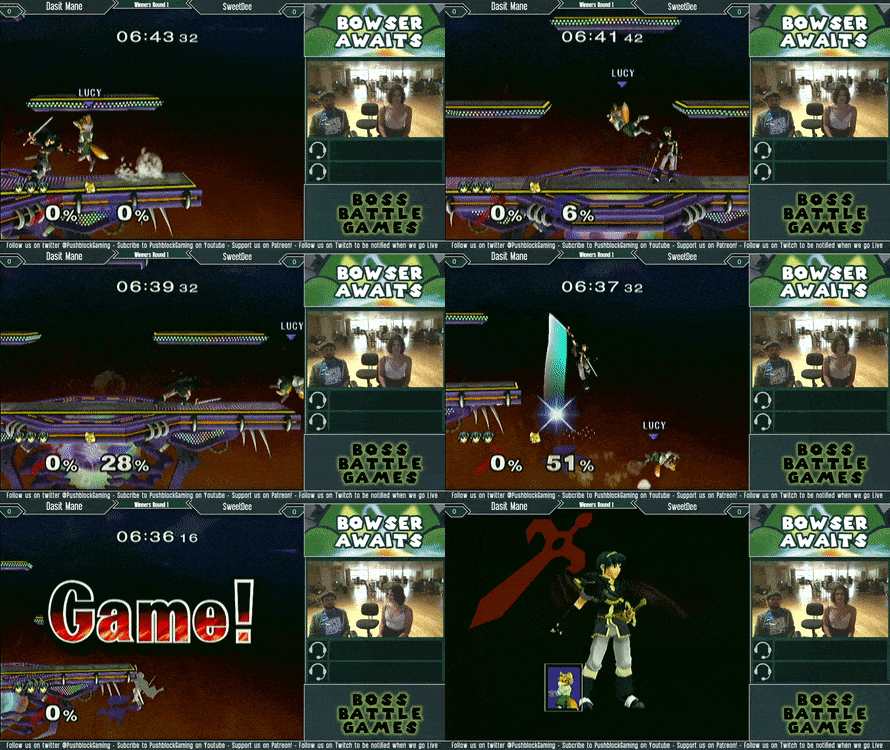
Fox’s Down-B, the shining star of his moveset, is unsurprisingly one of his go-to punish moves against Marth. By waveshining, Fox can follow up his shine with an up smash, a grab, or even another shine. Shine is good for forcing Marth to the edge of the stage, giving Fox opportunities to set up edgeguards, or simply acting as a tool for controlling center stage. If Marth is in the air, the same can be accomplished with an aerial shine into back-air combo. Fox’s grab game, though solid, is not nearly as potent as Marth’s. Up throw is Fox’s only optimal punish option out of grab, with his other throws rarely being worth going for. Even so, up throw is a reliable combo starter, as it can easily be followed up by aerials, the most notable of which being up-air and back-air.
Up-air serves a plethora of important functions in this match-up. In addition to being one of Fox’s most reliable kill moves, it is also a good combo option that is particularly useful for juggling Marth in the air. It can also be used to intercept Marth’s aerial movement, making it an option for maintaining control of the air space. As far as kill moves go, up smash is another strong option, and Fox has a quite a few ways of comboing into it, giving Fox pretty reliable kill power against Marth. Back-air and neutral-air are good combo moves that can force Marth away, making them useful for maintaining stage positioning or setting up edgeguards. If Marth hits Fox’s shield from below a platform, then shield drop down-air is an appropriate punish.
Jab can be thrown out for many reasons in punish scenarios, whether it be to halt Marth’s momentum, initiate combos, or set up for an up smash at kill percents. After crouch cancelling one of Marth’s moves, down tilt tends to be the go-to punish, popping Marth into the air and setting up for aerial combos. Up tilt can catch Marth when he’s coming from the air, setting up for follow-up attacks like up-air, back-air, or turnaround neutral-air. Whenever Fox does have Marth in the air, it may be best to rack up damage by falling with Marth from a distance and shooting lasers, as opposed to going for what might equate to a risky combo continuation.
Edgeguarding:
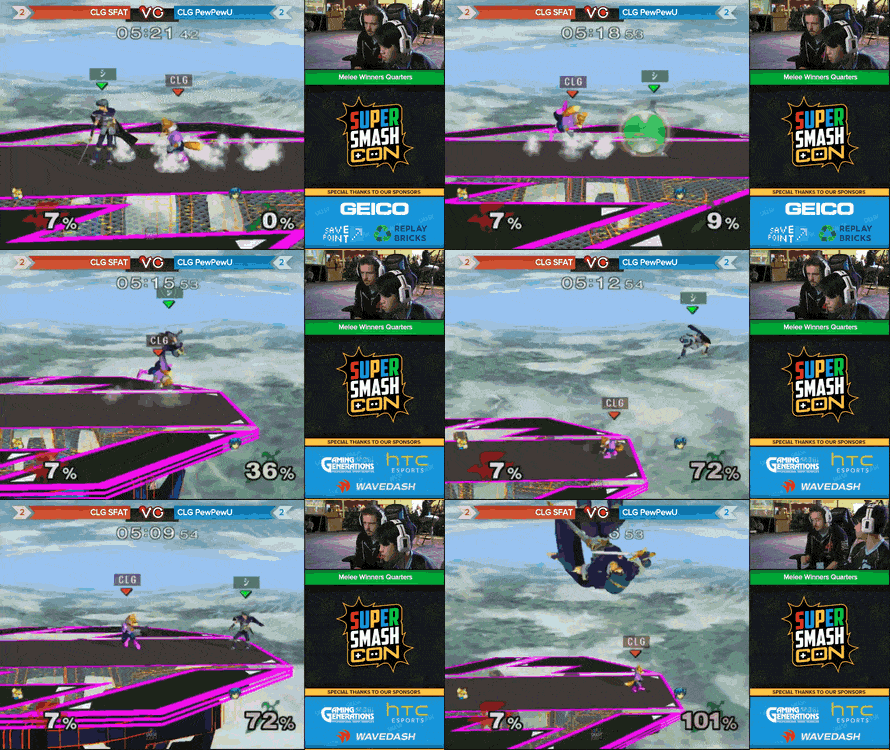
Fox has particularly strong tools for edgeguarding Marth, which contributes to his general ability to challenge Marth effectively at the ledge. Of course, shine is the crowned jewel of his edgeguarding kit, as a shine near the ledge is often plenty for securing a kill against Marth. Shine can also be used to set up a back-air or neutral-air (depending on the direction Fox is facing) in order to launch Marth far offstage, while an Armada shine followed by a ledgegrab is incredibly difficult for Marth to recover from. In general, crouch cancelling Marth’s Up-B recovery is an excellent way to set up edgeguards, with crouch cancel down smash being among the best of these options.
Should Marth fail to sweetspot the ledge with his Up-B, a down-air spike can force him back down below the ledge. Of course, a ledgegrab will typically be required to cement a kill after spiking Marth with down-air, since the knockback off of Fox’s down-air is not at all substantial. Just as Marth may try to make his recovery ambiguous, Fox can try to make his edgeguard ambiguous by full hopping up and down at the ledge before Marth executes his recovery. On stages with platforms, Fox can incorporate movement on and off of the side platforms to achieve a similar effect.
A downward angled forward tilt, though lacking significant knockback, can push Marth away if his Up-B doesn’t sweetspot, giving Fox the freedom to go for another edgeguarding option. A Forward smash at the ledge will force Marth far offstage, potentially killing him off the side at high percents. Fox can even combo into it, making it a potential kill option which may catch his opponent off guard. By Up-B stalling at the ledge, Fox may be able to throw off Marth’s timing for grabbing the ledge himself. And of course, the Marth killer, though simple and commonly used, is effective for snagging the ledge and leaving Marth to fall helplessly into oblivion.
Stage Counterpicking:
Dream Land is a common counterpick for Fox, since he doesn’t have to worry so much about stray tipper hits due to the vast space he has at his disposal. This stage allows Fox to play a bait-and-run style, and the platform heights play directly into his ability to stay out of Marth’s range until he has an appropriate opening. Interestingly, Fox gains some similar benefits on Final Destination. The open space and lack of platforms really benefit a patient, laser-heavy Fox, and Fox also has decent tools for juggling Marth on this stage. Of course, the boost to Marth’s punish game makes it far from preferable as a counterpick; nevertheless, Fox is not completely out of hope when Marth takes him here, especially if the Marth in question is not adept at chain grabbing.
Fox can effectively traverse the platforms on Battlefield, incorporating edge cancels into his approach. Fox can also tech on its platforms to escape Marth’s up throw combos, giving him somewhat of a defensive advantage. Down-air and shine are quite useful for trapping Marth on Pokémon Stadium’s transformations. On the neutral version of the stage, Fox gains some of the spacial benefits of FD, while also having a couple of platforms to aid in his defense when trying to get out of Marth’s combos.
Fox has a strong combo game and incredible kill power on Yoshi’s Story, along with greater recovery potential. While Marth can cover much of the stage with his sword, if he is not able to get his hitboxes out quickly enough, a fast-moving Fox can quickly overwhelm him on this stage. Fox does get a slight longevity boost on Fountain of Dreams due to the additional recovery opportunities it grants him. However, the nature of the blast zones on this stage means that Fox may have to rely a little more on edgeguards than on some other stages.
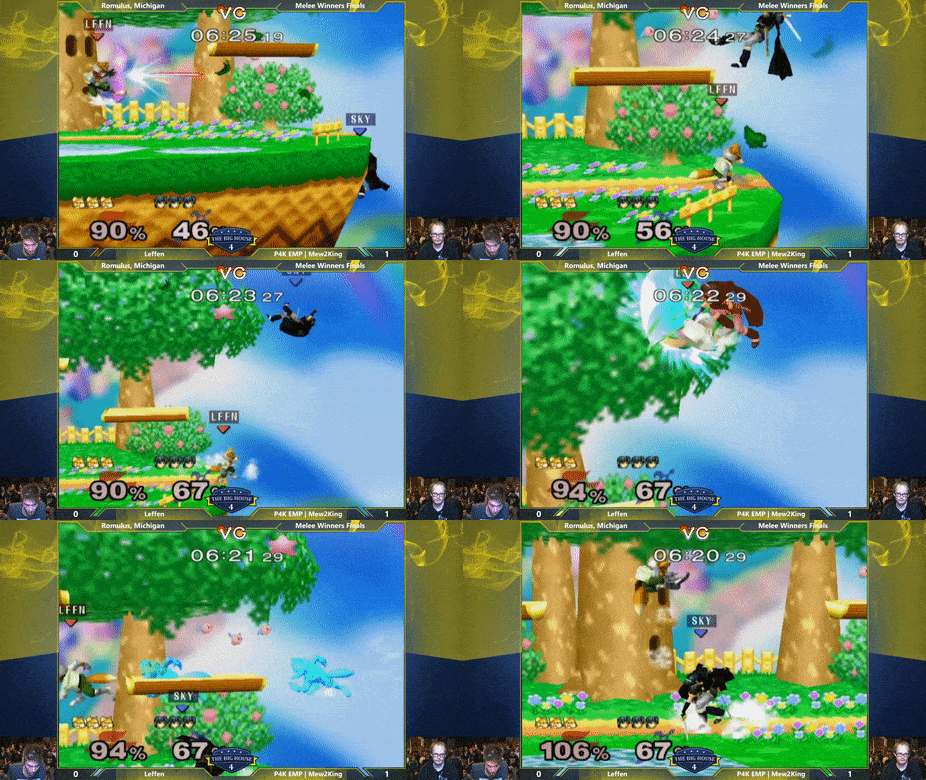
All in all, this match-up is fairly even, with perhaps a slight skew in Marth’s favor. While Fox has an edge in regard to approaching and edgeguarding, Marth’s strong punishes, along with his ability to avoid being punished too hard by Fox, gives him the potential to totally annihilate Fox whenever given the opportunity. These things aside, each of these characters have the tools to deal massive damage against the other. From their unique neutral options, to solid juggling tools, to potent kill smashes, neither character is truly safe in this match-up until the stock count or timer reaches zero.
Truly, the dynamics of this match-up extend much deeper than Marth’s chain grabs on FD and Fox’s early shine edgeguards against Marth’s lackluster recovery. This fact makes Marth vs. Fox among the most entertaining and immersive match-ups in all of Melee. Regardless of whether or not the match-up is 50-50, 60-40, or somewhere in between, there is no denying that Marth has the tools to give Fox a harder time than perhaps any other character in the game.
Like our content? Support us by getting our merchandise in our shop