




Blogs
Perspective Shift 1: Transcending Skill Plateaus
Perspective Shift 1: Red Light, Green Light
Introduction
“A narrow shift in perspective can unveil a parallel world.” –Demetri Martin
Welcome to Perspective Shift, a new series of blogs related to Super Smash Brothers Melee, although it is easily conceivable that these articles will be useful for any competitive discipline or skill-related task. Often when a player reaches a skill plateau, they ask how they can break through this newly perceived ceiling in order to reach the next level. When asked by a protégé, I often respond with the above quote. Changing your perspective can grant new insights for incorporation into your gameplay. It is the goal of this series to provide alternate perspectives, which can aid in the development of any player.
Red Light, Yellow Light, Green Light is a tennis drill used to train recognition/response decisions for players, especially those at the advanced-beginner and intermediate level. The drill is fairly simple. A proctor will hit balls across the net. It is the trainee’s job to play out a rally as normal, but with one key difference.
Before each return, the trainee will yell “red light,” “yellow light,” or “green light.”
- Red Light: If a ball has the trainee off balance and on the defensive, the trainee yells, “red light.” The trainee returns the ball however he can manage, often with little power or lobbed softly to the center of the court.
Red lights in the language of traffic are not innately a bad thing. The real issue comes when someone looks at a red light and behaves like it is green. This could cause serious accidents! In tennis, this behavior is likely to result in an out of bounds shot.
- Yellow Light: If a ball is hit that the trainee can reach and hit decently, he/she yells, “yellow light.” The trainee proceeds to return the ball to the proctor with reasonable power and precision. Yellow lights are complicated, and will be described in more detail in the section A Note on Yellow Lights.
- Green Light: If a ball appears to the trainee in prime position, the trainee exclaims, “green!” The trainee hits this shot for a winner. It may well be a powerful overhead slam, a volley with a devastating angle, or an approaching shot that gains a very powerful position.
Smash Applications
There are several possible ways to translate this thinking to Melee. Below we will translate a few example smash scenarios into traffic-oriented language.
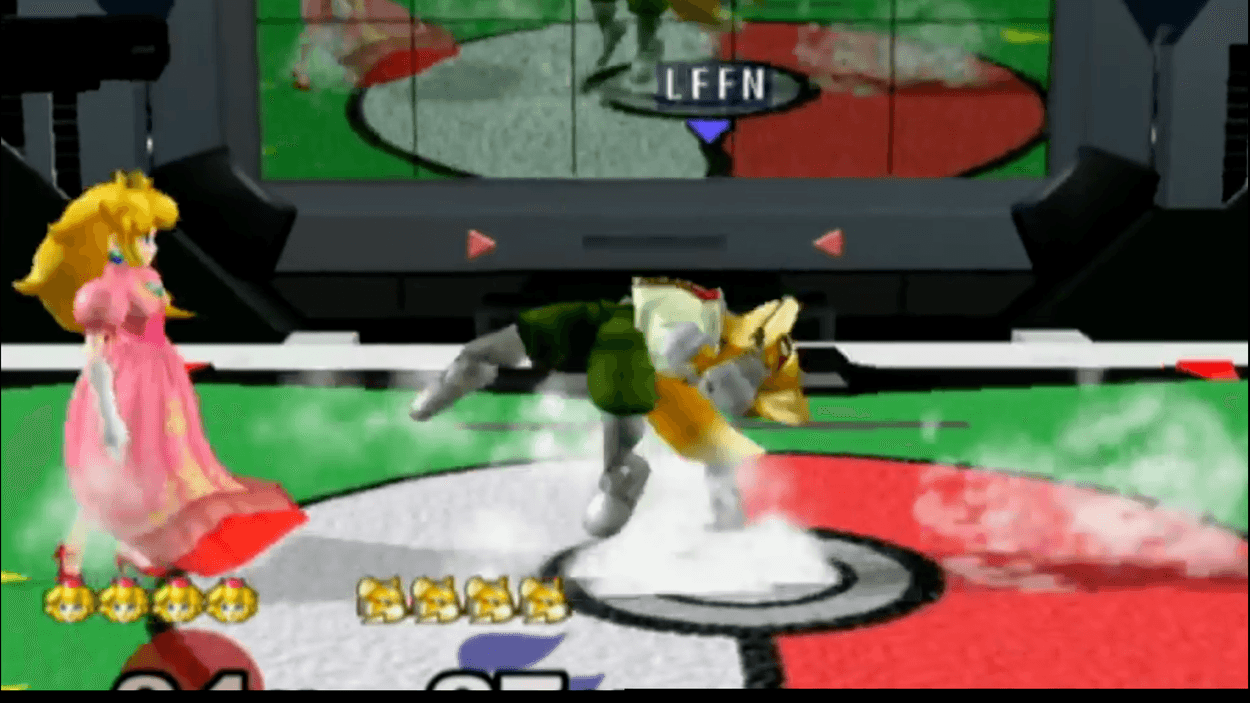
- Neutral Game: It is late in the game and Peach is at high percent. Fox is hungry to close the game, and whiffs an up-smash. Green light! Peach takes her opportunity and converts the big opening into a grab, dash attack, dsmash, etc.
- Punish Game: Fox has just up-thrown a mid-percent Luigi. Yellow Light! Be Careful. Fox is unquestionably in an advantageous position, which many would qualify as part of the punish game, despite there being no true combos available. Fox’s up-air can be broken up by a neutral-air from Luigi. It is better here for Fox to take advantage of Luigi’s low aerial mobility and provoke a response. A wavedash down will likely cause the Luigi to react with that neutral air. From here, the up-tilt or up-air should be easy for Fox to land.
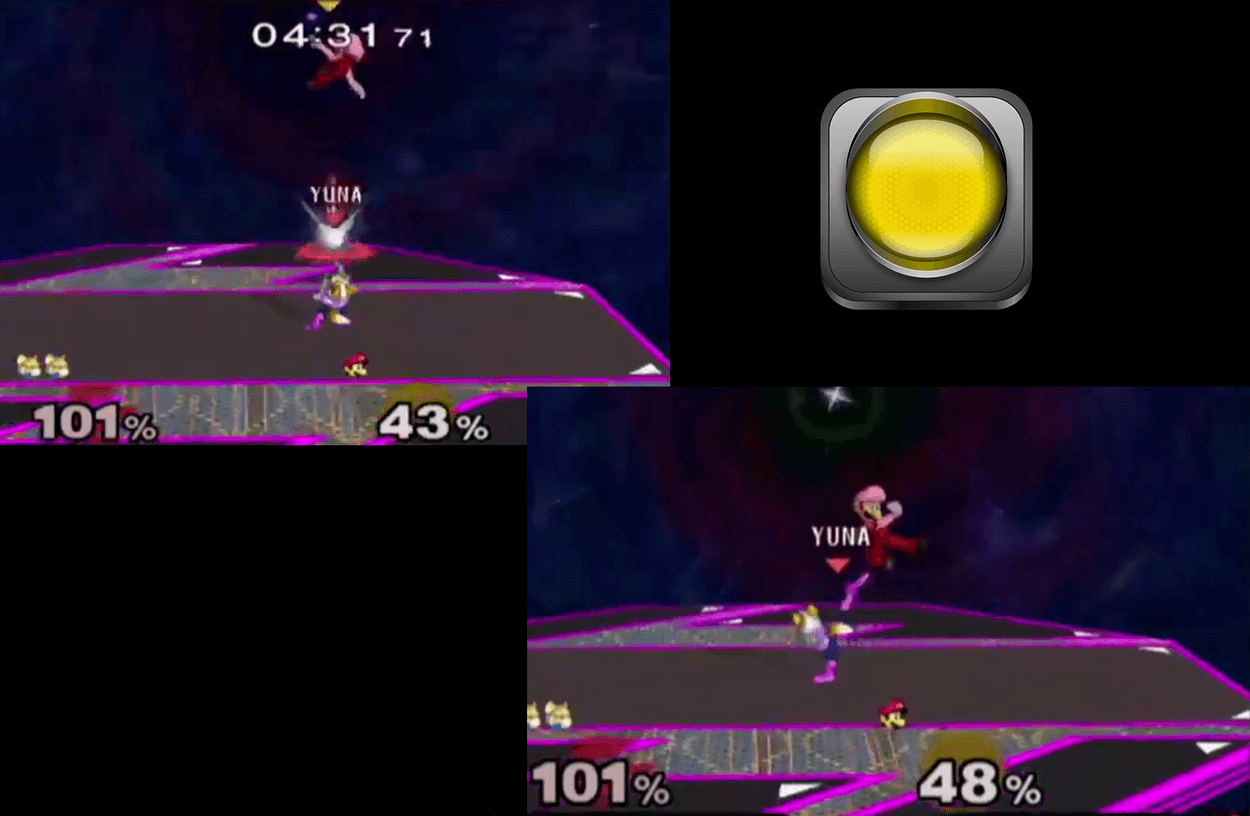
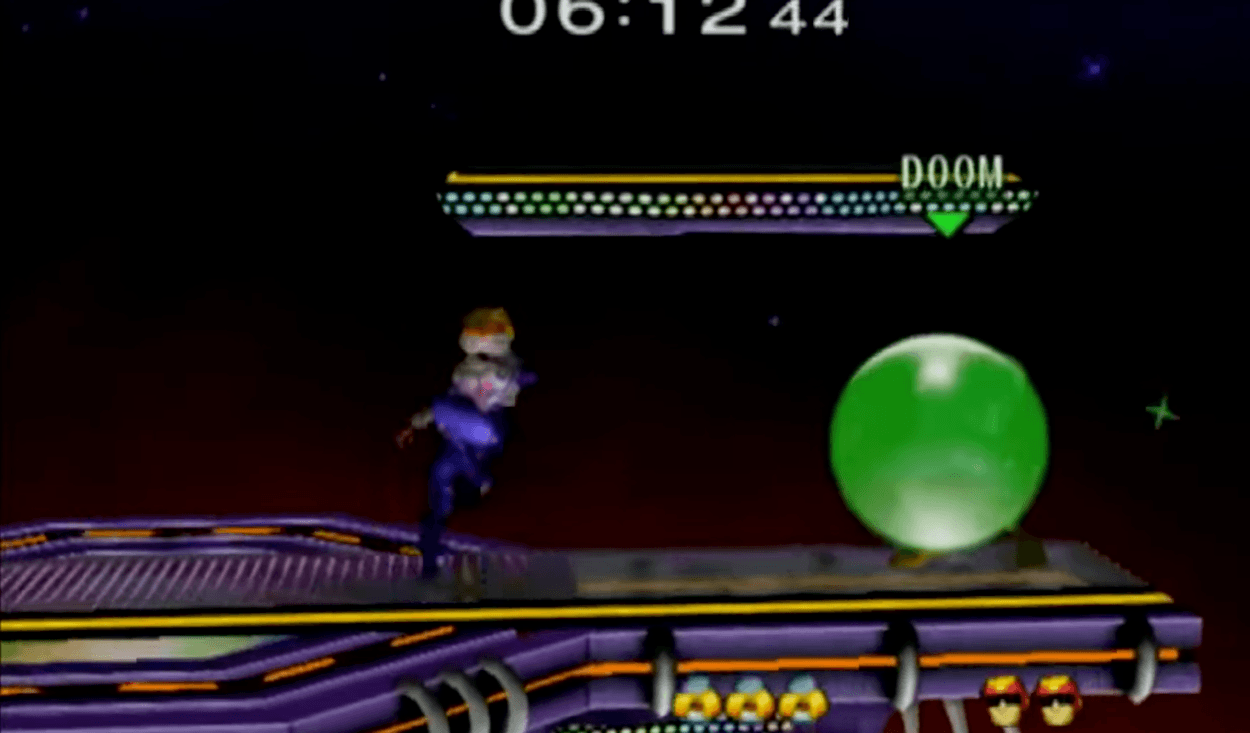
- Positioning: Oh no. Captain Falcon hides in his shield in the corner of battlefield against a Sheik player. Code red! Now is not the time to go on the offensive. It is most important for Captain Falcon to seek a way to regain his position so a more neutral position can be established again. Falcon faces a tough decision. Which punishable option does Falcon choose, and when does he execute it? Perhaps rolling will provide an escape. Or is full hopping to the platform a stronger choice?
In a red light situation like this it is difficult, but vital, to remain unpredictable and prudent. Failure to do so can result in a short-lived stock.
Manipulating Reward Systems by Conditioning
You can also use “Smash Traffic” thinking as a portal into your opponent's psyche. If your opponent has a narrow reward-based game perspective akin to smash traffic, you can use that view against them. Many players are likely to subconsciously recall actions that led to big rewards. Naturally, these players want to recreate successful situations. We can take advantage of this pattern.
Let’s look back at that first example of the whiffed Fox up-smash. If this situation arises again, Peach almost surely remembers what a huge reward she accrued from punishing the green light whiffed up smash. If Fox is cunning, he can purposefully whiff another up-smash if a similar scenario presents itself. This time however, Fox up-smashes just outside of Peach’s range, so she is unable to properly punish. Remembering how she mounted her comeback in the game just before, Peach pounces on a Fox that is not willing to be caught. It was a disguised red light all along! Fox now has time to avoid Peach’s punish and take advantage of the green light scenario he just created for himself.
A Note on Yellow Lights
The rules of the road dictate that during a yellow light a critical decision must be made. Most of the time, it is prudent to slow down. This is also true in Melee. Consider the “punish game” example above. Waiting and exploiting Luigi’s weak position is a safe route that most often yields Fox large rewards over time. Slowing down your pace and waiting an extra moment can consistently be the right call. This way Fox can keep sending Luigi skyward, gradually building percent and frustrating the mustachioed menace.
There are some occasions of course where it is difficult to maintain full control during a yellow light and there is not time to slow down. On the road, in this case, you would be right to speed up and pass through the intersection before the situation becomes an inescapable red light. Yet another truth here carries over into Melee.
Imagine in the same Luigi-Fox case that Fox instinctually jumped after the up-throw. This sequence connects on most characters after all. Once Fox is already flying toward the tall plumber, he ought to initiate his McCloud Flip. If all goes well, he may hit Luigi anyway, especially if Luigi has been punished previously for attempting to combo-break with a neutral air. The worst case scenario is the opposite. Luigi extends his foot lazily and Fox flies into hit-stun. Once again, a cunning player can make the most of this long-term. After this exchange, Luigi will expect his neutral air to hit in future iterations of this set-up. This enhances the yellow light scenario of up-throwing Luigi in a sense. Now it is reasonable for Fox to expect Luigi to throw out that neutral air which worked previously, allowing a lag-punish.
Conclusion
By now, it is apparent that gazing at any nuance or broad stroke of Melee through the lens of “Smash Traffic” can glean fresh insights. As with any alternate perspective, it is up to each individual player to apply this lens wherever it is the most powerful.
Like our content? Support us by getting our merchandise in our shop