





Blogs
How to Improve with a Set Team

Plenty of people have solo queued their way to champ and even grand champ. It's very possible, but it can get lonely. Recently, Psyonix has announced a new club feature that will allow you to join a "club" with set colors and play as a unit in ranked. This doesn't mean that there will be a ranked playlist for just those clubs just yet, but it’s still a great time to start taking play more serious with your team. If you do start to play with a set team, or if you have been doing so all along, there are some key advantages that can help you advance as both an individual player and together as a unit.
Face-offs
If you're playing with a set team that plays together consistently, one of the first things that you should do is discuss how to handle face-offs. Any game time that your ream is not in a smooth rotation is time that your opponents can capitalize on. Coordinating your face-offs is the first step to ensuring that the ensuing rotations are predictable and settled right after the play. Anytime a party of three has two people going for the same face-off, it's an immediate flag to their opposition that they're not well coordinated and/or they don't have much experience playing together.
The first step in defining face-off roles is just communicating what everyone is doing. However, a truly coordinated team will go much further than just that first step. As an example, my team has been playing together weekly for nearly a year. At this point, we know without communication what each position is going to do for every possible iteration of a face-off. For example, if the face-off features two players close to the ball, then we have simple rules to determine which of them will go for the ball. We also know immediately which face-offs feature a cheater moving up in support and which will have the two players back going to fill up on boost. Other rules include defining which boosts should be left for the player who goes for the face-off to ensure that each player is ready to join the active rotations in support of either offense or defense as soon as possible.
Join Tournaments
One of the best ways to improve is to play people higher than yourself. The effects may not be immediate, but playing with higher ranked players has several benefits. This is difficult to do in ranked because the match-making is putting you with similarly ranked players. But one benefit that full teams have over players who solo-queue or only play with friends randomly is the ability to join tournaments. In a tournament scenario, you’ll almost inevitably end up playing against some team that outclasses your own.
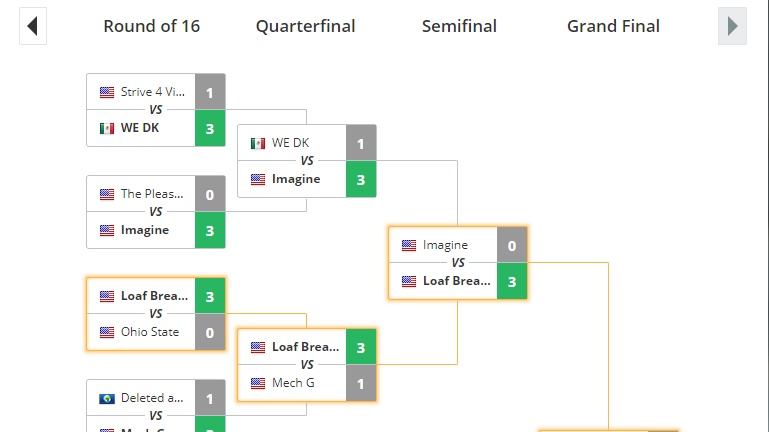
While watching pros play can offer many benefits to your own gameplay, their speed and precision gets diluted when you’re watching secondhand, in a way that you don’t even realizing you’re not translating any of it to your own play. Joining tournaments allows you and your team to witness firsthand how much faster players ahead of you are playing. Experiencing that in-game and being forced to adapt to that speed is great for your growth. You and your team may not play super clean at that speed, but getting experience at a faster pace even once or twice will help your mind get better at processing the game more efficiently
Playing opponents that are better than you also allows you to see other things that those players are doing, and see how adding new mechanics to your tool belt will directly help your game. For me specifically, I knew the concept of an air-roll shot, but thought it was a frivolous mechanic. During a weekly ESL tournament, I noticed that I was missing head-to-head challenges because the players weren’t hitting the ball directly in front of themselves, but air rolling to knock the ball to the side. Seeing how it caused me to miss the ball and made their playstyle more unpredictable inspired me to learn how to perform air-roll shots.
So if you have a set team, work to find a tournament with a schedule that works for everyone. The more the better.
Replays
One of the most important tools you have to improving as a player and a team is reviewing your replays. In addition to reviewing your own replays with a critical eye, you should also utilize your team for replay reviews.
The first way to do this is to review your replays with your full team present. My team likes to have one player stream the replay, so that we're all watching from the same feed. As you do this, choose a loss and watch through the replay. As the action unfolds, speak up anytime you see a missed rotation or miscommunication or any time you were confused by something a teammate did and talk it out with your team. This is not a time to accuse or blame your teammates! You're all here to see mistakes and fix them for the future. So you need to be ready to address questions on your own decision making and to pose questions to your teammates in a respectful way.
With this in mind, don’t focus on the mistakes themselves, but what lead up to them and on agreeing on methods to address those situations in the future so that every player is on the same page without the need for communicating it in the fast-paced action of gameplay. The more team replays you watch, you'll find yourself focusing on plays where your team conceded a goal, so try to choose replays that aren't a 0-1 loss. With goals conceded, sometimes you'll find that your team was perfectly set up to defend an offensive push and the opposition applied a well-timed demo, but that's rare. In most cases, there's a mistake made by at least one player and often more than one. Sometimes the mistake is 10 or 15 seconds prior to the goal being scored, so be aware are the cause and effect of the gameplay leading up to the actual scoring play.
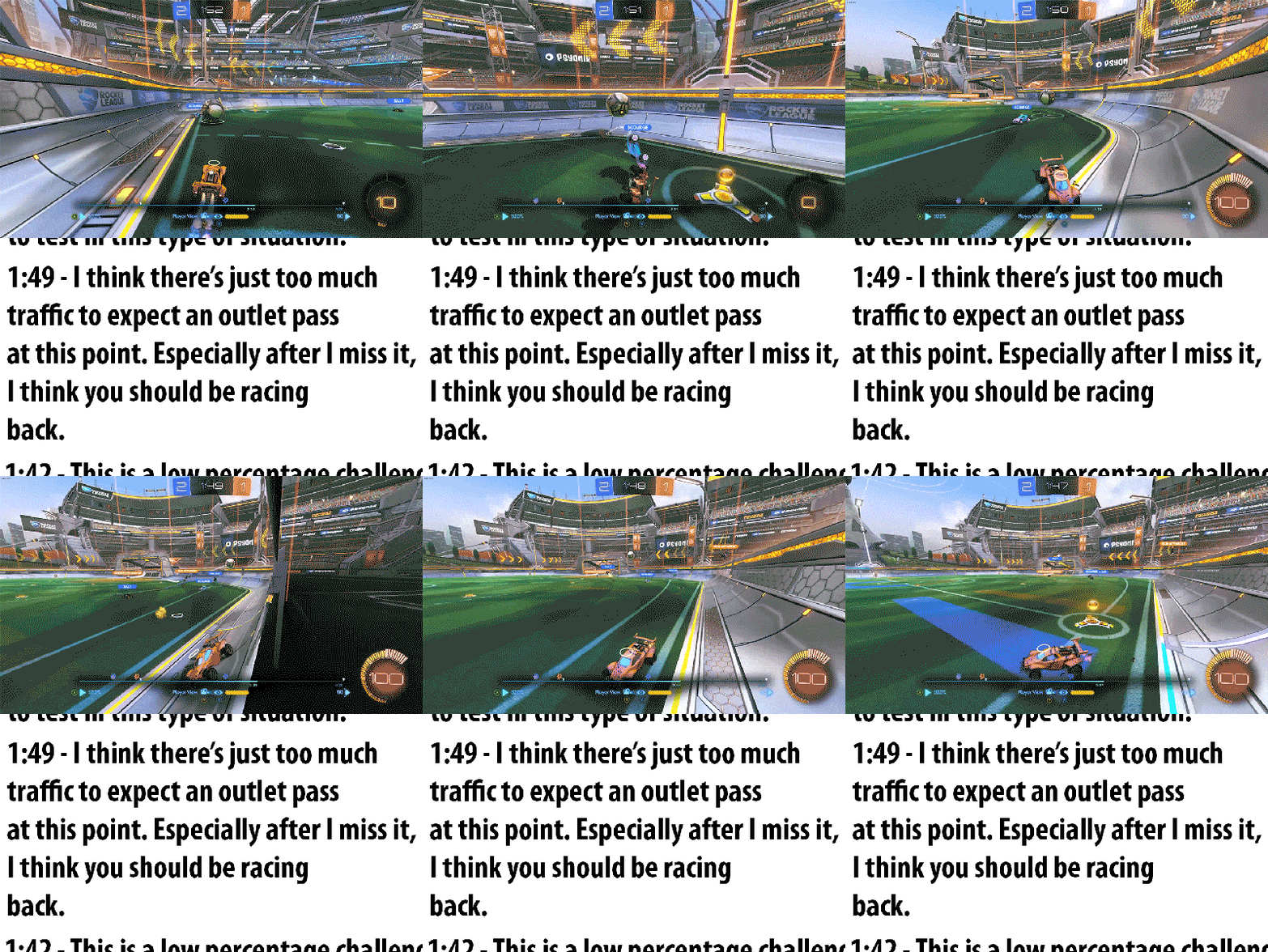
Additionally, another great way to use replays to improve as a team is to have both of your teammates review a replay of yours and offer their opinions/insight. This type of replay analysis should focus less on team plays and more on individual player decisions. In order for this to be effective, everyone participating should know that mechanical mistakes happen, and that critiques should focus on decision making choices. Doing this will not only allow you to see a different point of view on how to approach in-game situation, but it will also provide insight into your teammate's thought processes and inform you on how to position around them during gameplay. Also, this will give you a chance to see what your teammates do better than you and use that knowledge next time you look into training.
Now that the club system is being implemented by Psyonix, it will become much more apparent how many people play with a regular team and the advantages that come with it. Find some friends and follow these guidelines and take the next step to improving together.
Like our content? Support us by getting our merchandise in our shop