






Blogs
Blog: The State of SC2

This article represents the opinion of the author and not necessarily that of Team Dignitas.
Starcraft is something of a staple when it comes to eSports, that, no one can deny. The amount of longevity and impact that Starcraft: Brood War had on the international gaming scene was immense. Countless players rose to prominence and countless others fell. Names like Flash and Jaedong are synonymous with greatness in eSports, these are people who have been emulated throughout time and will continue to be for years to come.
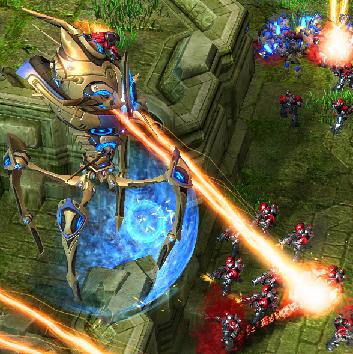
With the Brood War scene drawing to a close and Starcraft II’s release, many people asked whether or not Starcraft II would have the staying power of its predecessor or whether or not the game would be as complex, entertaining, or even as good. Over two and a half years have passed since SC2’s release and while things are certainly going strong that isn’t to say that there are no problems with the scene as it is, moving forward.
Starcraft has been and will likely continue to be a game driven by the community and their desire to see fair, balanced play but most importantly, exciting games. Starcraft II has provided a platform for exciting games, however, many players have been quick to call out the game for its imbalances at times and poor design issues. The Starcraft II scene is evolving quickly with numerous tournaments going on at any given time and many have been quick to label this the problem with the scene, that is: “oversaturation”. I, owever, would disagree with this notion.
While I certainly agree that there are an awful lot of tournaments in the SC2 scene, too many, perhaps, for both players and viewers alike, however, this can be alleviated by an increase in congruency between them and divergence of levels. These seem like arbitrary terms so let me explain.
When I speak of congruency between tournaments, what I mean is that tournaments need to connect more with each other and function more like partners than competitors. When you consider the amount of leagues and weekend tournament that go on constantly, it’s staggering. IPTL/IPL, GSL/GSTL, NASL, Iron Squid, Asus ROG, WCS, Dreamhack, MLG – to name a few, are all independent tournaments run with little to no regard for each other. Yes, the Code S finals may have taken place during some IPL events but that is not what I’m getting at. Seeding. Seeding is as crucial in any sport as it is in eSports. Why should performance in NASL not be weighed the same as performance in Dreamhack? Why should team leagues not correspond with each other? These are all issues which can be addressed with more congruency between tournaments. I will touch a little bit more on this later.
The second major issue I mentioned is a divergence of levels. This is something we already see in the GSL with Code A and Code S and even in team leagues with IPTL having the Amateur, Contender and Premier divisions. While this is along the lines of how I feel things should be working, I feel that this should be more common. Everyone agrees that there are some players who are just not good enough (yet) to win, say a Dreamhack event.
So why place them in the pool? Why aren’t there different levels of Dreamhack say a Gold and Silver level where the latter has players of a lower caliber and the former has players of a higher caliber? Of course, this boils down primarily to financial issues, it costs more money to run more tournaments, but think about the exposure. Being part of an open bracket and having your games seen is pretty rare. But having a tournament exclusively of lower tiered, professional players, will increase exposure to a massive degree.
What this boils down to, at the end of the day is organization. Although it would be nice to have some sort of global governing body for professional Starcraft players, something like the ATP in tennis, this is not something likely to happen in the near future. Regardless, tournaments, teams and players can still orient themselves in a different way. Tournaments with point systems in place where winners earn more points and thus a higher seeding in next week’s tournament irrespective of whether they are Dreamhacks or MLGs.
This has multiple effects. Players in the lower, “silver” level tournaments would need to have a certain amount of tournament experience or wins before they would be eligible to play in the higher “Gold” level, giving them more exposure. Furthermore, a system such as this will finally be able to answer the question on everybody’s mind: who is the best player in the world? No one really knows this answer. Many consider the current GSL Code S champion to be the world’s best. But is that really a fair benchmark? Many players do not participate in the event and there have been recent reddit posts illustrating how half of Code S players don’t even qualify for the next season.
I won’t lie, this is not an easy task. Accomplishing something like this will take effort, time and money but will result in less of each as well. Sponsors want the “big names,” they want to see the number 1 and 2 players in the world in a tournament final, this means more money. If eSports is to be taken more seriously there needs to be more organization not fewer tournaments. There was a lot of turmoil near the end of 2012 saying how Starcraft II has already overstayed its welcome. I simply do not believe that to be true.
I’m not going to sit here and say this will be easy or even offer up exact figures on how to fix the issues plaguing the industry but merely to make some issues more salient in the minds of the community. I think Starcraft II has a bright and brilliant future and I hope to be watching for many years to come.