






Blogs
Scouting and its Importance

Scouting can be described as "The action of gathering information about enemy forces or an area."
In a situation where every advantage you gain can tip a battle in your favour, it is advantageous to have as much intel as possible. Starcraft II is no exception. On the contrary, I would consider Starcraft II to be a prime example of its importance. If you have played starcraft II before, no doubt you've been beaten by something that caught you off guard.
After the game, you were probably asking yourself what the hell just happened? Whether it be a sneaky ling runby that evaporated your mineral line, some Dark Templar harassment when you have a lack of detection, or a Medivac drop full of stimmed marines, sniping a key tech structure. We have all been there and it sucks. The effects of such attacks can be minimised by the correct use of your races scouting abilities.
Scouting Worker
Many people underestimate just how important this 50 mineral unit can be. If you send one out early, you can get an extremely good read of your opponents build. Do they have low amounts of probes? Maybe they are doing an all in and you should prepare. Have they taken an early double gas? They might be teching up. These little things can give you an idea of what to expect, so at the very least you're not taken completely off guard.
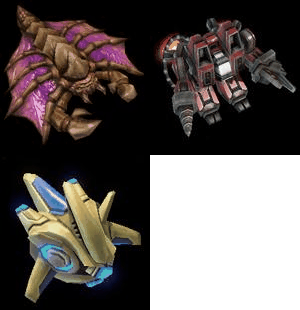
Zerg
As a Zerg player, you have limited means of scouting. By no means though does that mean you should throw in the towel and let this topic pass you by. Far from it. You still have some useful tools at your disposal.
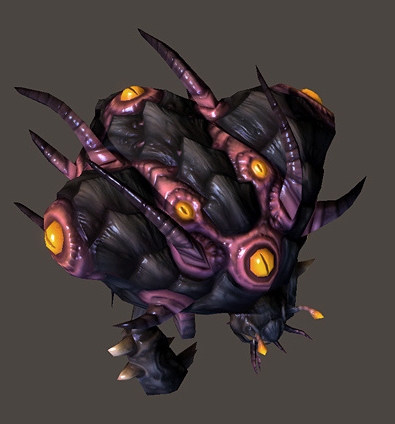
The first and probably most important thing you can do is place your overlords in strategical places. My personal ideology is to send my first overlord to behind their natural expansion to spot for expansions and my second overlord towards my natural to spot for proxies and such. In Zerg vs Zerg however you want to position your overlords in a straight line towards their base and later on, cover all possible bases.
Overseers come after lair tech but are an invaluable tool with the addition of changelings and increased speed. You can however simply upgrade overlord speed which makes things a lot easier.
Protoss
As a protoss player you have your own scouting unit called the observer. It is produced from a robotics facility and is invisible unless your opponent has detection also. It is an extremely useful tool. It can be used to scout your opponents base to see their tech choices and where the game is going so you can prepare correctly.
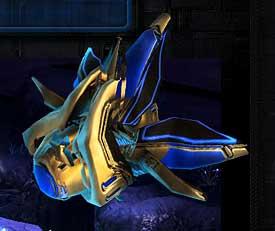
It can be used to scout drop or runby paths to protect your base from sudden attacks also. The most important use of it however, in my opinion, is keeping tabs on your opponents army. With the observer you're offered an unobstructed view of a rather large surface area. Never again will you be caught off guard by a sudden flank, once you have mastered the uses of observers. Bear in mind however, that if your opponent has detection he/she can destroy your observer and now you're flying blind.
Terran
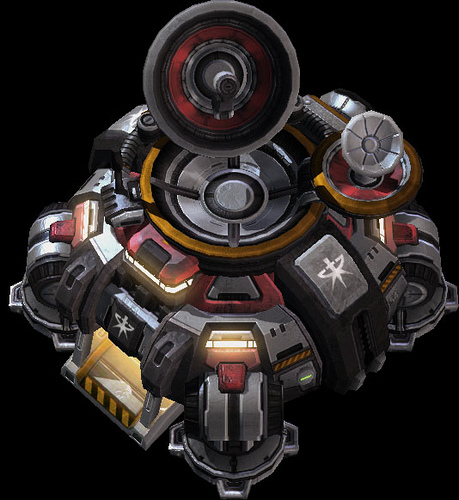
Terran players have a utility that is build in from extremely early on in the game. Orbital Commands are an upgrade to your command centre. This upgrade offers you the ability to use energy on either a Mule (A unit which harvests minerals faster than a traditional SCV) or a Scan (A circular area of pure vision) which you can pinpoint on the map anywhere you choose.
This is useful for spotting cloaked or burrowed units and can also be used to spot tech and army positioning, much like the Protoss observer. You should be wary for using it though. Mules are definitely worth their weight in energy and can be more beneficial than a wasted scan at the wrong moment. Choose wisely!
Another option terrans have is creating a single viking. You can use it to pick off stray overlords in TvZ and also patrol maps for incoming dropships. It is definitely a fairly cheap but invaluable tool. Make good use of it!
I hope you enjoyed reading this and found it to be informative. This was my first blog on Dignitas so let me know what you think!
OhSoOrthodox ~ Jake Burns