



Blogs
The Development of LAN Metas; How the Big Stage Affects the Big Games
With the conclusion of Dreamhack came a large amount of pro play as a celebration to conclude the Spring Split. The top teams from every region attempted to put their best foot forward on SMITE’s biggest stage of the season to compete for a large cash prize. During this event, new metas arise and things that once were either overlooked or underestimated become something that is commonplace in every game, with Dreamhack being no exception. During Dreamhack, Soul Eater came back into the meta after seeing a drastic decrease in play during the transition from season 2 to 3. In this article, I will discuss the reasons why these changes occur and what they mean to both the casual player and the ranked scene.
 Source: SMITE Gamepedia
The Dreamhack Meta.
There were several things that were seen in the Dreamhack games that had not been seen in the regular season. The most influential of these was that Soul Eater making a reappearance after having been played very little, if at all, during the Spring Split. It was picked up in the first game of the tournament by Panthera’s Emilitoo, and would be picked up fairly consistently throughout the rest of the tournament. This is due to the amount of boxing that was occurring, but can be traced even deeper than that. Another change that occurred between season 2 and season 3 was the hunter role in general. In season 2, the hunter builds had lots of critical chance and lifesteal in order to sustain through engagements in the late game, putting out tons of damage. It was during this time that Soul Eater rose in the meta, as it provided attack speed, lifesteal, and protections. This gave hunters everything they could every want for late game; it was their perfect item. With the changes in season 3, the role of ADC changed, and they became more of a structure damaging build, opting for power and penetration rather than crit lifesteal. It was a combination of season changes and role changes that led to the falling out of Soul Eater.
So why did it come to be popular at Dreamhack? Because Panthera noticed that it helped the ADC to be that structure damage split-pusher. With its passive, you could get a lot of health back, up to 30% once you fell below 25% health. This meant that the hunter could tank a few tower shots and not have any lasting effects, along with being able to use the lifesteal to get back to full health on the next wave. So if Panthera noticed this, why did they not utilize it during the regular split?
There is no one good answer to this, but two, purely speculative answers immediately come to mind. The first is that they did not think of it until the break between the split and the LAN, which is highly possible. The second is that they had no reason to. If they found a great item pickup to not counter the meta, but be able to execute it more effectively, it would make them a lot better than their opposition. The only problem with that is that there was no competition for Panthera for the whole split; they were the first team to qualify and clinch first seed in either region. What purpose would a team that is already dominating every game have for pulling out a pocket strategy to win in a regular season that meant nothing to them? The introduction of just one of the things that Panthera has thought about put them into the situation of being able to win Dreamhack without dropping a single game. This can also be applied to every team at LAN. Why would you show your full hand of strategy on games that don’t mean anything instead of saving them for a tournament? The only drawback to this strategy is that, in most cases, a very large meta-changing patch immediately follows a LAN, so many of the strategies that do not see professional play are left untested and may never be seen again due to the shifting meta.
Other Things LAN Affects
 Source: rockpapershotgun.com
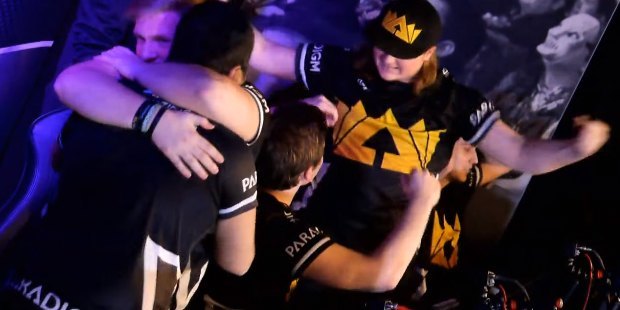
Most SMITE teams have players from all different areas. They do not see each other in person, with the exception of some teams that may have team houses. The team chemistry that can be built up or torn down by being it the same place as your team can make or break their performance at the LAN. One of the teams that personally impressed me at Dreamhack, other than Panthera, was Team Eager. They had absolutely dominating performances against HFM in their first matches before falling to Panthera. The other thing to note about Team Eager was that they looked to be spending a lot of time outside of the game together, similar to Panthera. This could be gathered from social media outlets, particularly Twitter. The personal level of chemistry that the teammates have, and their friendships with one another, are critical to the team’s success at major events. The reverse of this can also be seen at events such as last season’s Cognitive Invitational with TSM. It has been noted by many people in the scene that the TSM players spent very little time as a team of five. This led to an eventual disappointing showing at Super Regionals and the eventual dissolving of their team. The team that stays together, wins together.
The final talking point for the changes that occur in a LAN setting is twofold, and that is the lack of needing to account for lag. Players that have dealt with mediocre internet access all season and still managed to compete at the highest level now have the chance to compete without that hindrance. This creates standout players in the LAN setting that did not show up to the same degree that they had all split. The term “LANimal” was created for this purpose, and they can help carry a team that may have barely qualified into a position to win the entire tournament. This was on full display at Super Regionals on the EU side of things where former Team Dignitas hunter, IRens, and then London Conspiracy Mid Laner Cherryo put up performances of exceptional quality in comparison to their stats during the Fall Split. While the end placing of their teams did not change due to these wonderful performances, they are worth mentioning. Sometime the atmosphere of a LAN and the lack of lag changing meta picks is enough to turn an average player great. Sometimes it is just not having to deal with poor connections on your end. Whatever the reason, individual play can be drastically raised or lowered by the LAN setting.

Concluding Thoughts
Whatever lens you see a LAN through, they are the most exciting moments in eSports. The best teams all get together and compete for large sums of money, and that shows in their performance. Some teams pull out new strategies and others rely on individual players to step up and compete at a higher level than they had ever performed before. New metas are formed, target band become a norm, and the end result is a changed pro scene, for better or for worse. No matter how you look at these details, DreamHack was an exciting event, even through a screen.
Get your own AKRacing Chair here and support our players, all profit goes towards the teams!