




Blogs
Counter-Building in the Mid-Lane: When, Why, What, and How-to

Imagine queueing up for a game of Conquest. In lobby, you manage to claim mid and pick Scylla. Everyone locks in and the enemy team is revealed. One of your worst nightmares appear: the dreaded Loki.
You understand the roles. As Scylla, you’re a hyper-carry, destined to deal a lot of damage come mid to late game. It will be Loki’s job to, essentially, ult you on cooldown to completely remove you from teamfights and thus remove one of the biggest threats in the game. By the 20-minute mark, your slashline looks something like 3/7/14 and some thoughts might come to mind: Loki is OP; active cooldowns are too long; there is nothing I could have done.
Take a moment and look at your build: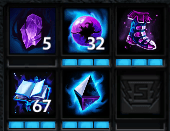
This build hopes to deal a lot of burst damage. The downside is that it leaves you extremely squishy with very low protections and very little health. This is where counter-building comes into play.
Why counter-build?
Counter-building is a means to mitigate the enemy team’s advantages, whether that advantage is high-burst or healing.
Consider a situation where the enemy team has four physical characters and one magical. This would be where an item like an early Breastplate of Valor would come in handy for protections and cooldown reduction.
You could try to argue that with protections you won't be doing any damage. Think of the earlier example with Scylla and Loki. At full cooldown reduction, Loki’s ult will have a cooldown of 45 seconds. That means, every 45 second he has an opportunity to instantly kill you and as the game goes later and later, you might find yourself spending more time dead than alive. However, if you counter-build effectively, you can resist the instant-kill and do some damage rather than no damage.
When should you start counter-building?
The easy answer would be to say ‘right away,’ but that won’t quite work for most mages. As a Scylla, building first item Breastplate of Valor is likely to completely cripple your early game and make it incredibly difficult to reach the late-game stage. On the other hand, it is ineffective to wait until you are five (preventable) deaths down for you to think about counter-building. Waiting for your 5th or 6th item to counter-build might just cost your team the game.
In general, try to have the items for counter-building built third or fourth which is typically when the laning phase ends and the teamfighting/objective phase starts so that, by the mid-game, your build might look something like:

Typically, items meant for countering (such as Divine Ruin for anti-heal) are cheap and, if you manage to successfully punish your enemies with your build, it might be possible to sell it for another, more powerful item later in the game.
What items are good for counter-building?
There are a lot of items in the game, especially for mid-laners. Those who are newer to the concepts of counter-building might find themselves lost in a sea of options, reading passives and stats as their team continues the game without them. Here are some items you may want to commit to memory:

Dynasty Plate Helm: 1700 gold, 45 power, 15 penetration, and 30 physical protections.
A lot of players have begun building Dynasty Plate Helm as their first item. With a cursory glance at the cost and the stats, it is easy to conclude that is is extraordinarily valuable for a few reasons. The enemy jungler is likely to be physical, and minions deal physical damage, so protections will help mitigate that. The 15 penetration helps the 45 power go even further, as every god has base magical protections with most mid-lane mages sporting 30 protections at level one. The penetration will completely ignore 15 of those protections.

Warlock’s Sash: 2650 gold, 50 power, 300 health, 400 mana. At 100 stacks, it offers another 300 health and 60 power.
It would be odd to consider Warlock’s Sash to be an item for counter-building as it has been a staple for over three seasons in any mid-laner’s life. I choose to highlight it because of the valuable stats it offers to counter burst damage. With a lot of mid-mages hovering between 1700 and 1900 base health, it is a great way to resist burst from the enemy team where a spell might hit for 900+ damage in the late game.

Ethereal Staff: 2700 gold, 30 power, 400 health, 300 mana. Turns 2.5% of your health into power.
If it turns out that late-game you’re being bullied and bursted without Warlock’s Sash, another option would be to build Ethereal Staff. I don’t generally recommend Ethereal Staff at most points in the game unless you need a lot of health quickly because Warlock’s Sash, at just 35 stacks, will grant you more health than Ethereal Staff.
Breastplate of Valor: 2300 gold, 75 physical protections, 300 mana, 20% cooldown reduction.
This is an excellent option if you find yourself in a difficult spot with the enemy’s physical damage. Sometimes teams will elect to have a hunter in the mid lane, or the enemy jungler will be extremely aggressive, or the enemy solo laner rotates a lot towards mid. In each of these cases, physical protections will help you mitigate a lot of that pressure. If you are interested in incorporating it in your build, consider it in place of Chronos Pendant.

Divine Ruin: 1820 gold, 50 power, 15% lifesteal, 150 mana. Reduces enemy healing and regeneration by 40% for 8 seconds.
Divine Ruin is the magical item to counter heavy healing team compositions. For each tick of an ability, enemy healing is reduced by 40% for 8 seconds. This is all healing, so it affects lifesteal, player healing, and items such as Meditation and Mail of Renewal. Divine Ruin actually functions best on characters with damage over time abilities as each tick of the DoT will apply the passive anti-heal.

Void Stone: 2350 gold, 40 power, 50 magical protections. Aura reduces enemy magical protections by 20 within 55 units (ranged basic attack length).
If it so happens that you are struggling against magic damage dealers, consider possibly building a Void Stone. You can almost think of it as having a flat 20 penetration on enemies that are within the aura range, which is just as much penetration as other items like Spear of Desolation. It is best utilized on mages that have to be in melee range to do some or all of their damage like Hel or Chang’e. However, this doesn’t mean that you cannot build it if your abilities reach further, you just have to make sure you stand close enough to affect them with the aura. This item is sometimes best used on Guardians who have to be in melee range.

Winged Blade: 1850 gold, 300 health, 10% attack speed, 10% crowd control reduction. When you are hit with a slow, you become immune to slows and move 20% faster for 4 seconds. This can happen once every 30 seconds.
There are other items, such as Winged Blade, that do get some use by other roles. A popular pick with supports, mid-laners don’t usually consider Winged Blade when it could prove to be invaluable. For mid-laners who tend to rely on basics such as Raijin or Agni to stack up their passives, the attack speed can help speed up that process. Mages tend to be extremely slow, so movement speed will help with juking and rotations. Crowd-control reduction is also an underutilized (and generally undervalued) stat as it doesn’t effect CC that applies constantly or knock-ups. However, against a Ymir or an Athena, it could help save your life. The passive, though, is extraordinarily valuable against a team composition that includes a lot of slows such as with Nemesis, Ah Puch, or Osiris.

Magi’s Blessing: 2350 gold, 15 magical protections, 15 physical protections, 350 health. The passive absorbs a single hard crowd control and grants 1 second of CC-immunity. This can happen once every 70 seconds.
At one point Magi’s Blessing was practically a core item on all characters, as its passive had a cooldown of 60 seconds. Though nerfs and changes in the meta have made it near obsolete, consider it against CC-heavy teams. To explain the passive better, it is a bubble that appears around a player. When that player is hit by a hard CC (daze, stun, taunt, knock-up, disarm, etc) or by a root, the bubble is “popped” and the wearer is granted 1 second of CC immunity. While this sounds incredibly strong, it should be noted that it won’t fit in every build or against every team composition. Knowing when to buy it is the most difficult part about Magi’s Blessing. Easily applied hard crowd-control, such as Bellona’s disarm or Kumbhakarna's mesmerize, will easily render the bubble useless. Consider it against team compositions where their dominant and strongest CC is on their ultimates such as Hun Batz or Chang’e.
The mindset of counter-building and survival tends to be difficult because there are expectations that mid-laners have to build up as much power and penetration as possible to do as much damage as possible in a teamfight. Someone who is counter-building might even be subject to complaints or concerns from teammates who don’t understand their end-goal, but don’t worry. You can’t be an effective mid-laner if you’re unable to get any damage off anyway.
Happy counter-building!
Get your own AKRacing Chair here and support our players, all profit goes towards the teams!