





Blogs
Organising an Effective Teamfight

Teamfights are chaotic and hard to understand at the best of times, and at the worst can be totally uncoordinated. The issue with not running your teamfights is that it makes it difficult to directly influence them and their outcomes. Even having a small sense for teamfights can make a huge difference, as it allows you to make big decisions during a fight, not just before and after. In this article, I'm going to talk about some skills that will help you run fights and understand how to get the most out of them.
1: Understanding your team's resources
Your team is something that differs on a game by game basis and understanding what resources are at your team's disposal is the first step to winning a fight. Obviously, knowing your team's gods and their abilities is easy, but resources are also things like actives, items and power spikes. Let's look at each of these in a bit more detail.
Actives, or relics, have incredibly long cooldowns and this is because the impact they make on fights is huge. For example, Shell drastically increases your team's protections and Sanctuary makes one member of your team immune to damage for a short duration. With each of these only being available for one out of every two or three late-game fights, they are important to consider. What actives does your team have access to right now? What about the enemy? If your team has all your teamfighting relics and their team only has personal ones, you may want to force a larger scale fight, and vice versa.
Shell gives all affected gods 45 protections and 15% reduced damage for 5 seconds. This is extremely relevant, and should be considered when fighting into a team with high burst damage.
Items and general itemisation is something that differs from game to game but also from person to person. A lot of gods in Smite have multiple working builds and even set builds can change to suit the occasion and understanding this is important, as builds can drastically alter how a character performs in a fight. A good example is Thor. He can be built as a tankier pseudo-frontliner or as a full assassin. These playstyles are drastically different, and lead to different fights. This must be kept in mind when fighting, as trying to do a style of fight with the wrong builds can lead to your downfall
Finally, power spikes are a lot more difficult to understand and see. You can't check the scoreboard and instantly see when they are going to occur. They require a deeper knowledge of characters and items, and a feel for the flow of the game. Power spikes are sharp instantaneous rises in a god's potential/power that come as a result of levels or items. The most potent and common power spikes are due to expensive items, especially ones that are very synergistic with the god. For example, when Mercury finishes Deathbringer or when Xbalanque finishes Qin's Sais. Items like these change the damage output of the character and potentially the playstyle, so you should always try to fight on your team's power spikes, not your enemies'.
Qin's Sais ends up being a power spike item for a number of gods. Both ADC's and basic attack based junglers have this in their core builds and its drastic increase in attack speed and the % damage it provides means no matter when it's built, its impact will be noted
2: Organising Comms
Any fight or any action taken within a team environment needs to be taken as a team. However, this does not mean being leaderless. Too often, people believe that fights should be taken as discussions and, while discussing the situation is useful and important, a good shot caller makes the difference between winning and losing a fight. So, what makes a good shot caller? And what duties do they have?
The ability to be a good shot caller is not directly linked to being good at the game. If we look at the pro league, it usually isn't the most mechanically gifted players that are the most vocal in comms. Sure, they contribute, but the loudest voices are often the players that have to focus on mechanical skill the least. This usually means your support is your best choice for shot caller. While support does require mechanical skill, the skill required is not as in depth and doesn't require as much focus at all points throughout the game.
Depending on your playstyle, a jungler can also make a good shot caller. If your jungler is playing a God who is adept at initiation and starting fights such as Thor or Ratatoskr, it might make more sense to have them as the shot caller, especially if your support is playing a guardian that isn't as well suited to the front line, such as Geb and Khepri. However, these are really the only two effective options for a shot caller. The reason the rest of the roles aren't desirable is that they usually have to focus on dealing damage, so trying to maintain their game sense as well can be difficult. Furthermore, your ADC and mid are entirely unsuited as they spend most of the game by themselves, therefore not really having a feel for the game or the enemy team.
While your support is most commonly your shot caller, it isn't always the best choice. Gods like Khepri do not suit the role of the frontline, as they aren't adapted to initiating and running teamfights. They would much rather sit near the back and peel and help their carries.
3: Knowing your goals
The final and most important thing that needs to be considered is your goals. Why are you fighting and what is the end goal? Obviously getting kills and therefore gold and experience is important, but fights that have the biggest impact are ones where winning the fight comes with a greater reward. This can be as small as stealing the enemy's jungle or as big as securing a Fire Giant.
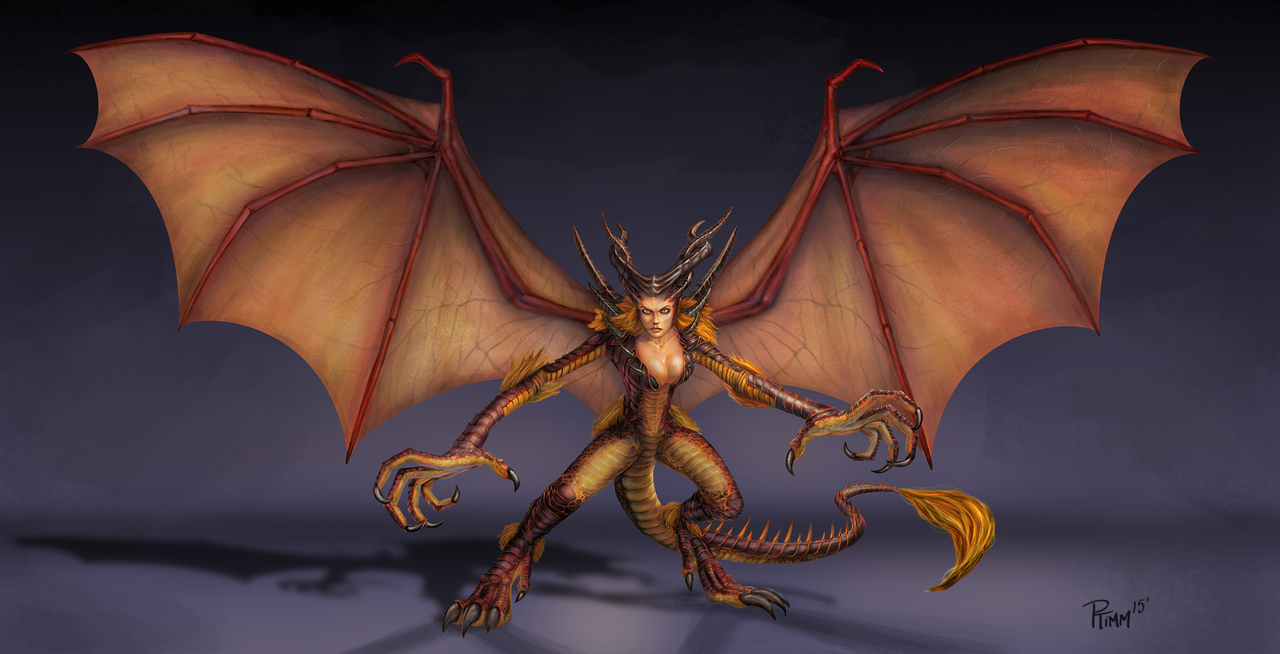
The Gold Fury is a worthwhile objective at most points throughout the game, and a good goal for any fight. (Picture credits Andy Timm)
Once you have your goal in mind you need to make sure you're fighting in the correct place, especially in the mid-game where respawn timers aren't too long. It's no use fighting on the Fire Giant side of the map when your current objective is the Gold Fury, or a tower on that side of the map. Also consider how confident you are in your ability to win the fight. If your team feels confident in their ability to win, you can press the fight on the enemy's side of the map, which is riskier but can lead to greater gains in map control.
Especially if you're the shot caller, fights can often be scary, but keeping a cool head and keeping the things above in mind will help you and your team find short and long term success!
Like our content? Support us by getting our merchandise in our shop