




Blogs
Ability and Relic Counterplay in Smite

Intro
The idea of counterplay is one that has its roots in strategy games like chess. At its core, counterplay is just taking an action that specifically addresses or defeats some action that your opponent has taken. This notion is much more prevalent in turn-based and strategy games, but it’s still an important concept to understand in Smite. Smite counterplay comes in many forms: Picks and Bans, objective pushing, and item builds are three common ones, but today we’ll be discussing the most basic level of them all - specific ability and relic counterplay. If you know how to stop your enemy’s tactics, you’re one step closer to winning the fight.
Relic Counterplay
One of the most obvious and built-in examples of counterplay in Smite is the relic system. Early on in your Smite career, you probably learned that specific relics can work wonders. Certain gods have elements of their kit that absolutely rely on successfully applied CC; Ares’s No Escape and Xing Tian’s Whirlwind of Rage and Steel are both designed to grab several enemy players and deliver them all to one specific location, where a Kraken or an Earthshaker is likely waiting. As most players know, the Purification Relic renders you temporarily immune to such effects, and can save you from almost certain death in these scenarios. This is one of the simplest examples of counterplay in Smite: you’re using a certain part of your kit to counter a specific part of an opposing god’s kit. Purification isn’t just useful for field-sweeping ultimates, of course. It’s also a viable counterplay option for lockdown CC like Frost Breath or Shadow Lock, as well as nullifying single-target assaults like Ragnarok and Gravity Surge.
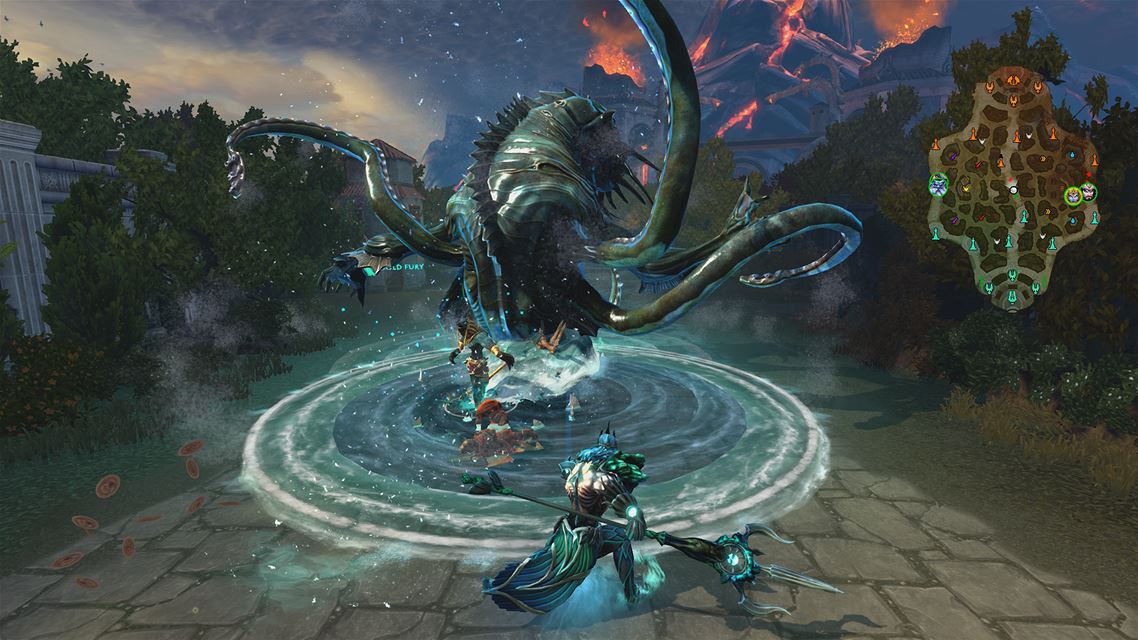
Purification isn’t the only relic with counterplay potential. Sanctuary is the second most popular relic for a good reason; it can block thousands of points of damage from high-impact attacks like World Weaver or Shards of Ice. Other, lesser used relics have useful counterplay options as well: Shell is a recommended pick against gods with persistent area-of-effect abilities, like Zhong Kui’s Recall Demons and Ah Puch’s Empty the Crypts. A timely activation of Shell can greatly reduce the damage by abilities like these. Almost every relic, with the exception of aggressive choices like Blink, has some major counterplay purpose. Phantom allows a team to escape an Odin ultimate, Curse can reduce the burst healing of a Circle of Protection or Nine Turns Blessing, and Sprint can reverse the slow effect of Curse if it’s deployed against your own team.
Ability Counterplay
Relics are all fairly obvious examples of counterplay. It’s hard to look at the description of Phantom and not immediately think of Odin. Less intuitive, however, are examples of ability-to-ability counterplay. The easiest of these to understand are, of course, the abilities that act like Relics. Ravana’s Overhead Kick and Chang’e’s Moonlit Waltz basically replicate the effects of Purification and Sanctuary, and should be used in the same kinds of situations. Many characters in the game are equipped with an ultimate that grants them CC immunity. Most times, these ultimates have better uses, but in some cases (such as the earlier mentioned Ares or Xing Tian ultimates) it’s worth burning your ultimate in exchange for your life.
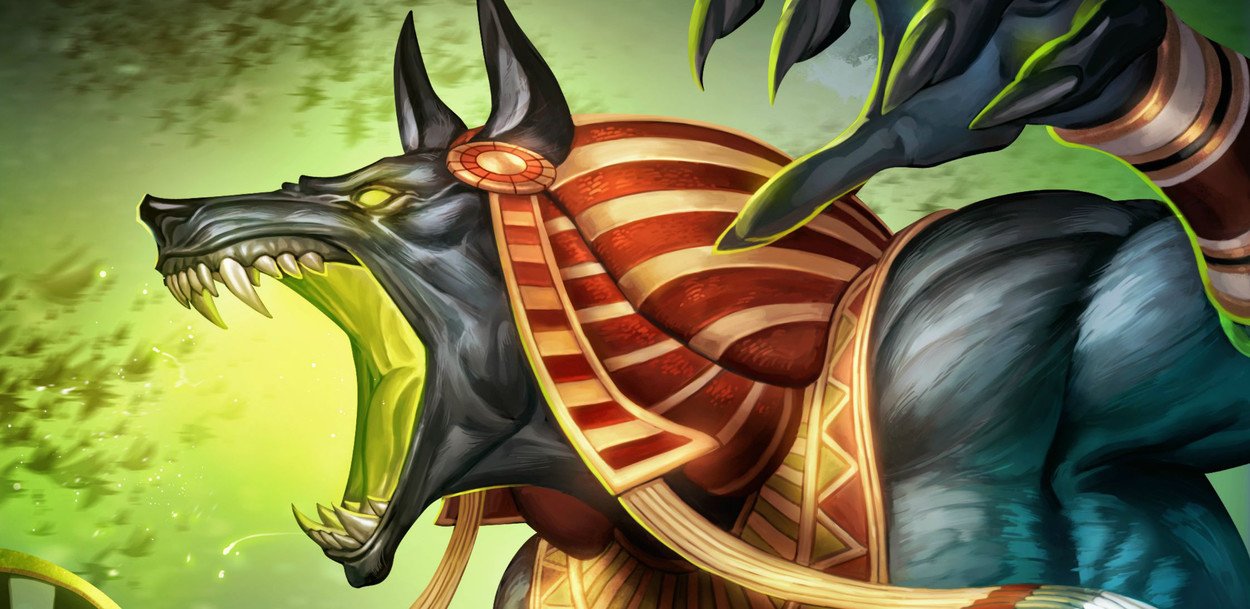
The majority of ability counterplay instances aren’t quite as intuitive. Often they’re more about knowing your opponent’s god rather than your own. Consider playing against Anubis, for example. Plague of Locusts, like most of Anubis’ abilities, can deal out absurd damage if allowed to run its full course. Unlike Anubis’s ultimate, however, Plague of Locusts doesn’t grant CC immunity, and thus can be interrupted by a timely stun or silence. The same is true of many other channeled abilities (abilities that take some time to resolve and prevent you from taking other action while they occur), like Isis’ Wing Gust and Cabrakan’s Tremors. This kind of counterplay comes at a cost, however. If you’re going to dedicate the CC in your kit to interrupting your opponent’s channeled abilities, you’re choosing not to use it as a tool to confirm your other abilities. If, as Ymir, you use Frost Breath to stop Plague of Locusts in the middle of a fight when your Glacial Strike is on cooldown, you’re giving up the guaranteed damage of the freeze into ice carpet. Conversely, if you start the fight with your 3 > 2 combo, you’re putting more damage onto your opponent, but risking a full Plague of Locusts channel.
Another common piece of ability-based counterplay relies on keeping track of you and your opponent’s mobility. Thor is an excellent example of mobility-based counterplay opportunities. A Thor player can opt to either teleport to the hammer thrown by Mjolnir’s Attunement, or let it boomerang back for extra damage. If he opts to use it for damage during a gank attempt or a teamfight, this mean that his only mobility (outside of his ultimate) is down for at least 10 seconds. This means that if you’re playing against Thor, and he uses the hammer for damage, you can feel free to unload your kit against him without the fear of him teleporting away. Conversely, if you engage on a Thor who hasn’t used his hammer yet, be wary of committing too many abilities against him, as if he gets low on health or doesn’t like the way the fight is going, he’ll just leave. This is true of almost any character with a dash, leap, or teleport. If they use their mobility to initiate or for damage, you can counter this by investing your character’s damage and almost be sure of a kill.
In addition to these general cases, there are also more specific examples, most of which you’ll have to discover for yourself over time. Ao Kuang’s stealth is disabled by damage, so damage-over-time effects like Zhong Kui’s card and Agni’s passive can effectively counter his escape or initiation potential. Awilix’s Gravity Surge can pull targets who are leaping, so this ability can be used to counter a jump from an opposing assassin. Fenrir’s Brutalize is an ability that is canceled by stealth, so Nu Wa can use her fog cloud to stop the channel and prevent the ability from completing. These are just a few examples of the many that exist in Smite, so make sure to watch for these kinds of interactions as you play.
In the end, despite the examples I’ve listed here, counterplay is more about a mindset than it is a specific action. If an opponent has something that they’re seeking to do, how can you stop it? If the enemy team has a Loki, what can you do with your abilities and relics to deal with him? The enemy team has a plan to win the game; what are you going to do about it?
Recap
Counterplay in Smite is taking an action that addresses or stops something done by your opponent. This commonly comes in the form of relic usage, which can be used to break CC, avoid damage, or escape difficult situations. Many god abilities have similar elements to relics, and can be used in the same fashion. Some kinds of abilities also counter each other: CC can interrupt channeled abilities, damage abilities are most effective when an opponent’s mobility is down, and there are plenty of other specific examples.
Get your own AKRacing Chair here and support our players, all profit goes towards the teams!