





Blogs
Overwatch: 4 Common Amateur Mistakes and How to Fix Them
While many Overwatch players have dedicated considerable efforts to improve and climb ranks, there are some mistakes that even adept players continue to make. This article will take a look at four common oversights among average Overwatch players and explain how to correct them.
1. ‘Trickling In’
When queuing for solo matches, communication between players can often be weak or lacking. As a result, situations may occur where the team repeatedly fails to group up, and players instead rush into the fray at different times, looking to contest the point alone. This results in players trickling in, being picked off individually before teammates can arrive, thereby wasting time before you can regroup or resulting in teammates having to fight without them. Trickling is particularly common on Control Point maps, where 5 or 6 opponents are holding the point and the losing team fails to coordinate and instead slowly engages as one-by-one.

While one or two players may be able to move ahead and fight while only a couple of threats are present, many situations will rise where teammates throw themselves onto the objective only to be outnumbered. While they may buy a few seconds of time by contesting the objective, in most situations this isn’t a worthwhile trade and will result in the enemy team holding the point for a longer period, or give opponents an opportunity to snowball their lead. It’s far better to wait for your allies to recuperate and move in once you’re together again.
Situations like these occur when communication and shotcalling is absent, and often begins once players have been staggered (killed at fairly different times, and thus respawning at spaced-out intervals). After all, it’s instinct for many solo-minded players to focus solely on the objective after respawning, even if it costs their own life.
The best way to prevent this from happening is to use voice communications to call for allies to fall back or group up. If no-one’s vocal, take charge and begin calling the shots to regroup, fight or retreat. It’s also extremely important that you pay close attention to the kill feed, which will help you gauge which enemies will still be present so you can decide whether or not you can contest a point without the entire team present.
2. Poorly Timed Ultimates
Overwatch matches are driven with ultimates, used to initiate, inflict significant damage, and survive during teamfights. The timing in which an ult is used can be game-changing and it’s common for players to use them far too late or when they’re not required.
Ultimates are most often misused in situations where a fight may as well be lost and wasted in an attempt to turn the fight around. While situationally this may work, a teamfight that has declined into a 3v6 is almost always a lost cause and ultimate abilities will unlikely be successful.
A common example is Lucio’s ultimate, which is frequently used ineffectively. Inexperienced Lucio players often use Sound Barrier too late into a teamfight as a response to the teamfight turning sour. Sound Barrier is best used to tank damage during the initial moments of a teamfight and won’t turn the fight in your favor if essential teammates are already dead. It’s better to cut your losses and recuperate, to die and respawn with your team again while minimizing resources wasted.
Ultimates are also frequently wasted by being used unnecessarily. They’re your most valuable resource, and should be used sparingly and meaningfully. Make the most of your primary means of damage and hold onto your Ultimate until the moment seems right. Unless it’s the final match-deciding teamfight, don’t be too quick to pull the trigger.
This is often the case with teammates following up on a Zarya’s Graviton Surge. While it’s true that Graviton Surge is designed to be chained with other damaging abilities, teammates shouldn’t be too excessive with their ultimates. Although the enemy team will fight back as you lay waste on them, defensive ults such as Zenyatta’s Transcendence should only be used if necessary and no more damage-based ults should be used than necessary.
One way to handle ultimate waste is to review your team composition, and evaluate which ults are available. With just a few words, you can communicate a rough strategy to your team, delegating which ultimates should be chained together and which should be held onto. If you’re created a substantial hero advantage, like a 6v3, you can notify your allies to hold onto their ultimates, since greatly outnumbering them should be enough to mop up the fight and kill stragglers without wasting them.
Furthermore, if you’ve got an ally that’s been forced into a role that they’re not comfortable with, advising them on when they should use their ultimate is one of the best ways to maximize their limited potential with the hero. This is especially the case for players unconfidently filling the Support role, so it’s often a good idea to give advice and call for Sound Barrier, Resurrects and Nanoboosts to be used.
It’s important to be conservative with Ultimate abilities since it’s entirely possible that a clean 6-0 team wipe can actually be disadvantageous if they’re all used. For example, if a team defending a point manages to land a 4-man Graviton Surge and wastes 5 or 6 ultimates on the attacking team, assuming that there’s still sufficient time remaining, the attackers will be able to push again after being wiped, knowing that the enemy team is far from acquiring their ultimates again.
3. Overlooking Advantages
It’s common for inexperienced players to miss ideal moments to initiate advantageous fights or to push onto an objective. Initiating a fight based on an advantage will have higher chances of a successful outcome. Reasons that players fail to capitalize on favourable opportunities include the lack of a shotcaller/leader within the team to take initiative and the inability to recognize an advantage.
Several notable advantages include:
- An opponent being picked off (eg. sniped, hooked)
- While high-impact enemy abilities on cooldown (Reinhardt’s Barrier Shield, Roadhog’s Hook, Mei’s Ice Wall)
- When the opposing team’s ultimates having been used recently
- Enemies are clustered closely together
- While you’ve got the high ground
- Enemy team is separated (trickling in, or after an unsuccessful flank attempt)
- Enemies pushing through a choke point (narrow, disadvantageous positions)
The main problem is that many teams fail to act upon these windows of opportunity before the moment is lost. Too often do teams with significant ultimate advantages fail to act and continue trading fire and wasting away time while enemies build ultimate charge. Furthermore, any lethal snipes that a Widowmaker or Hanzo make lose value if allies fail to respond to them.
To recognize your opponent’s vulnerabilities, make the effort to mentally note your opponent’s abilities once they’ve been used and proceed to play around them. Vocalize to your teammates when the Roadhog’s hook is down or a Torbjorn’s turret has been destroyed. Small statements like these can go a long way and will benefit your team as a whole. Pay close attention to the kill feed. You may also want to regularly tap ‘Tab’ to keep track of who’s alive and to check your allies’ ultimate status. If allies fail to initiate themselves, call for engages. Be direct, clear and vocal, and lead your team to engage upon kills, abilities and your opponent’s mistakes.
4. Undervaluing High Ground
It cannot be stressed enough: high ground gives a significant advantage. While being on even ground with your opponents is acceptable, establishing yourself atop an elevated position will give you a significant edge over your opponents. High ground gives you access to superior sightlines, while obstructing you from enemy damage.
When you’re at a higher point than your opponent, you’ll have a less obstructed overview of the battlefield and your opponent’s positioning and enemies will obviously have a harder time reaching you. Area-of-effect and arcing abilities like Junkrat’s grenades and Zarya’s particle bombs will struggle against elevation. Furthermore, utilizing a high platform can give you the elusive edge to flank the enemy team with a Tactical Visor or Death Blossom.
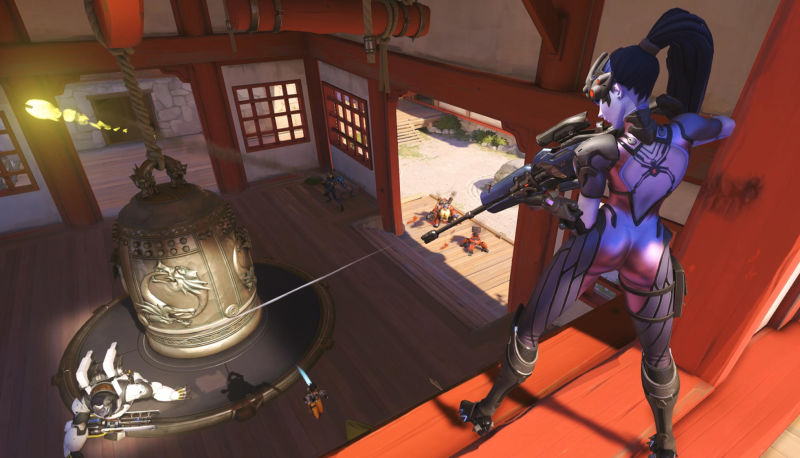
At an elevated position, you have superior control of sightlines with your opponent. By stepping back from the edge of high ground, you can break sightlines at your own discretion, enabling you to disengage whenever you want, while your opponent cannot. You can obscure yourself easily, while enemies on lower ground will have a harder time landing shots on you. Furthermore, splash-damage weaponry such as Pharah’s Rockets or Soldier: 76’s Helix Rockets are easily landed from above, inflicting area-of-effect damage more easily.
For these reasons, taking the high ground will go a long way. Many long-range DPS heroes such as Soldier: 76 and McCree play well from a high-ground position while on defense, setting themselves atop an elevated platform near the capture point and chipping away at targets safely from above. In situations like this, it’s typically best to maintain high ground until your position is intruded on by a flanker such as Genji or Winston, at which point you can descend and retreat within the confines of your allies.
While achieving a height advantage is beneficial, it’s important to remember that time is a resource. Many elevated positions take a while to reach, so you'll need to evaluate whether it’s worth the several seconds of combat downtime to reach the higher position. Whenever you have spare time between fighting, thoughtfully consider the best position you could take against your opponents and prepare for your next fight.
While some of this advice may seem obvious, these mistakes are regularly made by players at Platinum and below. Make a conscious effort to avoid these oversights in your competitive matches, and you’ll find yourself achieving greater success. Good luck!
Like our content? Support us by getting our merchandise in our shop