




Blogs
Trading in the Early Game: What, When, How and Why
Through this article we are going to look at how on every champion you can output the most damage on your opponent without endangering yourself too much. You can take into account a variety of factors to make sure that this goal is reached. The aim here is to touch upon these and define some examples so you can see how it works and what you are looking for exactly.
Early Level Difference
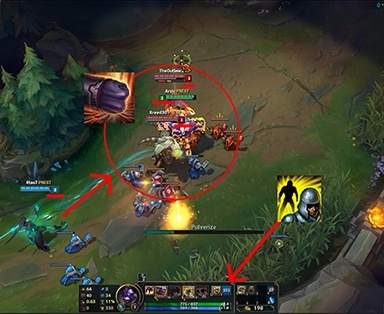
Acknowledging the levels of you and your opponent(s) can make or break a laning phase. With a level up, your champion gains multiple elements and can really affect how a trade plays out. An extra ability, base damage stats, offensive and defensive stats are all increased and need to be accounted for. When you see yourself level up and the enemy hasn't, harness that moment and go in for the trade, as you are favoured to win mostly any damage trade you attempt. There are a few instances across the map I want to look at here;
Bot lane level 2 power-spike: Killing the gromp/krugs or pushing the lane early can you get that to level 2 before your enemy duo. With champions like Alistar or Thresh, you can attempt to all-in on the enemy and concentrate on the one opponent of the bot lane. If done well, you can either kill them and get first blood gold for your duo or simply blow their summoners, making them vulnerable to future trades or ganks. The fight for the early level up is huge in the bot lane and you can see players go instantly aggressive as soon the leveling occurs.
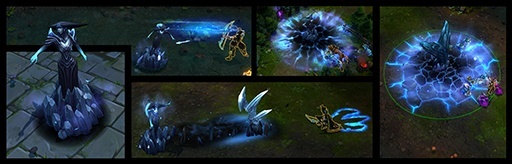
Solo Lane Levels: It's very much champion dependent, but having access to a second ability or third ability can change the tides of a fight pretty quickly. With Lissandra, for example, access to all of her abilities at level 3 increases her kill threat massively. A spammable slow in "Ice Shard", an AOE snare in "Ring of Frost" and a long gap closer with "Glacial Path" creates this danger. With the jungler's assistance, she can set up her allies easily with her multiple lock down tools and Glacial Path to get in close.
Minion Wave Manipulation
As we know, you and your opponent champion aren't the only ones sharing the lane. You have little men of 2 colours walking in single file and battling each other when they meet. Minions don't just give an increasing cs score and exp. They can give you valuable opportunities to trade damage onto unexpecting opponents as they think you're aiming for the cs. Using these mind games while focusing on the health bars of them alongside the positioning of your foe, you can punish them for standing in the lane and not focusing on your movements. Here a few of examples that utilise this method
LeBlanc. The mistress of AP assassination and can 100-0 you from the fog of war and you don't know what happened. LeBlanc's most favourable in the use of her dashes to close the gap and use her other spells in quick unison to shred health of her opponent. At level 3, LeBlanc can do this by using the minions to give her enemy a false sense of security. Leaving them low to use them as her dash distance, killing the creeps while opening a gap for her chains to latch on. When combined with the sigil, she can generally knock 2-4 health bars off you.
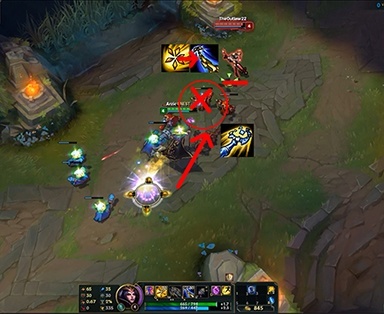
There are some champions who thrive off you standing behind your minion line as their damage amplifies through them. The Bilgewater Mistress and one of the strongest lane bullies, Miss Fortune fits this criteria. Her Q, "Double Up", bounces of the enemy she aims at and bounces towards the opponent behind them, dealing increased damage. The damage is amplified when the first part of it kills that enemy. Constantly keeping the minions at low health will keep your opponents on their toes and give Miss Fortune the opportunities to trade for a heavy advantage.
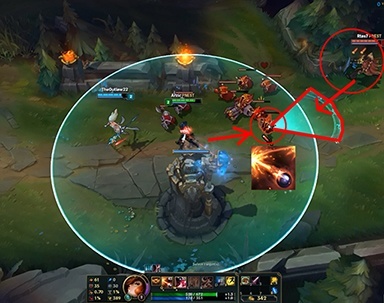
Animation Punishment
Whether it's a spell or auto attack, your champion will go through an animation to complete that action. By playing the game and learning the capabilities of every champion, you'll understand what the champions are doing when casting their spells or auto attacking. Using that knowledge, you can aim to punish these small opportunities you get to trade while they're vulnerable. Some champions have much smoother animations in their kit, so give you a smaller amount of time to take advantage. There a few though that shine in this area though.
The newest and highly unique marksman of the bot lane has one of the largest times of vulnerability in the game with his kit. Jhin while being incredibly strong in small trades and long range poke wars, gains a lot of weaknesses when reloading for his autos. Jhin only has 4 autos he can do in rotation of his auto damage. After that, he must reload his gun for a small period of time to deal that damage again. In this animation freeze, you can jump on the guy and potentially kill him as he will have hard time retaliating to the aggression.
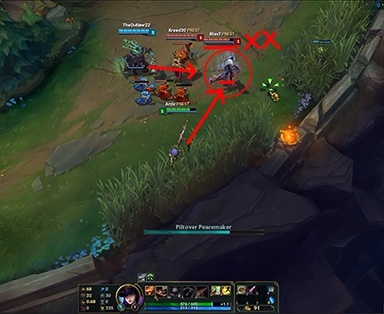
The assassin archetype in League also uses this mechanic well. As their aim is to kill their foes in the smallest time frame possible, punishing vulnerabilities such as animations separate the good players from the rest. Zed, Talon, LeBlanc and Kha'Zix are all examples of champions who do this well. Especially Talon, as his main goal (and only real way to affect a game) comes in his instantaneous burst. For example, say he was facing an enemy Viktor whose early game damage comes in the form of his E spell "Disintegration Ray". By adjusting his position and using the cooldown to his advantage, Talon can jump on the Viktor and trade damage onto him.
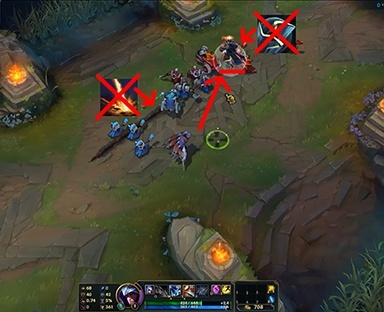
Cooldown of Summoner Spells
The next method is a way of thinking that most professional players undertake. Understanding the summoner spell cooldowns of the opposing team creates the chances for you and your team to dispose of a foe. Teleport, Ignite, Heal, Exhaust and of course Flash are all summoners which can be recorded. Acknowledging these summoners helps increase the success rate of a gank, a roam, or even just an 1v1/2v2 fight. Some champions become more exposed to the lack of summoners and we'll concentrate on some examples here.
The main trade of a summoner in the early parts of the game mainly helps your allied jungler have a higher impact as he can understand the success rate of his ganks in that lane. So you're playing Lee Sin, an aggressive, high damage early game jungler with high clear speed. Your allied bot lane consists of Lucian/Morgana. Due to a Dark Binding on the enemy ADC, Kog'Maw has just blown his flash to prevent death. Kog'Maw and his support have pushed in and have made themselves vulnerable to a Lee Sin flank. Knowing that Kog'Maw has no other mobility with flash gone, Lee Sin can jump in and create a lead for himself and the bot lane with the voidling's death.
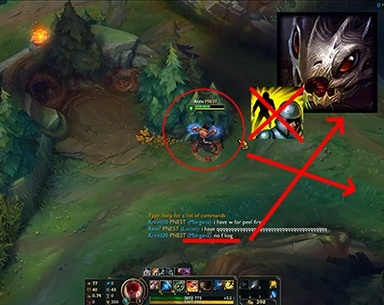
Flash is the main summoner that you want to record in your games as it helps you team understand every opportunity. This is dependent on meta but acknowledging the cooldown of teleport summoner can also give you an idea of when you can be on the offensive or need to stay back and be defensive. The bot lane has the most trouble with this, as a 2v2 can quickly become a full on 5v5 brawl and everyone just appears with teleports as it's common for mid lane to take it now as well. As one of the bot laners, by knowing that an enemy teleport is down you won't have the fear of someone else appearing. Understanding your allied teleports being available can make you feel more confident in walking up, as they can then join in if things go awry.
Video by League Highlights showing Huni's teleport play vs Invictus Gaming!
Allied Assistance
As a team orientated game, using the presence of your allies can help your mentality switch to aggression as you know there will be back-up if things go wrong. Depending on the champion, you can set up your allies for easy kills and assists. Using your wards to follow the movement of enemy champions also helps you understand where and who could possibly appear in your lane and return potentially fatal damage on to you for a losing trade.
A champion example which creates a lot of pressure with their kit is Thresh. The ability to solo out a target and keep them locked down in his grasp makes him a fearsome champion when partnered with allies. Through the laning phase with his W, "Dark Passage", he can bring an ally in from an unexpected distance and kill his opponents when they're least expecting it. When he's on the roam, he'll have a much better time setting up a kill then Janna. So as an ally, you need to abuse this and as enemy, you need to fear it. Using wards and pings can help you achieve this goal.
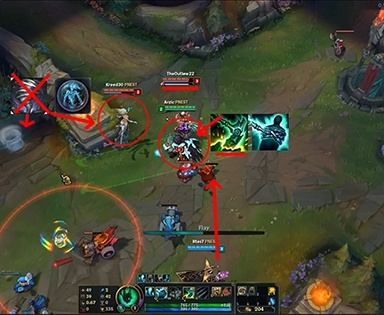
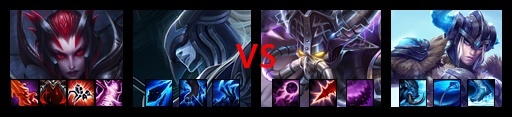
When considering the laning ally you’re attacking for or the champion who is ganking, understanding their capabilities is vital. So as the previous paragraph mentioned, Thresh will have a much better time setting up something then a Janna as his kit is stronger for that. Top lane and mid lane with their allied jungler need to focus on this. An Elise and Lissandra duo versing a Kassadin/Sejuani will most likely win due to their power spikes being so much earlier. Kassadin and Sejuani will bring nothing to the fight early, while Lissandra and Elise bring 3 elements of CC that they can easily use to focus down the enemies. In that instance, the Kassadin duo shouldn't aim for fights and instead should aim for ward coverage to keep the Kassadin alive while he farms to a point where that fight is in their favour.
Champion and Item Power Spikes
Every champion scales differently in League of Legends due to a combination of their abilities and statistical differences that ramp them through the game. Combining a champion with items helps them ramp up even further and continue to follow the role they've been put themselves into. Focusing on when you're strong early can make or break the laning phase. If you overestimate yourself or underestimate your enemy, you can fall into some trouble. Let’s focus on some match-ups when demonstrate this.
Karma defines early game and can out-damage nearly any opponent early, in either the support role or solo lane. Having access to her level 6 from the get go makes her spells a lot more powerful early. Face tanking a Mantra enhanced "Inner Flare" to make it "Soulflare" can chunk 3-4 bars off you easily at level 1. That one spell traded onto you can make or break the lane. As the Karma you should push the advantage and continuously barrage your opponent with spells to knock them out of lane. To have a higher success rate, she needs to be using her kit to define the lane and get herself and her allies ahead, which helps her transition into the later parts of the game when she changes into a utility mage.
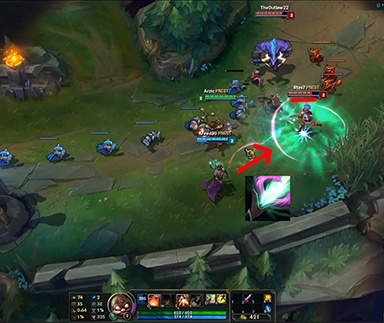
One of the most prominent champions to define the one item power spike comes with the ADC Mage, Corki. Trinity Force is a must buy on this champion, as his kit works with the item so well and gives him a ton of stats that help burst his opponents. With a constant flow of spells that you can weave your autos between, Corki has an easy time using the spell blade passive. Phage gives him the health to survive trades, while giving him speed to adjust his position appropriately. Zeal gives you the crit percentage and attack speed to help Corki mow through turrets and enemies. As the Corki player, getting this item in your inventory should shout for you to abuse that advantage. No other ADC at that point will ever out-damage Corki, so you need to put your stamp on the lane and the game.
Video by Kaim417 which focuses on the damage trinity force gives Corki in the mid game
Conclusion
I hope that these tips listed help you understand the details that needed to be accounted for when looking to damage your opponent(s) in the laning phase. Factoring in these components when seeing opportunities will push your success rate up in solo queue. Good luck and see you on the Rift.
Get your own AKRacing Chair here and support our players, all profit goes towards the teams!