





Blogs
The ABCs Of Invading

Sometimes games can take over 45 minutes until there is a clear idea of who is pulling ahead and will eventually win the game. As long and frustrating as some of these games can be, the opposite can also happen. Although it occurs less frequently, when invades in the earliest stages of the game are execute properly, they can decide the whole game or at least make the enemy start with a huge deficit.
Regardless if you’re on the side that is getting invaded or are invading yourself, knowing how to act properly in such a scenario is something every League of Legends player should know, even with the reduced minion spawn timer.
Invading: Aggressor
When you’re on the side of the aggressors, the most important things that you have to consider are the position of the wards that have already been placed, the amount of crowd control that both teams are able to use in a level one fight, and last, but not least, the specific composition of every team and their ability dish out as much damage as possible.
The first element is pretty important in the aftermath of the invade, whenever neither side has suffered casualties. In the event of a simple “move through their jungle”, there is always the extra edge you gained by (mostly) knowing what path their jungler is going to take (since there are only two generally accepted paths), as well as putting down some vision. The latter can later-on be a signal to potentially go for a kill, if your jungler had a pretty fast first clear, or simply make the buff reset by letting your support, or even your entire duolane, roam up to the buff and pressure the opposing jungler. This is a favoured strategy against a jungler with a pretty low clear timer or one that falls pretty low in health when doing their initial clear (e.g. Zac and Diana).
Secondly, and the most vital one to take into consideration when the likelihood of bumping heads with the opposing team is high, is the amount of crowd control your team has to offer. Besides the obvious side of this element - a Blitzcrank or an Alistar into a Soraka - the combined control can be significantly higher with power picks on level 1. Most notably in this category are champions with a single target lockdown stun such as Twisted Fate, Pantheon and Nautilus, or champions capable of rooting several adversaries with Shen and Zyra leading the charge.

Image courtesy of Ewa Labak
Finally with the third element, we have the specific composition each team decided to use on the field of battle. In every invade prior to the two minute mark, it seems logical players can only rely on one skill to dish out damage or keep their teammates alive. Besides the above mentioned champions and their inherently level one skill selection, the pivotal point in these early scrimmages is going to be the moment players use their area of effect damage Caitlyn’s Piltover Peacemaker or Graves’ End of the Line) or high (as much as you can call it high) single target damage.
Although the perfect combination for a team that is invading will be a little bit of everything of the aforementioned, several aspects of it without any clear edge can also lead to a successful invade. Communication and spot on shotcalling can win out on an insane level one crowd control team, but everything giving you an advantage and making you less reliant on communication - or making the communication easier - is undoubtedly something most invading teams should strive for.
Fending off an invade
When you find yourself on the flipside of the situation, fending off an unexpected invade will be vital to not start the game with a deficit. Even when the invade results in one casualty but several Summoner Spells burned, that extra 400 gold could mean the difference between an even skill matchup or a one sided snowball, as a lot of starter items are capped at 400 gold or less.
Any avid LCS fan will most definitely know the spots your team has to stand in order to spot any kind of invade or be able to track the opposing team. The spots as shown in the picture beneath can be either players standing on those spots or wards placed, although when deciding to use wards, the yellow dots show slightly different, but better, spots when using them to ensure your vision.
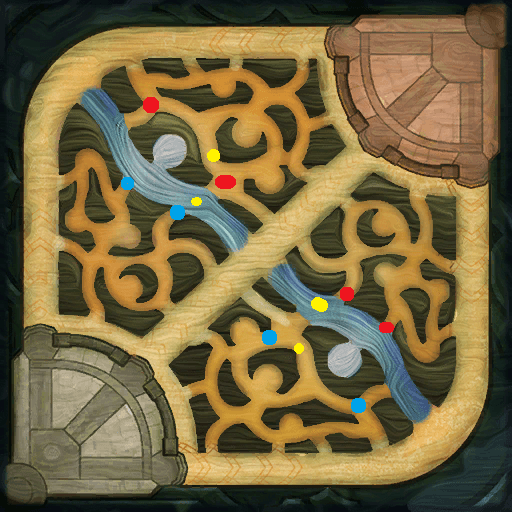
Whenever these spots have proven to live up to expectations and someone of your team is able to spot the movement of the opposing team, putting down some wards can be useful so that you can eventually reclaim your territory or move to another quadrant of the map in order to give your jungler an equally successful start. This can be done by either rotating to the other quadrant of the allied jungle, or invading the opposing buff, as invading will most likely take all their players into enemy territory and should leave theirs relatively undefended. Another way to counter this is by trying to reclaim what’s yours by making sure some of their members have backed off (to go to their own lanes being the most common reason) and then try to shoo them away, eventually leaving them with a larger setback than if they would have decided to stay on their side of the river.
As a final note: When the invade takes well over two minutes and the minions have already been fighting for quite a while, a lot will depend on which wave is pushing (and thus RNG), in order to decide to continue the invade or not. When the wave is pushing towards the opposing turret, the only choice is to prolong the invade, as not doing so will result in a setback for the duolane due to them being forced to overextend.
Thank you for reading and best of luck on Summoner’s Rift.
Are you into fantasy leagues? Then check out AlphaDraft and put together your allstar lineup!