




Blogs
Master the Enemy: Reading the Opposing Jungler
The Jungler is the most influential role on a team, applying pressure to the map via global presence. Hence, keeping track of the opposing Jungler will enable you to alleviate their pressure from your lanes. Through thoughtful ward placement, champion knowledge and deductive reasoning, you’ll be able to better anticipate your opponent’s behaviour.
Vision Coverage
Wards throughout the enemy jungle and river are the best way to track the opposing Jungler. If you’re looking to trace them as a Jungler yourself, the Tracking Knife machete upgrade is the best option.
 (Click for full size)
Wards positioned at junctions between jungle camps, as pictured above, are ideal for spotting the enemy Junglers’ location and movements. Additionally, checking if jungle camps have been taken will reveal if the camp has been taken recently. This can serve as a ‘breadcrumb trail’ of a Jungler’s actions, helping you conceptualize your opponents’ stratagem.
A specific tactic that can be done early-game involves counting the opposing Jungler’s Creep Score (CS). With simple math, their clearing route can be discerned. For example, you may catch vision of the enemy Jungler at their Red Buff, and the scoreboard shows that they have 11 CS.

This indicates that they’ve gone for a full clear, i.e. Gromp, Blue Buff, Wolves, and Raptors (1 + 3 + 3 + 4 = 11). Simple sums like this can help you read and anticipate the enemy Jungler’s intentions, although they become invalid after the first few minutes of the game as their CS will grow larger and other factors (ward/minion kills) will invalidate this technique. Additionally, be sure to check your opponents’ Smite bonuses (Razor Sharp, Gift of Heavy Hands, etc.) and their remaining durations to evaluate when and where they have used Smite.
Champion Knowledge
A fundamental element of predicting the opposing Junglers’ behaviour is understanding their champions’ functionality. Certain champions are farm-oriented, while others are best at ganking. Knowing factors such as the speed of their jungle clears, or whether they have a passive or aggressive playstyle, are crucial to predicting an opponent’s farm routes and likelihood to gank.
There are a range of facets that compose a champions’ jungle playstyle. When evaluating a Jungler, questions to ask yourself include:
- Are they farm or gank-oriented?
- How fast are their clears?
- Where are they likely to begin their clear?
- How much sustain do they have?
- Are they mana-dependent?
- How strong are their ganks?
- Do they have crowd-control?
- Do they require their ultimate to gank?
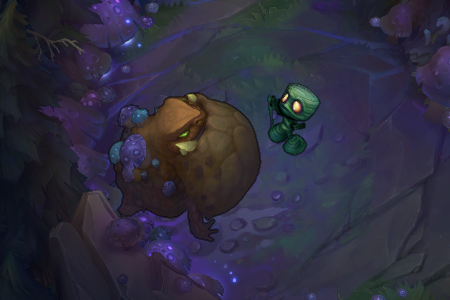
For example, you could break down Amumu. Amumu is an AP Jungler with decent clear speeds who will likely clear Gromp first, followed by Blue Buff due to his mana dependency. He’s extremely frail on his first clears, and will run low on HP without health potions and/or basic items. He’s a utility-based tank Jungler who will be looking for gank opportunities after Level 3 with Bandage Toss (Q).
This may seem like a lot to process for some, but this information will come naturally with experience. Spectating and playing alongside/against a champion will further your knowledge of their playstyle, but actually playing the champion will improve your understanding best. First-hand experience will help you gauge their capabilities, power spikes and shortcomings.
Global Awareness
Checking on the state of lanes and the enemy laners’ actions can help you anticipate a Jungler’s ganks and behaviour.
From around 1:45-1:55, you should check how long the enemy top/bottom laners take to move down their lanes. This will indicate if they leashed, hence revealing which side the Jungler began their clear. If you didn’t catch a delay, you should also check the laners’ health and mana to reveal whether or not they leashed with an ability or tanked the camp. Brief checks like this will help you begin plotting out the opposing Junglers’ first clear route.
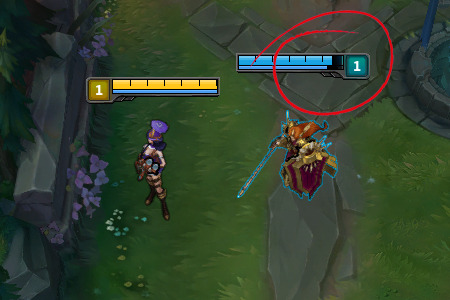 This is a dead giveaway!
Studying laner behaviour throughout the game can reveal if they’re intending to set up a gank. For example, if the enemy Leona suddenly opts to use Sweeping Lens on a river brush, they are likely preparing the Jungler to move in for a gank. Perhaps the enemy Ahri begins moving towards their blue buff at around 7:30, this suggests that the Jungler’s probably leashing it for them.
Maintaining map awareness and checking enemy motions such as these are clear giveaways of the enemy Jungler’s location. Notifying your teammates through pings and communication will enable your laners to adjust their playstyles accordingly.
Gank Potential
The likelihood that a Jungler will gank any given lane can be evaluated by assessing several factors, including the condition of both allied and enemy champions, the lane matchup and how pushed the lane is.
Consider a bottom-lane matchup of Lucian and Thresh vs. Kog’Maw and Soraka. Unless Lucian and Thresh are particularly vulnerable (heavily overextended, very low on HP/Mana etc.), it’s unlikely that a Jungler will attempt a gank against them since Soraka and Kog’Maw lack any Crowd-Control or decent gank facilitation. On the other hand, Lucian and Thresh are dominant laners with playmaking potential, and can accommodate ganks against their immobile lane opponents.
A Jungler will be looking to gank lanes where:
- Opponents are vulnerable (immobile or lacking HP)
- Minion waves are in an accommodating state (e.g. wave pushed in for a gank, pushed out to enemy tower for a dive, etc.)
- Allied laners can lock-down opponents/set up for Jungler
Being able to discern which lanes are most susceptible to ganks will come with experience. Lane matchups will define how a Jungler can approach a lane, and in time you’ll identify synergies between different champions.
This article is just a starting point for reading opponents. Through clever interpretation of information, you can draw conclusions regarding the opposing Jungler in a variety of contexts. Be sure to utilize the thought processes discussed in this piece, and you’ll soon find yourself able to read the enemy like a book. Good luck on the Rift!
Are you into fantasy leagues? Then check out AlphaDraft and put together your allstar lineup!