





Blogs
Are strong unconventional supports being bottle-necked?


Background of the support
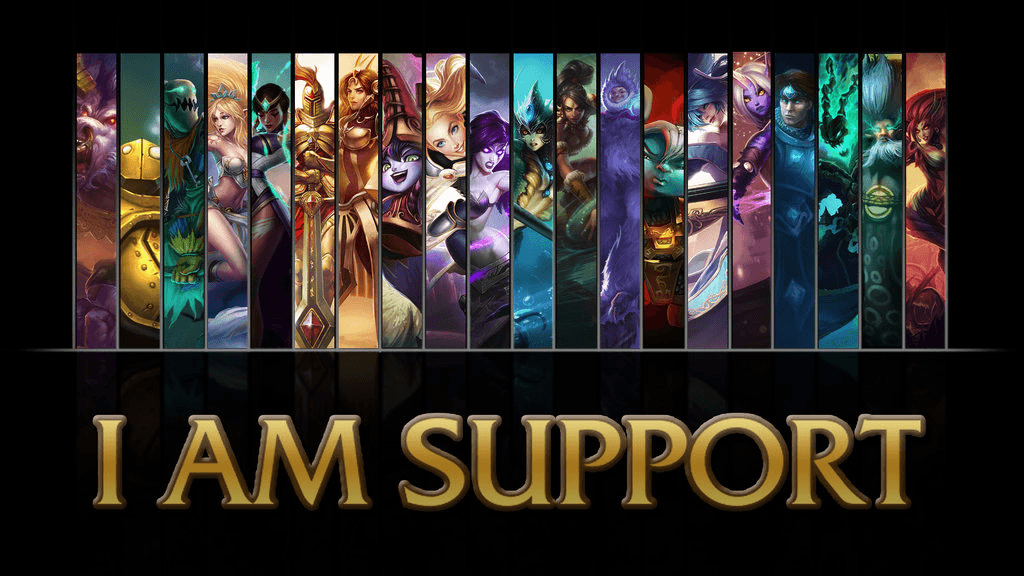
Support champions have classically been identified as champions with utility who can maintain an effective presence in the game with little to no gold. Riot's changes to the support role and the support roster (whether intentional or not) have changed which supports are prioritized. While Janna has made a resurgence nearly every season, other supports have come in gone with the changes of the League of Legends seasons. From season one we saw many classic supports such as Janna and Soraka. Today we see a wide variety of champions who have been played in the support role competitively or at a high level.
The expanding roster of supports poses a question of whether Riot has done a good job with empowering the support role or a less effective job at balance.
The Problem in Question
In League of Legends, when something is too powerful it tends to be overused or abused in more than one role. Some infamous examples of this are The Black Cleaver and Blade of the Ruined King. The Black Cleaver provided health and armor penetration, two stats which bruisers could utilize to great effect in addition to the armor penetration being able to stack, attack damage casters and bruisers wreaked havoc on summoners rift until it was eventually made to have a unique passive. Blade of the Ruined King also saw the same pattern across bruisers and marksman as the item's active was incredibly strong until its active heal was able to be reduced by the target's armor.
Other items such as Morellonomicon and Dark Fire Grasp have also been nerfed, or removed in the case of DFG, due to the item prevalence among mages. Morellonomicon was praised for its cost effective stats and would sometimes be purchased twice where Dark Fire Grasp displayed a gameplay issue which made enabled assassins to kill with extreme prejudice to anyone squishy while providing their enemies with little counterplay on top of enabling burst champions burst even harder.
With this concept in mind, we look to the support picks that have made a splash that were not considered to be weak champions when they appeared as a support pick.
Lee Sin: While Lee Sin did not see much play as a support pick, he was seen in professional play at the hands of Mata. A game which LoL Esports covers, giving praise to Mata's play. While there is a small pool of professional games to ascertain the strength of Lee Sin as a support, Mata demonstrated that the strengths of Lee Sin were at such a height that it could be played in the support role.
LeBlanc: Another unconventional support pick which is covered by LoL Esports, Leblanc was played by none other than the support player of the season three world champions, PoohManDu. While it would later be uncovered that LeBlanc was sleeper OP further down the line LeBlanc was considered a powerful but uncommon pick.
Elise: Elise was also picked my PoohManDu (which you can view in the article linked with Leblanc) but also saw play in the NALCS by former support player for GGU/Coast; DayDreamin in which he grabbed an unofficial quadra kill on his first day. The casters of the NALCS game mentioned Elise's high base damages which allowed her to be effective in providing CC and relevant damage as the game persisted.
Kennen: A more recent appearance in the LCK by SKT Wolf. First brought into the competitive scene by GMB Edward. In both seasons Kennen was already considered a strong pick and found his way into games once again as a support with his strong team fight presence.
“Weaker” champions in the support role
These champions are some that were played as a support who were not originally assessed as strong picks in their other roles or displayed a low pick rate by professional players in said roles.
Fiddlesticks: Elements, formerly of Team Curse, introduced Fiddlesticks into the role of a support in the NALCS and would later be picked by world champion PoohManDu. Fiddlesticks was able to fill this role with his notorious fear (which many will confirm lasts for over a year) and his high base damage and ratios on his Drain and Crow Storm. Before this, Fiddlesticks was considered by many to be a jungler and one that had not seen very much competitive play.
Zyra: Leaguepedia also gives credit to Elementz for bringing support Zyra into popularity, another pick in which PoohManDu would bring to his team. (I'm beginning to see a pattern here!) Zyra was able to fulfill this role with her range advantage and kit which provided slows, knock-ups, and snares. Zyra was a late bloomer in the League of Legends as she displayed traits of being a mid-laner but lacked what professional players were looking for in the mid lane.
Zilean: The earliest evidence I could find that pro players were beginning to consider Zilean as a support pick was by Lemonation in January of 2014. Zilean had been played in the mid lane before but made his way into the Spring Split 2014 as a support. Using his Time Bombs, he provided long range poke as well as a Guardian Angel to whoever died with his ultimate.
Morgana: 2014 Spring Split also saw the appearance of Morgana in the bottom lane. Her time in the mid lane had passed as the meta continually shifted out of her comfort zone. With her Dark Binding lasting as long as a Fear from Fiddlesticks, coupled with her Black Shield, and powerful ultimate she saw a surge of play as this info-graphic provided by onGamers shows. Morgana is now valued so much so that she is even played as a top laner.
Annie: Annie was by no means a weak champion when she was picked into the support role most notably by Tabe when he was in Royal Club in 2013, popularizing the Annie pick. Annie had received no changes for an entire season, her last change in a Season one patch until a Season three patch. One of the traits Season three is most notably known for introducing the assassin meta, one which Annie did not fit very well into. What made her effective as support was her offensive ability and long range, able to harass enemies laners without retaliation and when her enemies did react, Annie responded with high magic damage capable of stunning multiple targets. Even after several nerfs to Annie’s damage she is still picked in competitive games today.
Veigar: Another support introduced into the competitive scene by LemonNation, he describes Veigar as a stun bot who’s sole purpose is to use his Event Horizon (E) to catch enemies for his team to follow up on. Veigar made a short appearance in the professional scene as a support as his Event Horizon was nerfed shortly after. Riot’s comments about the nerf on on patch 5.4 suggested that the two were not related.
Beyond a Support
Here are some champions who were originally intended as supports who made their way out of the bottom lane and into other lanes.
Soraka: C9 Hai was a prime example of Soraka in the mid lane. With her self heal, spammable push which decreased in cooldown when striking an enemy, and silence she made waves when she splashed onto the professional scene.
Janna: AP Janna can be traced back as far as 2012. During this time Janna was already considered to be a strong support pick, some even banning it in prior matches. Janna was so strong that she made her entrance into the mid lane, being able to provide her signature shield which provides AD, persistent slows onto the enemy team, a line knock-up, and an AOE heal able to push enemies back she made a strong pick in the mid lane.
Lulu: Perhaps the most recent addition to supports who have flown the coop, Lulu went from supporting the carry to the support that carries some time in Season four, her nerfs came in patch 4.5. As the patch notes stated, it was the addition benefits of building AP on Lulu that made her an attractive support pick and even after several nerfs she is still scene in competitive play, showing just how valued of a pick she is.
Why the list?
Some readers may be wondering what the purpose of this list was. Many players have been around to see supports transform from the selfless ward hoarders of Seasons one and two, to the marksman soloing badasses they have become today. That all came when Season three gave supports a more defining role, giving them increased increased utility with an AP scaling. Riot also states the context of these changes in the patch notes:
We're making changes to the way abilities scale on champions designed for the support role. Our goal is to emphasize utility and protection over damage output and, with more gold flowing to supports, we had to tweak numbers to ensure certain champions didn't become too oppressively powerful.
Season three’s changes to these champions were intended to make them do more damage but at the same time emphasize utility over damage. With a higher gold income than supports received in the past, the qualifications for the role of support were broadened. The question remains if this for the benefit of champions or if it harmed their place in the game instead.
For better or worse
Riot has shown a history of nerfing champions traditionally played in the mid lane when they become a powerful and popular pick in the support role. These supports have stats originally intended for the mid lane, making them output more damage and being effective in ways differing from tradition supports. Annie and Morgana are two examples of such champions. (While Zyra first appeared as a potential mid laner, she did not make much of an appearance in the professional scene until she was played as a support and will therefore be excluded.) Both Annie and Morgana had made appearances in the mid lane in competitive play, while Annie boasts a more blatantly aggressive kit, Morgana’s black shield provided utility that may be desired in the bottom lane. Both Annie and Morgana received nerfs in Season four.
Both champions had their flat damage brought down and both were in the context that it was to decrease the strength of these champions as supports.
In patch 4.4: "We like Annie's versatility, but some of her base damage is too high for how she's currently being used. Our goal is to introduce more interesting choices in Annie's kit (particularly on that Disintegrate buff) as we looked for ways to buff her late game scaling when she builds more traditional AP items."
In Patch 4.14: "Regardless of how she's played (as a mage or a support), Morgana brings a lot of utility and damage to the table, so we're looking to reduce some of her overall effectiveness. While we don't usually talk about specific changes in the context, reducing the base value on Black Shield means support Morgana will have to choose between the defense it provides and the offensive power she gets from leveling Dark Binding, while mage Morgana will be less affected with her AP ratios compensating at rank 1."
While Annie remains a consistent pick in competitive play some of the changes intended to bring down her strengths as support have also brought down her strengths in the mid lane. Riot’s compensation for the nerfs to the base damages are typically compensated by increasing the AP ratios of the champions. As Riot has stated they intend these changes to buff late game scaling when champions build traditional AP items. This may seem like an appropriate compensation at first but in truth it narrows a champions strengths.
While Annie may have had high base damage by today’s standards they have been brought down and now Annie does better when she builds more AP. The issue with increased scaling is that it is only good when you have the currency to buy the scaling. While Annie’s damage has not changed very much when we consider the she needs about 250-300 AP to make up for the damage she’s lost in the nerfs to her base damages during the later level of her abilities. Annie’s strength has narrowed as she is more effect with AP once she’s purchased around 350AP or more.
However if Annie does not do well she no longer has her base damages to fall back on, meaning when Annie loses lane, she loses harder. This may force Annie players to play more or less aggressively as the changes have made the highs higher and the lows lower. In some ways this makes Annie a weaker pick in the mid lane and essentially bottle-necks her to being primarily played as a support, implying that if she were not such a great support, she may not have gotten those nerfs in the first place.
Conclusion
Riot’s changes to the support role has empowered many supports and also brought new champions into the role. While this diversifies the role, powerful champions are able to be additionally utilized as supports as well as champions more commonly played in other roles who have a history of being nerfed to more appropriately fit the the support role , the most common way is by bringing their base damage down.
Through reducing a champion’s base damages and increasing the scaling the champion becomes more reliant on gold to purchase AP. This can result in the champion performing worse when they fall behind and are unable to purchase enough items to bring their damage up in comparison prior to the nerfs.
While increasing scaling ratios on abilities seems like a change that minimally impacts Annie’s role in the mid lane, it makes her considerably weaker when she falls behind. This brings into question if Riot will treat other champions the same way if they have too much success in the bottom lane. Recently Nautilus has made an appearance in both the LCK and NALCS and while he has not shown to be as dominant when Annie and Morgana were first played as supports in the professional scene, it is of concern whether or not he will be the target of nerfs in the future. This also brings to light what Riot will do as the support qualifications broaden. As more and more champions from other roles become competitive choices as supports, how will Riot balance those champions? And will they be able to remain competitively viable outside of the support role if they are nerfed? How will Riot avoid bottle-necking champions in their "primary" roles? I do not have the answers to these questions but I believe these are balance concerns Riot already has under their eye.
Cover image from nibblesmekibbles.