






Blogs
A Comparison of the Conditional Champions

In this article, I'll be referring to a question and providing examples of the question's possible answers. As the League of Legends champion roster continues to grow, there is more imagination and thought that's needed into champion design. Riot are having to improve their game to stay relevant as numerous companies join the MOBA race.
With more and more champion releases, the amount of new ideas Riot can use decreases. There is an argument to say that there is no barrier to the amount of possible characters that could be released, but there are barriers that Riot have to work around when developing a champion i.e. champion cloning and limitations of software. Riot have shown that they can work around these restrictions and continue to develop increasingly interesting champions.
Lately, a trend has been occurring through the recent champions which defines the evolution of Riot's champion. I'm talking about "conditioned" abilities. This is where an ability is not usable until a set condition has been fulfilled. The mechanic has been there for a while but on a more basic level - an enemy needs to be nearby, an ally needs to be on the map, your champion needs to have died, etc. These are all examples of pre-existing conditions on multiple champions. Riot have expanded on this a lot more lately with the recently released additions to the roster and have made some mechanically unique champions.
The question is "Whether these evolved champions are better than the pre-existing ones?" Are these champions viable for competitive play? Are they strong for Solo-Q play? Are they stronger in competitive than solo-Q and vice versa? How does that specific ability change the champion's playstyle? How do they interact with other champions? I'll be trying to answer these questions by discussing the basic conditions set on older champions and how champions like Gnar and Azir have evolved this further.
Enemy Needed

One of the basic conditions for some champions is that there needs to be an enemy in the vicinity. Katarina needs at least one champion in her area to use "Death Lotus". Caitlyn can't use "Ace in the Hole" if there isn't an enemy champion within range. Champions such as these can't use an ability until at least one enemy champion is in the game. Unlike champions such as Gragas and Teemo who without a champion on the enemy team, can still use all their abilities.
A variety of these champions are some of the strongest in the roster right now. Syndra is classed as a top tier mage in the Mid lane and is a highly contested pick for players. Her ultimate "Unleashed Power" can only be used to pile on the damage to a single champion. Zed, one of the strongest, if not the strongest, assassin in the game can only use his Death Mark on a champion. It's not usable on an enemy minion or jungle creep, just an enemy champion.
There's also instances where this condition has actually hindered the champion in a way. Fiora has one of the strongest snowball kits in the game but her ultimate doesn't work with the design she has. Coming across as strong duellist, Fiora's ultimate, "Blade Waltz" which makes her invulnerable doesn't match that theme well. Dancing around in the air doesnt shout to me "Duellist". She's also considered a weak champion overall as she doesnt provide any form of crowd control and is easy to work around as she becomes practically useless if not ahead.
As a rule, I think it's very much champion dependant in judging if the condition "an enemy is needed" is useful. Strong champions like Syndra, Zed and Caitlyn are stable champions in the roster right now, viable in both competitive and live servers due to the innate strengths built into their kit. In some ways, the enemy constricted ability defines their success. This is likewise with Zed as his ultimate "Death Mark" is core to him in 1v1 duelling, being able to outplay his opponents and create the pressure he does on lanes.
In contrast, champions such as Urgot and Fiora have their kits weakened through their enemy dependant abilities. Thematically, Fiora's doesnt make much sense as a duellist and Urgot puts himself into danger when using his "Hyper-Kinetic Position Reverser". As a somewhat hybrid ADC, you question whether you want to be in the middle of the enemy team. To summarise, the success of champions with this conditioned ability relies on the champion. Some of the champion's kits work around that idea efficiently while in contrast some of the champions are hindered by the ability in question either thematically or mechanically.
Allied Champions Needed
There isn't many champions that come under this category but I think it's still worth mentioning. When I'm talking about "An ally is needed", I mean the ability is unusable unless on an allied champion - so Sona doesnt count as she can still use her aura abilities on herself, she doesnt need an ally in the vicinity to do so. Lee Sin's W "Safeguard" doesnt count as he can activate the shield for himself and use it on neutral monsters and allied minions. The champions I will be referring to literally can't use the ability. So if you had no allied champions in the game, the ability would be unusable.
The only champions I consider to fulfil this role (if I'm wrong, please correct me) are Soraka, Shen and the newest ADC to hit the rift, Kalista. Shen's ultimate "Stand United" works by teleporting him to an allied champion, bringing his presence and shielding the allied target he selected. Soraka's W, "Astral Infusion" also needs an ally as she is restricted now to only healing other champions on her team. Kalista hasn't got access to her ultimate without an ally in the game with her. I'll talk about Kalista further into the article.
These abilities on both Soraka and Shen define their playstyle as a champion and are core to their functionality. Soraka's "Astral Infusion" is central to her trading potential in lane and the impact she has in the later game fights. She can still heal herself with the W as the passive grants her healing when she hits "Starcall" on an enemy champion. That being true, Soraka wouldn't be the champion she is without her oppressive healing on her allies. The same goes to say with Shen. His kit works around him being in his individual lane then using his "Stand United" to turn around fights in other parts of the map. Potentially saving an ally from fatal and bringing another man to a fight. So even though these abilities have a rule where an ally needs to be in the game, these abilities are deciding factors in the reasoning for why players choose these champions.
Needs Fatal
It's a weird rule to be set for some of the LOL roster but it does exist on a few of them. Mainly built into their passives, these champions need to have no health in their bars for this ability to be occur. There's a few champions with this state in their kits and how the player interacts with it differs between the champions involved. Examples I thought of were (again, please correct me if there is more); Aatrox, Anivia, Karthus, Kog'Maw, Sion, Zac and Zyra. From these champions, I have categorized 3 different types.
Firstly, there's the Revive Champions whose passive works around giving them a second life as long as they survive for a certain length of time in a particular state. Anivia and Zac when they've hit fatal and their passive is off cooldown, become a non-interactive form that needs to survive for a length of time. After the duration has been fulfilled and if they have survived, the champions revive back to health and can interact on the Rift once again. While it isn't a defining point of their kits, it defnitely helps them survive. It prevents actions such as tower diving as the dive becomes incredibly risky for the enemy to pull off without losing members of their own. The same applies to Aatrox but he doesnt have a state which he needs to enter to revive. The amount of health returned to him though is dependent on how much blood he has stored in his well, the second part of his passive.
Next is the damage dealing after fatality champions. Kog'Maw and Zyra change their model and have the ability to deal damage even after they've died. Both of these champions deal a set amount of true damage which players can direct/manoeuvre. This can be really good for when you've just missed out on a kill, acting as a way of getting the kill back and making the trade reasonable again. It also clears minions pretty effectively which could get you that little bit of gold you needed or help in defence of a turret. Personally, I think this particular category is weaker than the rest as champions with mobility can avoid it easily or flash away.
Finally, the "Zombie" state in which Sion and Karthus enter after dying. Karthus and Sion can both continue their damage after dying. Karthus enters a non-movable state in which he can cast all of his abilities with no mana cost for 7 seconds. Giving him a safe time frame to use "Requiem" without being interrupted and for free. Don't fight over a Karthus after he's died either, "Defile" is automatically turned on so you can take a considerable amount of damage doing so. Sion becomes a relentless juggernaut. Gaining immense amounts of attack speed, life steal and movement speed to help him clear up any kills he's missed out on, farm up for any gold he needs and take potential objectives. The major weakness in this passive is the fact he can be crowd controlled during this period of time. For both of these champions, they're strong elements to their kit which just need to be utilised correctly by the player.
These specific abilities work to give players a second chance on the Rift. Either in a second life or an afterlife period where they can still deal damage. Now worked correctly, they can accomplish that goal but need to be utilised efficiently. Remembering to not use your ultimate as Karthus unless in the "Death Defied" state. Using the Anivia egg and Zac's cells in a safe area if possible as there's a higher chance for you to live again. Remembering that you have an active passive as Kog'Maw and Zyra as it could mean the difference between you getting as kill/assist or not. To conclude, when used correctly, these passives still have their uses in a game.
-------------------------------------------------------------------------------------------------------
These are a few of the basic conditions set into some of the pre-season 5 champions. These abilities identify some of the champions in terms of kit. Marking the role they are intended to be on the game i.e. Assassin, Marksman etc. They also break the kits in some of the champions and don't thematically make sense for the role they're intended to be. There is varied success on the abilities I've mentioned above and comes across as being very champion dependant. Now I want to discuss the released champions and through analysis expand on these conditions and if they are better or worse off because of it.
New & Old Champions who fit the "rule"
A list of the champions I'll be talking about and the conditioned abilities in question for discussion:
-Shyvana: Dragon's Descent (R)
-Kalista: Fate's Call (R)
-Gnar: GNAR! (R)
-Yasuo: Last Breath (R)
-Rek'Sai: Void Rush (R)
-Azir: Shurima's Legacy (P)/ Conquering Sands (Q)/ Shifting Sands (E)
Shyvana
Shyvana doesn't fit the criteria of being recently released but I think her conditioned ultimate is something to be mentioned. "Dragon's Descent" is Shyvana's only form of crowd control and the main tool in her kit for initiating fights. The condition for her to use the ultimate though is that her "Rage" bar needs to be full, filling to 100%. With no actual cooldown on the ability, Shyvana only needs the "Rage" bar to be filled. Her "Rage" increases with every auto attack she gets off on any enemy which indirectly means the more attack speed she has, the faster she gets her "Rage".
As mentioned, her ultimate is her only form of crowd control and is the main tool she needs to utilise effectively for her to be of any use in the later team fights. It's not essential for her duelling potential, but helps to catch the enemies that get out of her grasp. Her Dragon form amplifies some of her damage and makes for more of an AOE threat, especially when she sticks to your back line carries and destroys them before they can have any form of impact on winning the game.
Does this rule set to her ultimate make her any worse of a champion? No, I would actually consider it the opposite. Her ultimate doesnt have a cooldown and relies completely on this mechanic built into the champion's kit. The mechanic can be amplified through items such as BOTRK which directly makes her a strong duellist against a variety of opponents from a tank to a carry. Creating pressure in terms of split-pushing and becomes a large, unavoidable presence on the back line in later scale team fights. Attack speed works like cooldown for Shyvana as it prevents the ability being overused, but can also be built upon using bought items which will speeds up how fast she gets "Dragon's Descent". The set condition overall has more positives then negatives and fits well into her kit. Both thematically and mechanically, the champion plays smoothly due to the "Rage" mechanic built to access her ultimate throughout a game.
Kalista
 Kalista fits into the group of needing an ally on her team for using one of her abilities. Firstly, she needs to use her individual item "Black Spear" to bind herself to an ally for the rest of the game. This gives the Kalista player access to use the passive attached to "Sentinel" (W Ability). Then at level 6 give her access to "Fate's Call", her ultimate. Her passive on "Sentinel" grants Kalista and her ally bonus magic damage on hit when they hit the same target in the same period of time. "Fate's Call" works as an initiation/escape tool that makes the ally she's bound with have the ability to throw themselves a distance away. This can work as an escape mechanism for the ally or a method of beginning fights with the knock back and slow it causes on hit with champions.
Kalista defines co-operation in games and has one of the highest skill caps in the game. Alongside the Dash she gets on every auto attack, the player needs to use her tools to synergise with the team. She can win a high majority of trades if she is able to dodge a majority of the enemy's abilities with "Martial Poise" and take advantage of the extra damage and peel potential she has built into her kit. Trying to utilise all the new tools built into her kit at the same time in team fights is what makes the champion difficult. If done properly though, this champion can become stupidly strong.
Onto the question itself, does Kalista benefit or flounder from her conditioned abilities? As a whole, I would say its 50:50. In competitive play, you are bound to have an ally who can use Kalista's tools effectively. You have co-ordination and team work to utilise the extra damage and possible initiation combos she can potentially create. Even in solo play, as long as the player themselves and the team understand Kalista's kit, she can have a unique effect on a game. The main negative to it though is the possibility of AFKs. If you pick an ally that leaves the game half way through, you suddenly lose an ability and the potential for extra damage. While it doesn't do much to her kiting and base attack damage, you lose the unique skills the champion brings to a game.
Gnar
From his release, Gnar has shown himself to be one of the strongest top laners in the game. With 2 forms he can switch between, he can bully laners with his smaller form and become a massive CC tank in team fights. Gnar has these 2 forms built into his passive and transforms into Mega Gnar by filling up his "Rage" bar. "Rage" serves as his resource bar and swaps for the normal resource of mana. His 2 forms bring different methods of playstyle in both abilities and how he deals damage. Controlling the "Rage" resource is essential to being successful with the champion.
Gnar's conditioned ability works around the "Rage" resource. Gnar doesnt have an ultimate ability in his smaller form. The only way a player can access his "R" ability while playing Gnar is by being in his Mega form. While in mega form, Gnar can push all enemies within an area around him in a direction the player chooses. If they hit a piece of the environment such as wall or turret, they are stunned for a duration of time. Gnar is one of the biggest team fight presences in the game because of this ability as it can dictate team fights and win games. With the large impact it can have, players need to understand the area of usage, the distance the enemies are displaced and how a player can fluidly pull off the ability without getting interrupted or blocked.
The rule of him being in "Mega Gnar" doesnt effect him as much as long as the player uses the transition effectively throughout a game. Controlling his "Rage" is essential for adequate play with the champion. Using it to transition smoothly between his smaller and larger forms means you can create constant pressure but in different play styles. Outranging opponents with his smaller form and dealing bonus damage with his auto attacks on every 3rd proc then obliterating his opponents in team fights by using his mass crowd control to lock them down for a considerable length of time. As a whole, the conditioned state restricted on his ultimate only becomes a negative thing if the player doesn't understand it. When used correctly, the "Mega Gnar" restriction placed onto his ultimate isn't apparent. The focus on this restriction is dependent on the player's skill and knowledge of the champion.
Yasuo
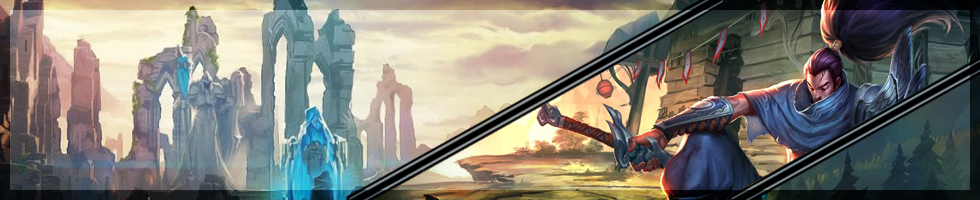
Yasuo is the champion that made me notice this recent trait of conditions built into champions. Yasuo's condition is momentary and needs to be used quickly as the enemy won't stay in that state for a long period of time. With "Last Breath" Yasuo needs to have an enemy knocked up for it to be usable. This knock up can be created by anyone on his team and isn't central to Yasuo's in built crowd control. "Last Breath" works in both 1 vs 1 scenarios and in mass team fights. With at least 1 or 2 allies who can set him up, Yasuo can get to the important targets and demolish their health bars quickly. Especially when the requisites for the ability aren't just restricted to knock ups. It can also be knock-backs and knock asides, so so you can have champions like Draven and Vayne in the composition to set up Yasuo's damage.
Yasuo can set up his own kills with the knock up provided by the third use of "Steel Tempest". Either to get long ranged snipes with the tornado or use the combination of "Sweeping Blade" into "Steel Tempest" to get a close ranged AOE knock up on possibly multiple targets. He can follow these both up with "Last Breath" to set up some considerable damage on one or multiple champions. He can also follow up on champions with knock ups/backs/asides, seen through multiple combinations such as Malphite/Yasuo who can decimate multiple enemies in team fights. Then there's the Tristana/Yasuo combination who can work together to catch out one target and kill them. Mao'kai/Yasuo was renowned in competitive play for its potential to latch onto priority targets while keeping them both safe through the damage reduction Mao'kai grants with "Vengeful Maelstrom".
Onto the question itself, the ability isn't weakened by the knock up status it needs due to the built-in condition. If anything, due to the sheer cast range it has it could be seen to make it stronger. When his team mates create opportunities for him from afar, Yasuo can jump into fights unexpectedly and orchestrate fights in their favour. Especially when you consider the armour penetration he gets when using "Last Breath" for a duration of time after use. With good mechanics, team co-ordination and synergising allied champions, Yasuo can create a lot of pressure with "Last Breath's" knock up/back/aside condition. Varying from 1 v 1 duelling and maximising his damage output in large scale team fights throughout games.
Rek'sai
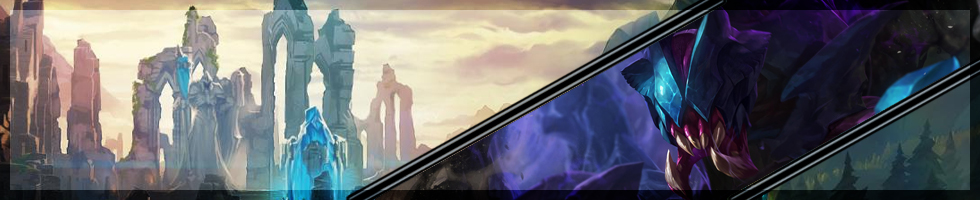
Rek'sai is the most recent champion to enter the LOL roster and has brought with her a very interesting and diverse kit. With strong early game damage, mobility and potential late game tank stats, Rek'sai is a force to be reckoned with and she's hitting hard on the Rift. Rek'sai has one of the easier conditions in the game but one of the most unique. Rek'sai when using her W "Burrow" leaves a tunnel like object on the map. As long as the enemy doesn't destroy these tunnels by standing on them, Rek'sai can move through these for the rest of the game. Helping her travel around the map quickly and causing the enemies to be uncertain of her position. Her tunnels also need to be present on the map if Rek'sai wants to use her ultimate, "Void Rush". "Void Rush" sends Rek'sai to an allied tunnel on the map with immense speed, arriving in her burrowed form.
Rek'sai's "Void Rush" works in a similar way to Nocturne's "Paranoia" but with 2 major differences. Rek'sai's ultimate is a potential global as she can jump to any tunnel on the map while Nocturne has a large area in which he can cast his. The other difference is how they cast their abilities. Rek'sai needs to have a tunnel on the map while Nocturne casts "Paranoia" on an enemy champion she's against. The map mobility this grants for Rek'sai makes her unpredictable for the enemy team as an even fight can quickly turn into unbalanced one. Her team can push together in the middle lane and then use Rek'sai to stop any split pushes the enemy team are pulling off on the side lanes. The active on her ultimate doesnt bring any form of damage to her kit but by co-ordinating with her team and using it to impact objectives and team fights, it can be a strong part of her kit.
Burrowing around the map and creating tunnels is essential for proper function on Rek'sai. By creating a multitude of tunnels around the map, she can quickly move around and get to the location she is needed. The tunnel ability is also her primary engage and gank tool so using her "Burrow" is rather important for her to function. Tunnels spawn all the time as Rek'sai is played so having the restriction of at least needing one tunnel on the map doesnt weaken the champ in any form of way. The tunnels are core to her kit and are basic necessities on the champion so the player needs to establish as many as possible around the map. By doing so, the player can create pressure on objectives and champions throughout the duration of the game.
Azir
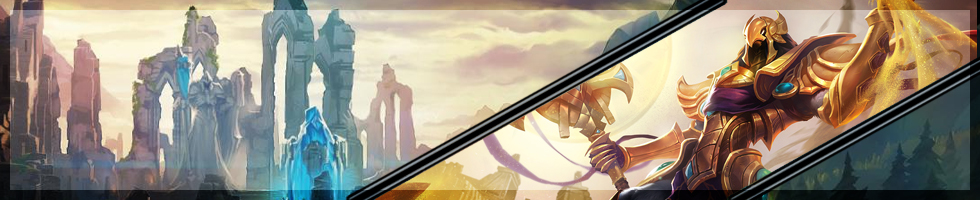
 Azir is one of the most complicated champions to come out of the Riot Design team. Having mechanical knowledge of the champion's capabilities is core to playing him correctly. Using and positioning his sand soldiers in ways that applies pressure, deals maximum damage and controls objectives. Azir has numerous restrictions placed on his kit and they come down to the core part of the champion. His whole kit works around using his sand soldiers appropriately. "Conquering Sands" and "Shifting Sands" only function if Azir has his sand soldiers available from "Arise!". Giving Azir a way of offensively/defensively positioning his soldiers and an escape tool. The second conditioned ability he has is his passive, "Shurima's Legacy". Azir can only spawn and activate a turret if a turret has been destroyed on the map.
The only champion in the League of Legends roster who is anywhere near similar to Azir is Orianna, "The Lady of Clockwork". Orianna is known to be one of the safest, but potentially one of the most impactful non-mobile mages in the game. Positioning her ball so the enemies think about how they position themselves in a game. She could unleash her shockwave at any given moment so the slight movements of her ball can threaten her opponents. Azir works in a similar fashion but has many core differences. He's one of the strongest turret pushing mages in the game with his sand soldiers as the "Arise!" ability can be used to deal damage on turrets. He's also strong at resetting fights with "Emperor's Divide" as it provides a wall that enemies can't walk through while his allies can. These 2 aspects just start the list of the potential plays this champion has access to.
My answer to the question is that when it comes to his active abilities, "Conquering Sands" and "Shifting Sands", the restriction has to be in place as they would serve no purpose without a soldier. He'd be a totally different champion if his abilities didn't function around the soldiers as they define his unique playstyle. The other restriction placed on his passive needs to be in place for it to work efficiently. Can you image Azir placing turrets with the same damage as the SR's turrets randomly? Having the destroyed turret placeholder means that this isn't possible and expands on his gameplay further. Used correctly, this can work against enemy sieges and delay their advances down lanes. The restrictions in place work to thematically make the champion function. The soldiers define his control orientated game play and are needed for him to work. Concluding that these conditions are only present to create the game play intended for him by Rito.
Conclusion
This article may seem a little out of the box in terms of the content it provides but I wanted to show the evolution that Riot has been making to create interesting character concepts. The conditioned abilities is one of the many methods they're using to design champions who keep us on our toes and change how LOL is played in our games and in the competitive scene. The game is evolving for the better and the emphasis Riot need to put into champion design gets increasingly intricate with every new release.
There are examples of conditioned abilities earlier in the game but are present in a very basic level. A variety of them define the champion and establish them in the LOL roster. An enemy champion is needed, an allied champions is needed, the champion needs to have hit fatal health are all examples of how Riot have used this before. The champions vary in success rate and some of them are more challenging to master. The recent releases have evolved this further by making more champion specific conditions. Some of these conditions define the champion for who they are. Azir and Rek'sai are prime examples of this. There are momentary conditions in Yasuo where he can only use "Last Breath" in the duration of a knock up. There's the sophisticated update of existing conditions in Kalista where she's evolved the allied mechanics involved. The evolution of champion design is evident in Riot.
To conclude, the newer champions are better but generally take more understanding as their kits are much more intricate. When the champion's kit is executed effectively, they can dominate games with their damage, crowd control, utility and unique mechanics. While this is true, the depth and difficulty of the champions can be a large hurdle to step over. Lower mechanical players will have a harder time picking up the champions and have consistent impact in a game. With training and consistent play of a champion, any player can learn the ins and outs of a champion, so don't be discouraged by difficulty levels. We've seen a lot of competitive discussions talk about how the new champions change how the game is played. These champions will be highly contested in the pick and ban stage for teams across the world. Answering the question, I believe these evolved champions are in some instances better than the older champs. It's player dependant on how much they understand the champion's capabilities and restrictions in the multitude of scenarios they could face.