






Blogs
Collegiate LoL Programs: Their Positive Effect on the Community and eSports
Crystera
Wed 5th Nov 2014 - 10:02pm
A new type of organization has been popping up across the United States and Canada within the last few years: collegiate League of Legends clubs. They are Riot-affiliated and often very popular, with some programs having well over 300 paid members. Collegiate eSports organizations are growing, and several universities have even made League of Legends a club sport. I spoke with Riot Steve “Jaws” Jaworski, an NA community specialist who works with the collegiate program, about the positive effects of these programs on eSports and college communities.
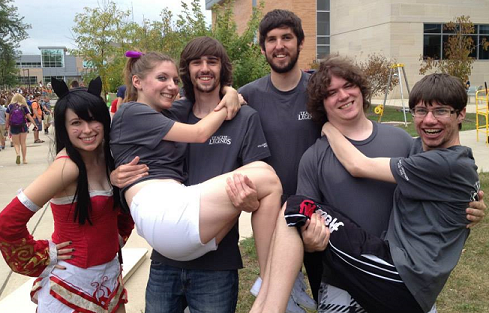
The University of Wisconsin-Whitewater's League of Legends club board members gear up for fun on Campus Involvement Day
(Roughly) how many registered LoL clubs are there in the country?
Riot Jaws: Last year a little over 300 clubs registered with the official Collegiate program across the US and Canada. We’re still taking registrations through the 2015 year, but so far we’re on track to see more than that.
When did this program begin?
Riot Jaws: Collegiate players of League of Legends are incredibly driven and passionate, and with no help or direction have been organizing themselves into clubs, teams and large-scale events for some time now. So while player-run collegiate organizations have been alive since the game launched, official Riot support for those organizations started only in February of 2013.
What do you feel has been the biggest success of this program?
Riot Jaws: The biggest success has been seeing the collaboration and peer mentoring that has grown out of the program’s foundation. We consistently see student organizers from larger and more established clubs working with newer organizers both locally and online to share best practices and create collaborative networks to build bigger and better experiences for college students.
How do you believe Collegiate LoL will impact eSports and the way people think about competitive League of Legends?
Riot Jaws: In terms of the overall program, the social side of Collegiate LoL continues to grow through organizing larger and larger meetups, viewing parties, etc, and we’ve seen professional players like Kiwikid and Bischu recognize the support from college campuses and reach out. In terms of the competitive side of Collegiate LoL and the NACC, the impact on the larger scene is hard to predict. Currently we’re focused on opening up the tournaments to as many collegiate players as possible, while utilizing the prizing to be something that helps winning players pursue their academic careers as well.
The clubs themselves participate in a wide range of activities. Playing the game is always the main focus, but many universities have branched out to create shout casting communities like Georgia Tech, competitive teams, trips to major conventions including PAX East like Ohio State, and viewing parties. They offer players an opportunity to connect offline and encourage local players to form a community where they can play and grow together. I had the opportunity to get in contact with student leaders from a few of the larger collegiate programs to ask them about their League of Legends clubs.
Atik Bhatka is the president of the Collegiate LoL program at California State University Fullerton. His club has over 150 members, and a competitive team that has placed 2nd in CSL (Collegiate StarLeague.) I asked him about what types of activities his club participates in.
“We host tournaments for our members. We do a solo queue style tournament. We just have people sign up and then we match them onto teams based on their solo queue ratings. It's a great way for club members to make new friends because our main goal is to build a community of CSUF students through League of Legends. In addition, we also have viewing parties for LCS matches and we've had a viewing party for Worlds these last 2 years as well. We try to do socials as well, where we announce a restaurant or fast-food place and just have people meet up to eat and talk together! It's a really great experience!”

These organizations clearly have an overwhelmingly positive impact on the League of Legends and campus communities. However, they also bring a positive image to eSports on college campuses. Wesley Jackson, president of the Collegiate LoL program at the University of San Diego, manages a club of nearly 200 students and is captain of their most established team, USD eSports Blue.
I asked him how he believed that collegiate League of Legends clubs can contribute positively to the eSports community. “I believe that the grassroots foundations that collegiate League clubs are founded on help provide the eSports community with promising student leaders that may later go on to forge careers in the eSports and video game industry. Collegiate League clubs are also able to effectively draw in the college student demographic, introducing and involving people in the eSports community who otherwise may have never considered it. This will lead to the further legitimation of eSports; as collegiate clubs continue to grow in number, their credibility will as well.”
There is an undeniable shift in the perception of eSports among collective society as games like League of Legends grow in popularity, aided greatly by the increasing community involvement that comes with opportunities like the Riot Collegiate Program. As president of the UW-Whitewater Collegiate LoL program myself, I have witnessed students take on leadership roles in which they mentor new players, exercise their public speaking skills, and come out of their comfort zone to contribute to the campus community. Countless others have been introduced to the game because of the program, and now enjoy playing it on a regular basis while forging friendships with the other members.
Riot’s Collegiate League of Legends program is undeniably a healthy contributor to the League of Legends community and the eSports community alike, and I would greatly encourage readers to start a club at their university. For more information on how to start your own club, head over to the LoL Collegiate Program’s page here.