






Blogs
Jungling Beyond The Ganks

dulsung
Sat 13th Sep 2014 - 2:11pm

“Just blame the jungler” is a common joke in League of Legends. If something goes wrong, it’s because the jungler failed to perform the seemingly easy task of making sure everything goes smoothly. Junglers on the other hand can fall into the trap of forgetting that their position is very support heavy and don't play as such.
No matter what side you come from, it all boils down to the sometimes frustrating fact that a jungler sets the tone for a lot of the game. Secure ganks and the ability to feed teammates is undoubtedly a gigantic part of being a jungler, but for those who do not regularly play the role or are new to LoL may forget that there is more to being a jungler. Knowing these things will not only make you approach League with a more intelligent mindset, but it will also make you a better jungler.
History
Let’s look all the way back in Season 1. It was discovered that having two solo lanes was ideal, as there would be more global experience and gold if two people weren’t fighting over it. Not only that, but jungle creeps gave both of these, and roaming around meant there was an opportunity for buff and vision control. Of course, they realized that a team member’s location being unknown meant they could gank lanes. Ganking is one of the most important part of jungling but looking at its roots, it’s not the only benefit that comes from having a jungler.
Understanding Champions
Knowing what exactly your champion does as a jungler is a good start. What about their kit makes them good at that role? Where are their strengths and weaknesses? Measuring a jungler's strengths can be categorized by how well they gank, clear, itemize, dual, crowd control, and invade. Doing a quick mental note of these upon selecting your champion lets you know where to put your focus and what to watch out for. If you choose Nunu for example, you aren't exactly a ganking powerhouse- but you know you can set up for vision and counterjungle. As jungling is not solely about ganks, it makes sense that junglers will follow the same rule. Looking at how high ranked players or pros use their champion is a good way to learn what your jungler does.
Knowing the enemy jungler is just as crucial. Using Nunu as an example again, you have to watch for invades and early objective control as he basically has a double Smite with his Consume. If they have Lee Sin and you're Nautilus, you're not going to 1v1 him if you meet up. Going over the key strengths and weaknesses helps you compare your champion to theirs. Laners have to know what every matchup brings, and junglers are certainly no different.
Farming
People question junglers when they sit back and farm when it is okay for them to do so, but sometimes that’s all a jungler is able to do at the moment. There are a few junglers who can potentially gank at level two, but many other junglers don’t have an optimal time ganking until level 4 or 6. You’re not going to get a level 2 Warwick gank for example. As such, it is best to keep in mind that you may not be useful right away.
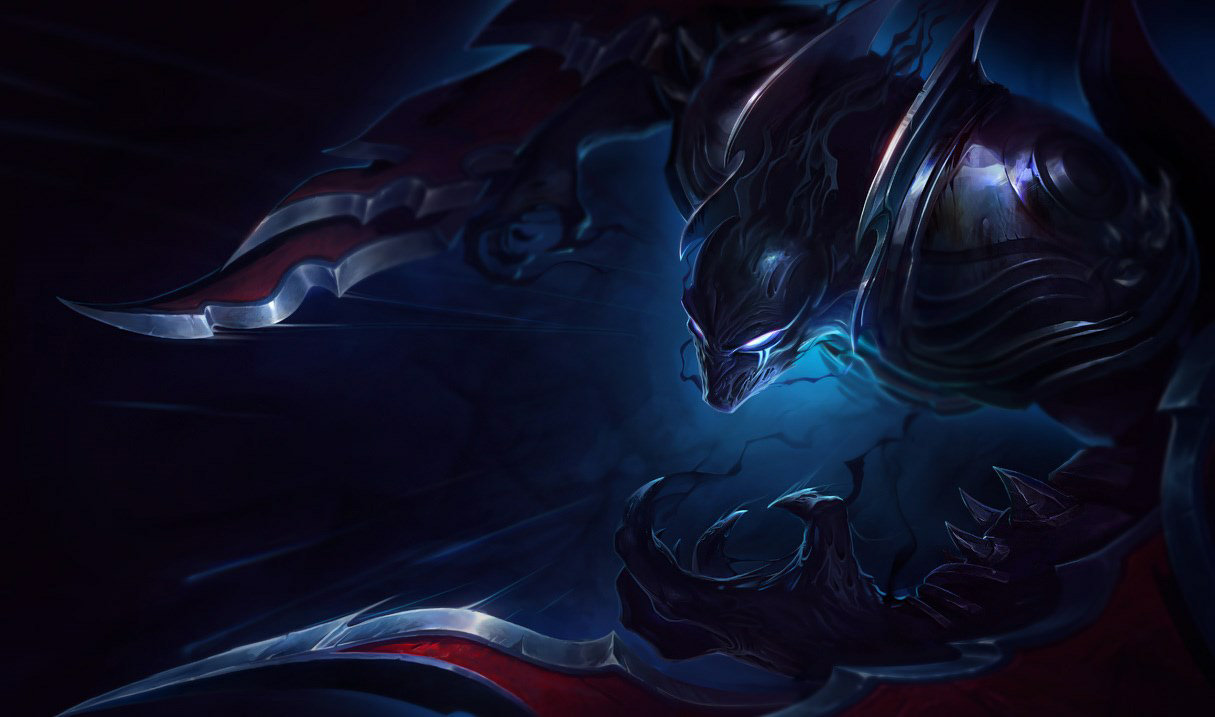
Waiting for Nocturne's level 6 "Daaaarknesssss..." is something everyone dreads, and many players choose to farm until then.
Moreover, a jungler behind in levels is not going to be effective. Noticing that you as a jungler have not reached an acceptable level in the timeframe you should have is an indicator to relax and catch up. It is easy to feel stretched thin when so many things are going on ingame, but sometimes all you can (and should) do is farm and level up. A behind and underfarmed jungler is not going to be an effective one.
Warding
Any jungle guide will go over the importance of warding, but this really can not be stressed enough. Allies are not always able to leave their lanes to get deep wards into enemy territory, but you can!
Warding lane bushes is not enough in most cases. Placing wards in high traffic areas that illuminate as many paths as possible are what you should aim for. Here are some suggestions:
Blue Side
Red Side
These wards make sure you can see movement from both yours and the enemy jungle. It covers multiple paths and openings as well which is ideal for placement. Pink wards should also be placed here.
Buffs and Creeps
Blue Side
Red Side
Warding enemy creeps not only lets your team know where the opposing jungler is, but also opens up the opportunity to steal them. Warding your own buffs against an aggressive jungler is important as well.
For warding on Wraiths, you may prefer to move the ward closer to the river path if you don't care about fully seeing the camp.
Defensive Wards
These don't cover the river bushes, but having these wards a little further out and covering multiple paths is helpful if your lane is getting camped.
These cover jungle entrances and exits and are good for warding the tribush behind top and bot tower if you think you're going to get ganked under your tower. These are also good for warding Dragon and Baron when it's the late game.
Dragon and Baron
These wards are placed specifically to not just cover Dragon and Baron, but as much of the surrounding area as possible. When it comes to finally securing these objectives, you will likely want more than just a single ward.
"Obvious" bush wards such as the toplane and bottom tribush, river bushes, and lane bushes are usually warded by your laning teammates. Depending on how the game is going however, you may have to take it upon yourself to ward some of these if they for some reason refuse to ward or are getting so bullied they can't leave. Warding deep will make movements more predictable and will let your team gather much more information.
To be a good jungler you absolutely have to drill into your head that vision wins games. Even as a "carry" jungler, your role is to make sure you have vision. Setting up as things happen is less effective than setting up for things to happen. If you know Baron will be up, ward and sweep around it in advance.
Invading
As it is quite easy to fall behind as a jungler, you'll want to inflict that pain upon the opponent. Denying jungle minions not only helps you farm and set the enemy behind, but it can be a big factor in lowering their confidence as well. Feeling like you are unsafe in your own territory and like you are wasting time running all over the map to get a full camp is demoralizing.
Stealing away buffs is a bit more difficult as they are not up as often and are guarded more heavily. Being more mindful of buff respawns or warding ahead of time paves the way for the possibility you will show up before they do. Ask for someone to help you steal, or even offer to give them the buff. Your team getting red or blue while the enemy has none puts you in a huge advantage.
Nice buff! It would be a shame if something happened to it...
However, it is possible to do poor invades. Taking a long trek to a camp that is quite out of your way is not ideal.
The top factors for deciding to invade are:
A) Do you have it warded or can you get a ward down?
B) Do you know where the other jungler is?
C) Am I on that part of the map anyways?
D) Do I have a way to escape in case things go wrong [ults, flash, an ability]?
How often you do so also depends on your champion. A mobile champion who has a quick cleartime is going to look to invade more than a sluggish one.
As you will want to get a few wards into enemy territory anyways, stealing camps should go hand in hand. Invading will always be a risk but one that you have to take to get your team ahead.
Losing Lanes
Perhaps a bit of a sidenote, but important to remember. If you watch some junglers stream you will hear them say “There’s nothing I can do to help that lane. I’m going to snowball somewhere else.” That idea sounds odd at first. Why help a lane that’s doing okay when you can help those who are falling behind?
The idea behind ganking is to do it when you know you will have a positive outcome. For example, if bot kept dying, the jungler would be walking into two fed players with their teammates extremely behind. It’s safe to assume that the ally carry’s cs will not be as high as well, because of all that time spent dead or possibly being zoned from their farm. Even if the jungler is supper fed, it’s still not advantageous as it is almost a 2v1 at this point. Comparing items, champions, and levels is a good way to decide if it can work out as well. If their AD carry has an Infinity Edge and Blidgewater Cutlass compared to your marksman’s two Doran’s Blades, things are probably not going to work out.
Uh oh.
Therefore, helping a lane that can carry after the laning phase while you're losing lane slowly tallies up assists or even kills is the best situation. Losing one lane is certainly not a lost cause in any case, so making sure your other lanes are victorious is what a jungler should be focusing on. That is not to say that you should absolutely never help a losing lane, rather that it should not be the first thing that a jungler should run to. Being camped is frustrating, but there are times when the enemy jungler does so because the lanes are not taking additional measures to avoid being punished for mistakes. Helping your laner get defensive wards further out will aid them in not dying to camps as much.
Junglers can help people do well, but it is not their responsibility to win lanes for them. Sometimes your team will have a hard time and may even blame you for it, but the best you can do is recognize when you truly could have intervened and when it was beyond you.
All in all...
Mechanics are undoubtedly important, but jungling relies very much on intelligence and oftentimes on the fly decision making more than anything. While everyone should know the tempo of the game, junglers especially need to be mindful of how the game works as an individual entity. You aren't going to be keeping track of how the game moves so much as trying to control it.
Ganking is but one of the many things have to do while in game. By focusing on those other aspects, you can help lead your team to victory not only by being a playmaker, but creating an environment for them to happen.