






Blogs
Every Play Has an Equal and Opposite Counterplay


The goal of League of Legends is incredibly straightforward, destroy the enemy Nexus. Getting there is a veritable adventure of success and failure with good and bad decisions being made by every member of both teams.
A “Play” is a term used in League of Legends to describe a tactic or decision that one or many players make to achieve a desirable result and gain some form of advantage over the enemy. This can range from anything like a tactical tower block against a diving opponent, baiting into a gank or the best damn baron call you’ve seen in your life. The game is filled with plays and most players don’t even notice half the ideas they’re subconsciously churning out.
Taking a step back and analysing our play is one thing that every player can do to improve themselves, and one big thing that I find comes with experience is play-making. It’s not always as simple as “I’m going to gank for my mid lane and everything will be fine”. Because the enemy may rise to that challenge and think, “Oh great, the Top lane is not here, so I can alert my mid lane and then take their tower”. Every play has a suitable reaction, and it's finding these reactions and being able to guide your team to them that will ensure you have many more victories and reduce the occurrence of a successful split push, or loss of an objective.
Armed with a sweeping lens, Tryndamere answers to a gank top lane by seizing dragon uncontested
When we make a play, we always think of how it benefits us and it’s very rare that outside of a challenger level team, we will think of how it could be detrimental to us. Take for instance on the blue team a jungle Vi ganks for her Vlad in the top lane, they succeed in getting the kill but the enemy top lane has teleport so they couldn’t put down much damage on the turret. They’re still up a kill, some creeps and some experience. However, at the same time purple team’s Jarvan just ganked for his bot lane, the blue team Marksman goes down and the Support sustained too much damage and has to recall which opens up an opportunity for the four available members of the purple team to secure the dragon. Suddenly Vi’s play in the top lane was detrimental to her team because she was not in a position to stop the Jarvan gank, or even apply enough pressure to deter the team off of dragon. Her play was met with an enemy counterplay that allowed them to come out on top.
This is a skill that comes from experience. Playing the game and learning from how opponents react can give you a real indication of the things you should and should not be doing. This is not a technique that is limited to only Diamond and Challenger players, for every division still has its own way of reacting to things. You may find there is a play you can frequently get away with in Gold, that doesn’t work anywhere else and the same applies for the other divisions. Think about how enemies can respond to the plays you make and you’ll find yourself more aware of not only what you can do and get away with, but also what enemies might be likely to attempt during the game.
High priority objectives or plays, not necessarily in order include, but are not limited to:
- Baron
- Dragon
- Tower
- Inhibitor
- A gank yielding two or more kills
- Dewarding areas around a major objective
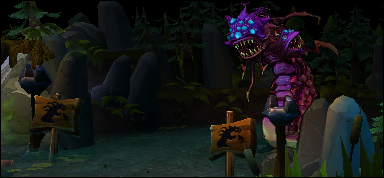
This objective in particular has caused the throwing of a fair share of games as unprepared teams attempt to rush him.
Lesser priority plays include:
- Denying buffs
- Solitary gank targets
- Ganking at a time that forces an opponent to miss a large wave of creeps
- Dewarding lesser valued locations
By understanding common plays, you can begin to combine this with your knowledge of the both team composition and the skill level of players involved to develop plays specific to your game. By communicating these kinds of plays to a team in Solo Queue, if they’re diverse, the enemy can be thrown on the back foot and this can catapult your team into an even more secure advantage.
Using the minimap helps track your opponents' movements, this is your early warning system to all plays that the enemy could make, ganks or bbjectives. This of course does require strong warding to be at its most effective
This skill is more relevant to Ranked 5s play but it’s something that’s highly transferable into Solo Queue. I consider a sound understanding of plays a strong basis for any aspiring player climbing the ranked queue in whatever type. I’d even go as far as to say, should you sink enough time into Dominion or Twisted Treeline, you would still notice similar play styles and patterns that appear and still be able to devise an appropriate counterplay.
High level competitive players playing with their teams are good examples to learn from in terms of plays and counterplays. For every move one team will make, the other team will have a tactic to match. Like any strategic game, archaic like Checkers, or modern like Starcraft II, staying a few steps ahead of your opponent is key to victory.
Staying one step ahead of your opponent is a key to victory and as they say, knowledge is power! Good luck out on the rift!