





Blogs
The Roles, the Meta, and When It's OK to Break the Rules


Meta is a term that gets thrown around a lot in League of Legends and any other game that requires a good deal of thinking, strategizing and preparation. While the term can have different meanings, in League of Legends, the Meta is the current established play style, roles, and builds for individual champions and the team as a whole. Many players have come to fear seeing non-meta picks in their champion select, as more often than not things like Support Wukong and Jungle Twitch just don’t end up working out. On the flip side, there are some players who constantly look to break the meta, hailing themselves as revolutionaries when their odd picks and builds lead to victory.
Breaking the meta is not inherently bad, but having consistent success with a non-standard pick in League of Legends means understanding how the current meta has been established and what the purpose of each role is. In this article I’m going to take a look at how the League of Legends meta has developed and offer some insight to players looking to develop new strategies to take to the Rift.
The Roles:
Before we can look at how the current lanes developed, I’m going to give a brief explanation of each role and its purpose. Rather than mid laner or top laner I will use these terms to describe champions and their positions in a team.
AD Carry: The AD carry is typically a ranged character with high sustained damage. Most have an escape (a dash, jump, etc) or at least a speed boost to help reposition themselves in fights. They usually lack hard CC and have some form of auto-attack enhancer such as an attack speed buff, true damage applied to their autos, or increased critical chance. Caitlyn and Graves are both examples of AD Carries.
There are technically melee ad carries such as Fiora, Tryndamere and Master Yi, but because of their need to close with opponents (and thus becoming far more susceptible to CC and harder to peel for) they are never favored over ranged AD carries. However, melee ADC’s do have a purpose, which I will discuss later.
AP Carry: AP carries deal primarily magic damage, and the majority of their damage comes from their spells. They tend to have high single-target burst or high-aoe damage, and a degreee of utility and cc. Some of them benefit from some defensive items, but most focus on items that increase their AP and Magic Penetration. Lux and Orianna are AP Carries.
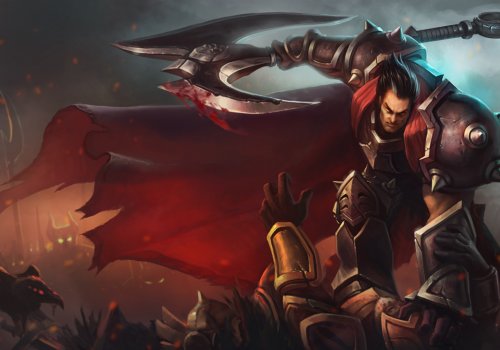
Bruiser: A bruiser usually benefits from building a mix of damage and defense, and is almost exclusively melee. They have decent base damage on their abilities with average scaling. They usually have a gap closer and small amount of cc, typically a slow and sometimes have built-in auto attack enhancers. Jax, Darius, and Rumble are bruisers, with Rumble being one of the few examples of a magic damage-based bruiser.
Tank: Tanks focus on building almost exclusively defensive items. They usually have high base damages on their abilities, but have bad scaling. At least one of their abilities is usually a hard CC, along with another being some form of defense, and a degree of utility. Leona, Malphite, and Shen are tanks.
Assassin: An assassin is a high-mobility character with high burst damage. They lack utility and defense in exchange for a fair amount of CC (though usually not a stun) and an escape. Building defense usually does not benefit them much so they typically build pure damage and focus on exploding a single target. Kassadin, Talon, and Zed are assassins.
The Lanes:
Those are more or less the role each character in the game can fill, now let’s take a look at the lanes, and why certain roles go where:
Mid: Mid lane, in Season 1, was typically where the AD carry went. Being the shortest lane, it’s safe for squishy characters. Eventually, people noticed that most AP carries lack escapes besides flash, and benefit the most from levels (as much of their damage scales with their abilitites) and AP carries began heading mid. Because many mids have excellent wave clear, they can push waves and then roam to other lanes, taking advantage of the cc and/or utility they typically possess. Assassins see a lot of play mid too, as their high burst damage combined with a gap closer and/or escape allows them to shred an opposing AP carry and roam about as well.
Top: Being a long lane, characters in top lane need to be able to stay in the lane for a long time, usually taking advantage of high damage to push opponents out of lane, or high sustain so they dont have to back often. Additionally, tankiness is required as top is fairly easy to gank. This makes Bruisers (high damage) and tanks (high sustain) ideal for top lane, though assassins have also found their way here, especially those with strong poke that can force opponents out of lane.
Jungle: The Jungle changes in season 3 opened the jungle to a wider variety of roles than we saw in Season 2. Bruisers and Tanks are still the most common roles in the jungle, as they are capable of being both farm-heavy and ganking. However, carries and assassins have also made their way into the jungle as their high damage makes them capable of farming the jungle quickly.
Bot Lane: AD carries need farm, typically lack built-in sustain, and don't rely on levels as much as AP carries. Being sent bot lane means they are paired with a support who either provides sustain or bullies the opponents off of farm (the same way a tank or bruiser sustain themselves or bullies the opponents in top lane). Supports can thus usually be found in AP casters (especially those with heals or a lot of harass) or tanks. Additionally, the 2-man lane is sent bottom (except in a lane-swap) to allow for increased dragon pressure and ward coverage around dragon.
When (and Why) Breaking the Meta Sometimes Works:
As I mentioned, the roles have not always been the same, and thus it is up to people “breaking the meta” to find new and innovative ways to play the game and change the current state of the meta. Let’s analyze a few examples of when people broke the current meta and changed our understanding of what roles go to what lane.
At the beginning of Season 3 we started seeing bruisers mid. The reason for this was twofold. First, bruisers fill the same role of sending an assassin mid, they have the ability to dominate the enemy AP carry and force them out of lane, with only slightly less roaming potential. Second, the fact many people were focusing more on building health than resistances meant balanced damage (magic and physical) was a bit less important, so the AP carry role became a bit less important. The early stages of this adaptation of mid-lane can be seen in Froggen’s mid Lee Sin, and now sending bruisers mid is very common at all levels of play.
With bruisers making their way into the mid lane, many teams felt starved for magic damage and some of the higher-level players began experimenting with more magic-damage top laners. Vlad and Rumble had always been viable top laners, but champions like Elise and Kennen now also made their way to the top lane, opening up the options for the rest of the team to play more AD-heavy characters. The logical conclusion of the AP-top development came with Dyrus and Flame playing Karthus and Ryze top: two champions we understand to be AP carries but found their way top lane.
Another development we’ve seen is the double-ADC comp. With such a high emphasis placed on pushing down turrets in Season 3, an occasionally seen strategy is to have a second ADC mid lane. If this champion is capable of standing up against the burst damage AP Carries and can wave-clear, they can harass the AP carries and help force down their turret much faster than most other mid laners. While not a very common strategy, some professional teams like Evil Geniuses have used it successfully.
Other times, strange picks just work within a certain team composition. This is the reason you see these non-meta picks in professional play. ADC Kennen? Sure. He wasn't designed to be an adc, but he has the range for it, and he works with certain team comps. This is the same reason we sometimes see less-played champions like Xerath and Yorick show up in the LCS. They work with the team comps that the team has designed.
The Meta Isn’t Foolproof:
Why do we sometimes see ridiculous things in solo queue like Support Darius or Jungle Miss Fortune working? A number of factors can lead into this, but it often comes down to the fact that solo queue is a volatile place, even at the top level, and players can get away with doing things they’d be punished for in professional games.
At low level, judgement and skill matter much more. In Bronze, Silver, even Gold, you will often see strange picks working. This isn't because they've adapted some "new meta" that's going to turn the game on its head. They're just particularly good with that champion/set of champions. Their opponents lack the skill and knowledge to oppose that player, and that player does well. At higher levels, it is much harder for a single player to carry their team. More skilled players will be capable of shutting that fed player down in fights. Even more likely, the person the non-meta pick is laning against will be more aware of the character's abilities. They will either kill them because they've chosen a pick that doesn’t work well in their lane, or farm up and wait until teamfighting starts, when the enemy team will most likely be missing a crucial component of their team comp.
At the higher levels of play, we sometimes see picks that are odd but work. Jungle Poppy or Heimerdinger would be nearly impossible in a professional match because the enemy team would be coordinated and shut them down. In solo queue it’s much more likely to work due to the skill of the player and lack of coordination of the enemy team.
League of Legends has a gigantic player base, and as long as there are people playing, there will be people innovating. Expect to see the meta continue to develop and change as pros and other players alike find new strategies and compositions that challenge the current norm. By understanding the roles and the lanes and how they’ve developed to where they currently stand, you can have a better understanding of how and why “meta-breaking” picks work, and others fall flat on their face.