






Blogs
Interviewing the Interviewer: State of the League's Travis
1.jpg "KatanaMordecai")
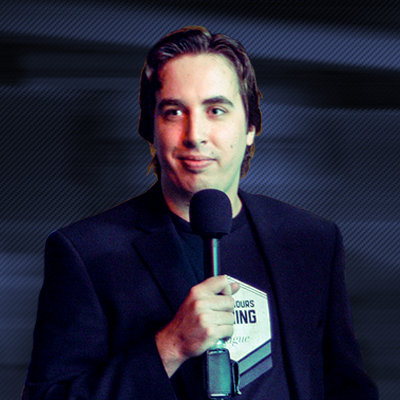 Travis 'Tnomad' Gafford is a major part of the professional League of Legends scene. After starting one of the very first shows with professional players, he has now expanded 'State of the League' to also include 'Whose League is it Anyway?' and live event coverage.
With Season 3 promising to bring even more expansions to the professional scene in League of Legends, fans can expect to see even more coverage. We asked him about how it all started, and what fans of the show can hope for in the future.
How did you get into the eSports scene, and what drew you to League of Legends in particular?
Travis: I had been following the StarCraft 2 eSports scene for a long time and that’s what really got me into eSports in the first place. At the same time, I had played League of Legends since beta so when Season 1 Finals went down at Dreamhack, I realized League had the potential to become as great an eSport as StarCraft 2, possibly even surpass it.
Shortly after, Doublelift ended up living with me in a spare bedroom I had at my apartment. I didn’t really know much about him when he did. I had recently graduated college and felt really hopeless after being rejected from several different employment opportunities. Doublelift suggested I put my newly received Communication degree to use interviewing pro players.
I realized that one of the reasons it was hard to get excited about League eSports the same way I got interested in StarCraft eSports was due to the lack of visible personality from the players. I decided to try and solve this by bringing a show based on my favorite SC2 show to the League scene. That was a little over a year ago.
What has been the most difficult challenge of achieving and maintaining State of the League?
Travis: On the business side, it’s extremely hard to support yourself if you head into eSports as an independent rather than becoming employed by an organization.
On the production side, it’s hard to coordinate guests due to random tournament schedules and last minute scrims. On the emotional side, it can be extremely hard to carry on creating content when folks start inaccurate rumors about you on the internet and there’s a lot of backlash.
Making esports a fulltime job is a risky move. Was there any moment when you thought your investment in an esports career had failed and it would not work out?
Travis: I made the jump to fulltime based on commitments made from several different organizations regarding promotion and production of my content and financial compensation based on that. Shortly before Christmas, that fell through. At the same time, there was a wave of harsh sentiment within the community that hit me pretty hard. I actually started thinking about applying for jobs and just getting out of eSports completely.
And at what moment did you realize all your work had been worth it?
Travis: There have been several moments where I’ve just been filled with so much love for my job, eSports, and the League community in general; the support I got after my debut at MLG Providence, being on stage in front of the AMAZING crowd at IPL 4, and the incredible generosity and support of those that sent me to Korea this summer to name a few.
What has been the most enjoyable event or experience thus far?
Travis: Like the last question, this is a really tough one to answer. I’d say that the trip to Korea really opened my eyes in a way that nothing else has so far and besides the content I was able to create there, the experience gave me a lot of insight that I’ll happily carry into any future content I create.
Are there specific professional players that are more fun to work with?
Travis: Because we lived together for so long, Doublelift is probably my favorite person to work with. Our attitudes are a little different but I just have a ton of fun with everything we create, and the community always seems to give it the best reception.
When you sit down with a player one-on-one, are their personalities usually much different than what we see on streams?
Travis: Almost never, everyone tends to act the way they do on streams. There are some that bring a little more energy to their streaming personality to help create some extra entertainment for viewers, but for the most part everyone’s the same.
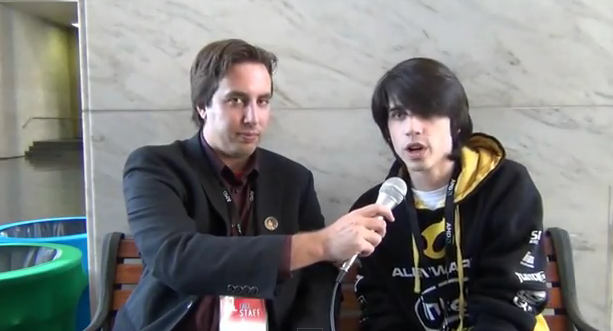
As you ask many of your interviewees, how do you feel about the way Riot Games is handling League?
Travis: When I first heard the plans for Season 3, I was really nervous. I actually caught wind of most of it several months before it was announced. During the following months, they solved a lot of the problems I was concerned about and now I’m just really excited about it.
There’s a lot of talk about “artificial inflation” of the LoL eSports scene via Riot, but I don’t think that’s fair phrasing. It implies that the numbers we see on streams aren’t comparable to other eSports numbers because Riot puts a lot of money into tournaments and also advertises them via their client, etc. I think this argument is flawed. If the game wasn’t a good eSport, folks wouldn’t tune in regardless of the prize pool or the stream link. Additionally, we’ve seen tournaments such as Kings of Europe hit 100k+ viewers without Riot involvement.
So overall I think their support is incredible and I’m happy for it. I’m fairly certain that if other eSports devs followed their lead, everyone else would stop complaining and start celebrating it.
Can you give us any insight to the future of State of the League or your eSports career?
Travis: Ultimately, “State of the League” is just a brand. At the moment, it’s just me working on all of the content, so answering the second part of your question actually addresses the first part.
When I started creating content, it was about letting folks see pro player personalities so fans knew who to root for and players could build their brands. Now a year later, we don’t have the same problems we had then. While I still want to keep spotlighting players, I’ve learned so much over the past year that I feel I can provide commentary and insight into much of the rapid LoL eSports development we’re seeing these days. Besides the commentary, I’m also starting to fulfill more of a journalistic role on a weekly basis and via event interviews.
I always want to be where the scene needs me. Who knows? Down the road I may help manage a team or an organization. I learn so much more every week that I feel much more confident holistically than I did a year ago.
How did your recent trip to Korea for OGN coverage change the way you look at League of Legends or eSports?
Travis: Korea is what I hope we can be in the future. Production levels over there are great; they have mainstream sponsors and professionals that take the game extremely seriously. Likewise, their fanbase and audience is large and extremely passionate. I really think Season 3 will get the west extremely close to Korea levels of awesome.
From a ground floor perspective, the interactions I had with a lot of the Korean players and eSports folks allowed me to better understand the atmosphere over there.
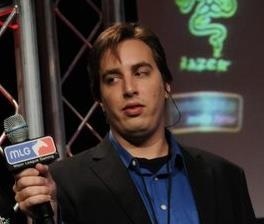
After the trip, do you think there is a specific region (NA, EU, KR) that is producing better players, or that they are fairly equal overall?
Travis: Snoopeh told me in an interview that if you took the top 2-3 teams from NA or EU and put them up against the top 2-3 teams from KR, you’d have solid games. On the other hand, if you took the top 8 teams from KR and the top 8 from either western region, KR would come out on top easily. That’s the way it is right now.
There’s an opportunity for this problem to resolve itself in Season 3. Riot’s salaries and support will allow the top 8’s to put in as much effort and training as the Koreans, but it will be on each team to take those tools and use them to their full potential. Ultimately the fate of S3 rests squarely on the shoulders of each championship series player.
What are your predictions for the Season 2 Championships?
Travis: I actually hate making cross region predictions because it’s hard to know where all the teams stand. In the past, team performance at international tournaments has been more based around region play styles clashing than the individual skill of each player. Hopefully the month of downtime before World Championships will allow everyone to study up on their opponent’s styles.
If you insist on a prediction: “The games will be great!”
Do Scarra and Doublelift (both professional players you have lived with) have any weird habits or traits?
Travis: Doublelift can’t close the freezer door to save his life, he yells extremely loud at 3 AM while soloqueing, but he’s overall a good guy. Scarra can’t control the volume of his voice while talking and drinks water faster than my brita filter can filter it. Also a great guy though.
What are your best memories with Scarra and Doublelift?
Travis: Doublelift and I would just have hilarious conversations every time we got in the car together, usually due to his ignorance about how simple things in the world work. Scarra only lived with me for a couple of weeks until he recently moved into his new place, but we always had great conversations over dinner.
If you could choose any professional player to live with after Scarra moves out, who would it be?
Travis: Jake (Muffinqt) and I have been good friends for a long time now and I really wish he lived in Southern California so we could hang out. We’ve met up at events before, but we’re both usually so busy we don’t get to spend a lot of time together.
Do you have any shout-outs you would like to give?
Travis: Thanks to Doublelift, Scarra, and Muffinqt for being cool guys. Thanks to Riot for supporting the scene and to all the great folks there that I get to interact with. Finally, thanks to the community for supporting me over the past year.
You can follow me on Twitter @SotLTravis and Subscribe to my YouTube.