






Blogs
Choosing Champions Series: Support
1.jpg "KatanaMordecai")
Supports are notorious as the unsung heroes of League of Legends. Where people often call and fight over the other four roles, when was the last time you heard 'support or feed?'
Regardless of their unpopularity, a strategic support can be the difference between a kill for your team, or one for the enemy. Especially in the early game, this can be a big determining factor for the rest of the match's outcome. This being said, how can you maximize your early potential, as well as carry that momentum through into the late game? Get a head start from champion select.
Factors to Consider When Choosing a Support:
1) Individual Strengths and Weaknesses -
Each champion in the league has individual strengths and weknesses which make them a weak, strong, or balanced character individually. This assumes a pure on-paper analysis of base statistics, scaling, and skill set when compared to similar numbers from other supports. Based on each patch, these numbers are tweaked and fluctuate according to the current metagame and relative balance.
Selecting a champion that you have always been comfortable with might be a safe choice, but if they have been recently nerfed, you may not see the same results. Choosing a character that has just received buffs may put you at less of an experience advantage, but could help you gain an edge over the enemy. In this respect, it is helpful to stay up to date on each patch and learn as many champions as possible, even if you feel they are weak.
2) Synergy With Your Attack Damage Carry -
Arguably the most important aspect to playing support is to protect and aid your AD carry in whatever way possible. In order to do this most effectively, certain supports mesh well with the attributes and play styles of certain carries more than others. These same factors are also impacted by a player's individual strategy as a carry. Though you will not likely have that familiarity in solo queue, you may if queuing with a carry you have played with before.
Aggressive Supports: Aggressive supports typically mandate some form of crowd control to help maximize the carry's damage to the enemy laners. Some may also offer buffs or shields to protect the carry when risking aggression. Popular examples (though this list should not limit ideas) are:
 Nunu - His ice blast offers a strong slow and excellent zoning, while blood boil provides bonus statistics to help the carry follow up. After level six, his ultimate provides another slow and even more damage. Any high-damage carry benefits greatly from the buff and slows.
Leona - Shield of daybreak and solar flare (ultimate) can stun and slow enemies either by target or area of effect. She does not offer any protection to the carry, so she is generally best paired with a partner that has an innate escape, such as Ezreal or Tristana.
Alistar - Pulverize, headbutt, and triumphant roar all work with your team's carry to keep them in lane while pushing enemies out of it at the same time. He can zone enemies away from the carry well, so he pairs effectively with carries with or without a gap closing ability.
 Blitzcrank - One of the most crowd control-oriented supports in the game, Blitzcrank needs only to land one grab to ensure the enemy takes a hefty amount of damage or a death. As a result, high burst damage is very strong when paired with him.
Passive Supports: Though some of the aggressive supports listed above can also be passively (and of course, some below can be aggressive), the champions listed below lend themselves well to a passive sustain and farming lane. This often synergizes well with individual players who like to farm well into late game, as well as carries who do not trade well early game such as Tristana or Vayne.
Sona - The various auras of her basic attacks are great for a farming and sustain lane. This is not to say that her ultimate and passive (power chord) aren't great for setting up teamfights and harassing, but early game she has a lot of ability to keep a carry in lane and farming with her heals.
Soraka - Similarly to Sona, Soraka's sustain becomes most valuable in a passive lane. Both astral blessing and infuse help to replenish health and mana to increase time spent in lane. Infuse is a great line of defense and an effective way to zone enemies away from a creep wave or your team's carry along with starcall. After level six, her ultimate also has an incredible amount of saving power, which pairs well with carries who have poor early trades.
Middle Grounds:
Taric - With one crowd-control ability, a small heal, a small buff with damage, and a larger buff, Taric represents a fairly well-rounded support. Because of this, he can fit into an aggressive or passive lane well, but his skill set is best when leaning toward aggression. An extremely strong lane combination with Taric is Graves, but his many advantages make him a solid pick with most carries.
 Janna - Howling gale and zephyr combine to knock up and slow the enemy fairly effectively, so long as howling gale's skill shot successfully lands. Eye of the storm protects your team's carry as they follow through, also offering bonus damage. Janna is a fairly safe pick in that she can lane well with most any AD. The neutral benefit of her shield and protection from her ultimate work well with many partners.

Zilean - The movement speed buff and slow can push Zilean into an aggressive support if need be, coupling well with the harass on time bomb. The same speed buff and his ultimate can also accomodate a passive lane, however, if the situation dictates. His skill set allows him to easily toggle in between the two game modes as well, never really forcing him to choose one or the other.
Keep in mind that these roles aren't set in stone. Just because your carry is a Vayne doesn't mean that the player will not want to engage at level 1. Communication in champion select is a good way to plan for situations like this. In addition, some usually passive laners pair extremely well with certain aggressive supports, such as Vayne and Alistar. In short, use this guide as a basis, but build your own knowledge and experiences on top of it.
3) Synergy With Your Team as a Whole -
As in all of the other Choosing Champions guides, I will stress that when selecting a champion, a player should always try to fill the spaces left in the composition. Often times this means opting for heavy crowd control if your team has none, or a healer if there is little sustain. This rule applies even more to supports than any other role, however, because the biggest priority is backing up your team to the best of your ability. Trying to supplement where your team may be lacking is a great way to do this, though you should also keep this in mind when planning your itemization.
Scaling with your carry through the late game phase is a longer-term composition that should also be taken into account. Very fragile carries, such as Kog'Maw, benefit very well from a large tank line and good initiation. More mobile carries may instead perform their best attack damage or attack speed buffs.
4) Enemy Team Match-Up -
In normal draft pick or ranked games, you must choose your support based on the enemy team's composition in addition to your own. Counter picking an enemy bottom lane can be much more difficult than trying to find synergy in your pairing. Because different strategies appeal to the strengths and weaknesses of different players in various ways, choosing a 'counter' may not be as easy as selecting a champion with more favorable numbers.
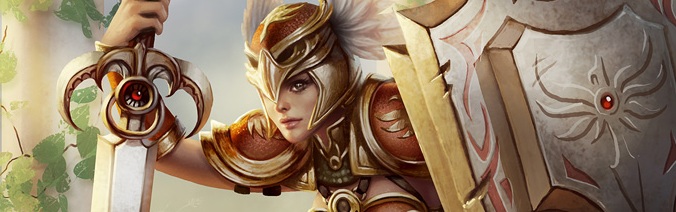
When playing against an aggressive match up, your team must choose to either counter with aggression of your own if you think you can out-damage them, or choose a defensive lane and deprive them of kills. The choice you make does not have to affect how offensively or defensively you play for the whole game, or even the whole laning phase, but it can give you the option to shut down their aggression with shields, silences, slows, and heals.
When playing against a passive lane, you and your carry can choose to push for an offensive composition, or answer with a mirrored farm lane. The first option typically suits a pair best if your team's carry will not scale better into the late game with farm. A good example of this would be a Miss Fortune on your team versus a Vayne on the opposite team. Because Vayne has such a strong late game, and Miss Fortune's strength is in the early game, shutting Vayne down at the begging of the match is probably the best chance at coming out on top. Many lanes are not so clear-cut, and the choice will be a bit more difficult.
If you find yourself with first pick of the lane, focus more on the synergy with your carry and the rest of your team, and hope for the best with match ups. Try to adjust your spells, runes, masteries, and planned item build after you find out the enemy's selection to best accommodate the lane.
Remember that all good and great players become what they are through practice, learning, and experience. A guide can never see you through every situation, and one of the best skills in League of Legends is the ability to adapt.
Good luck on the rift!