




Blogs
Support Becoming a More Proactive Role
ClearDays
Mon 9th Jan 2017 - 9:59am
As with any new season, Riot introduces a large number of experimental changes to try and make the game more exciting. With the new assassin update and the introduction of jungle plants, the new support changes haven’t gotten much traction. Despite the other roles hogging the spotlight, support has become a more proactive role than ever.


Back in the early days of League of Legends, support was a very basic role. You would buy your standard gold per 10 item, such as a Heart of Gold or Philosopher’s Stone, and your job for the rest of the game was to ward up and clear with an Oracle’s Elixir. With an Oracle’s Elixir, you were essentially a walking sweeping trinket until you died. At 400g per death, it was very expensive to clear wards the entire game. The only interesting item was Shurelya’s Reverie, which was a stronger version of Talisman of Ascension. Supports were stuck spending their gold on wards and Oracle’s Elixirs, often forgoing a completed item to help their team.
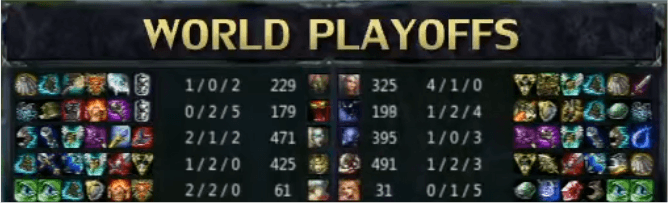
Looking back to game 3 of CLG.EU vs. World Elite during the Season 2 World Championship, buying anything other than wards as a support player was a luxury. Sona’s team was vastly ahead on towers and objective gold, so she could afford to upgrade her boots and buy some fancy items to help out her team. Janna on the other hand was having a pretty miserable time. With two gold generating items, the basic tier boots, and a ruby crystal, the rest of her inventory was always filled with ten wards. At 75 gold a pop, all of the gold that poor Janna had accumulated during the hour-long game went straight into wards. Supports back then had to be able to function on essentially zero gold, because they had no reliable way to make more than what they were spending on wards. It was unhealthy to keep support the way it was; it was an unappealing role with very few merits. Luckily, with the introduction of trinkets and Sightstone, support players aren’t walking around with only their base stats to protect them and can spend their gold elsewhere.
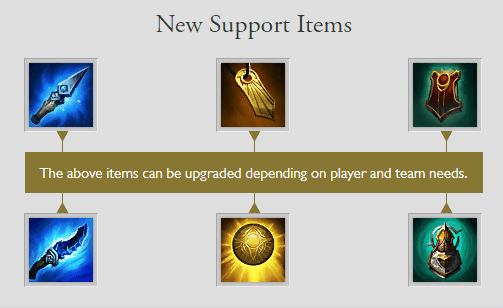
During the preseason for Season 4, Frostfang, Nomad’s Medallion, Relic Shield, and their respective upgrades were added to the game. These items were a step in the right direction; they provided supports with more item options, contributed to their overall gold gain, and gave them more utility. These starting support items also created new strategies for supports. With Frostfang, you could easily pull off early kills, and with Relic Shield, you could push the wave very quickly for a level lead and negate the harass with its healing passive. With active items such as Mikael’s Crucible and Twin Fangs also being introduced around the same time, support was beginning to have interesting itemization choices. However, there were many other issues that kept support as an unappealing role.
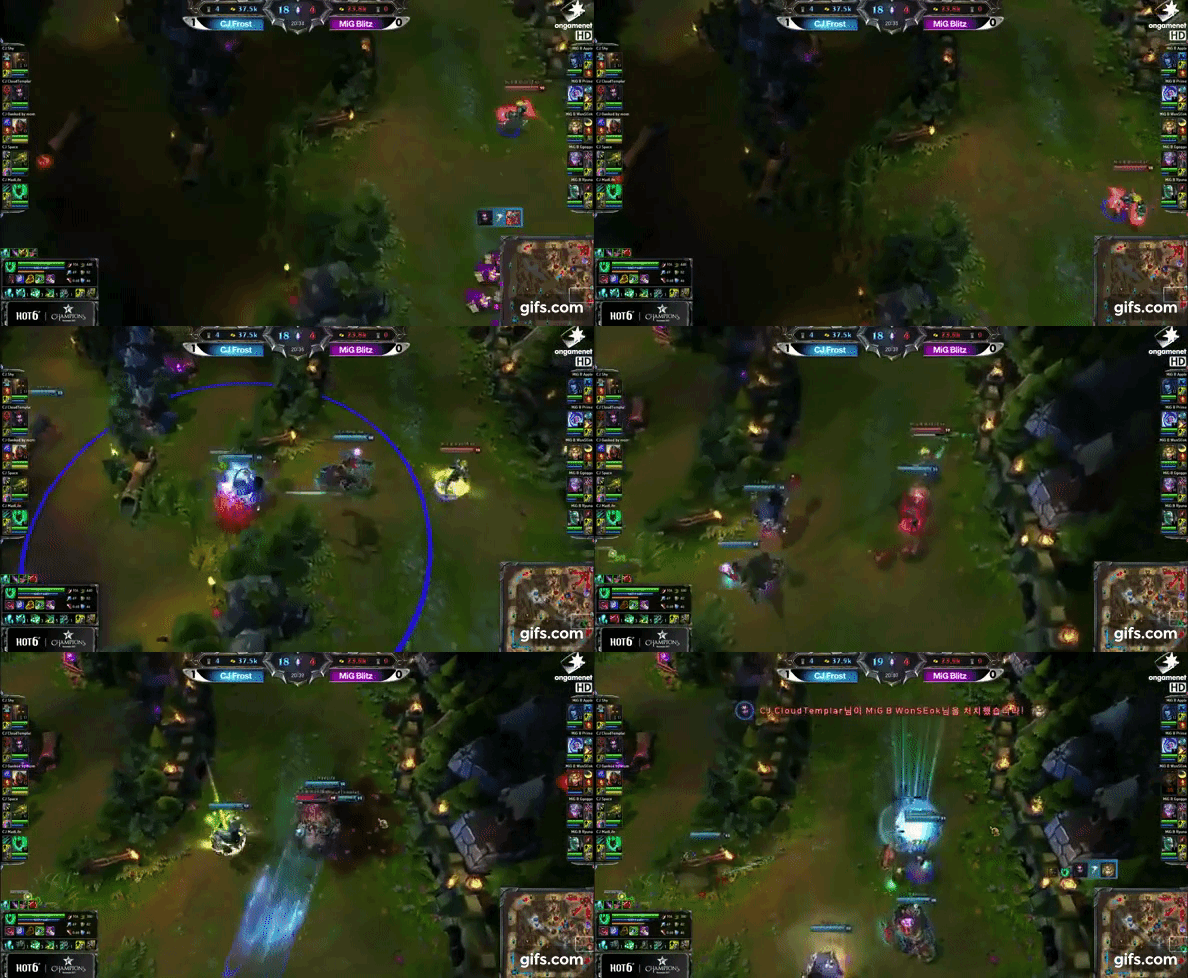
Not only were the support items fairly bland, but the champions seemed bland too. For quite some time, support was viewed as the easiest and least mechanically intensive position. While somewhat true, this perception was based on the champion pool at the time. Soraka and Janna would sit on carries without interacting with enemy champions, Taric and Fiddlesticks were point-and-click CC bots, Sona and Lulu players were usually very passive – you get the idea. It wasn’t until players such as Azubu Frost’s Madlife and Moscow 5’s Edward started making very aggressive plays that people in the West started to realize the full potential of support. As a role, support was supposed to be impactful on practically zero gold, but failed to do so outside of its limited champion pool. The best you could do to carry a game was a Flash Sona ult or a lucky Blitzcrank hook. Even so, many professional supports were scared to pull the trigger on their abilities, even if the opportunity presented itself. This lead to a lot of really boring plays happening in the bot lane; at least until support players started to get better.
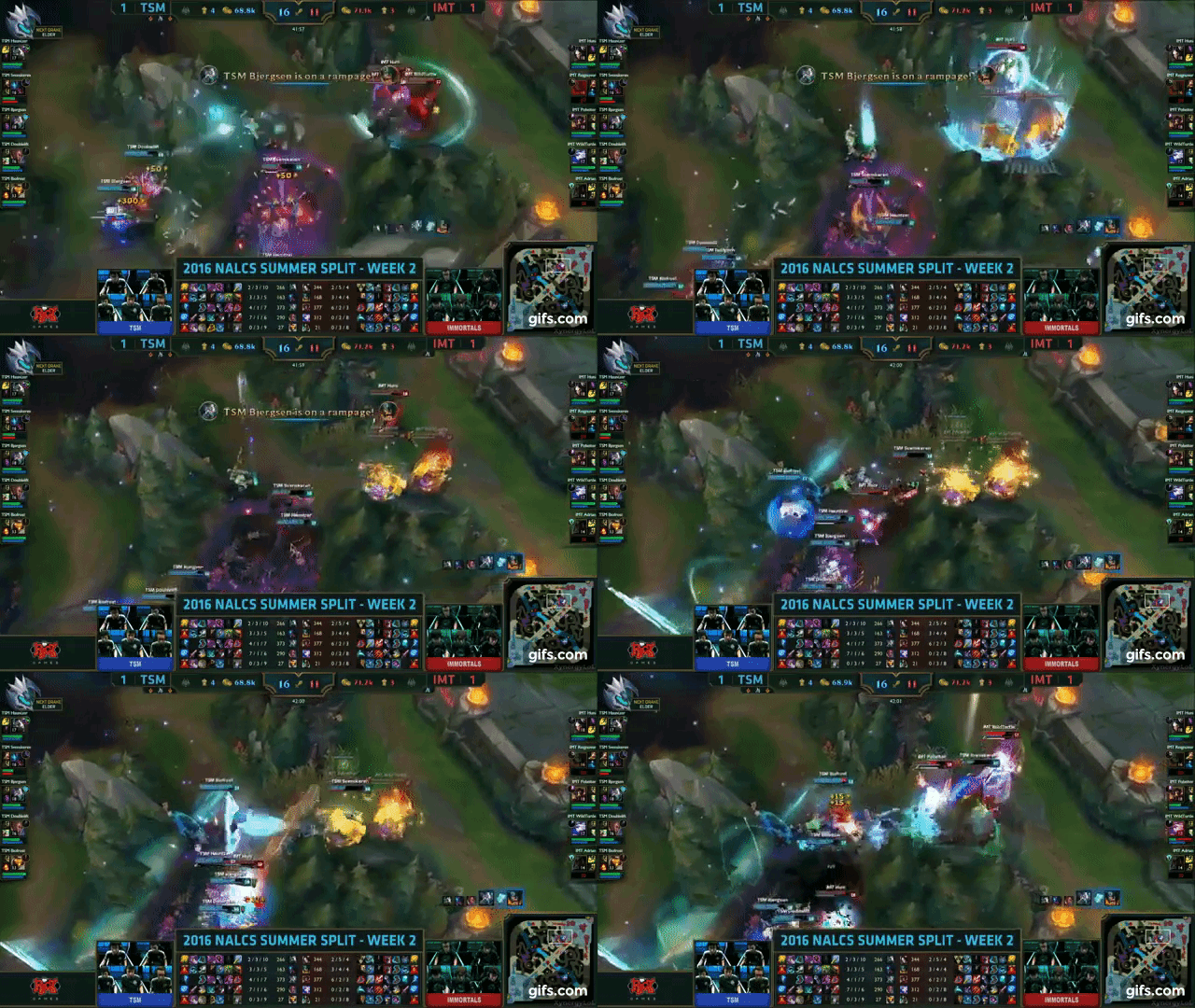
As the years progressed, support players began to improve, but their champion pool was still very tame. Riot realized this, and wanted to introduce more unique champions, something different from the typical heal/aura bot with one CC formula that we were used to. Game changing supports such as Thresh and Bard were introduced, protection based champions such as Braum and Tahm Kench could shut down several assassin-based team comps, and champions like Alistar and Taric were reworked to be new and improved versions of their old selves. Support champions started to feel unique, each one with a specific purpose. Players had more duties than to simply ward up and protect the carry late game, which is all we saw competitive support players do in the past.
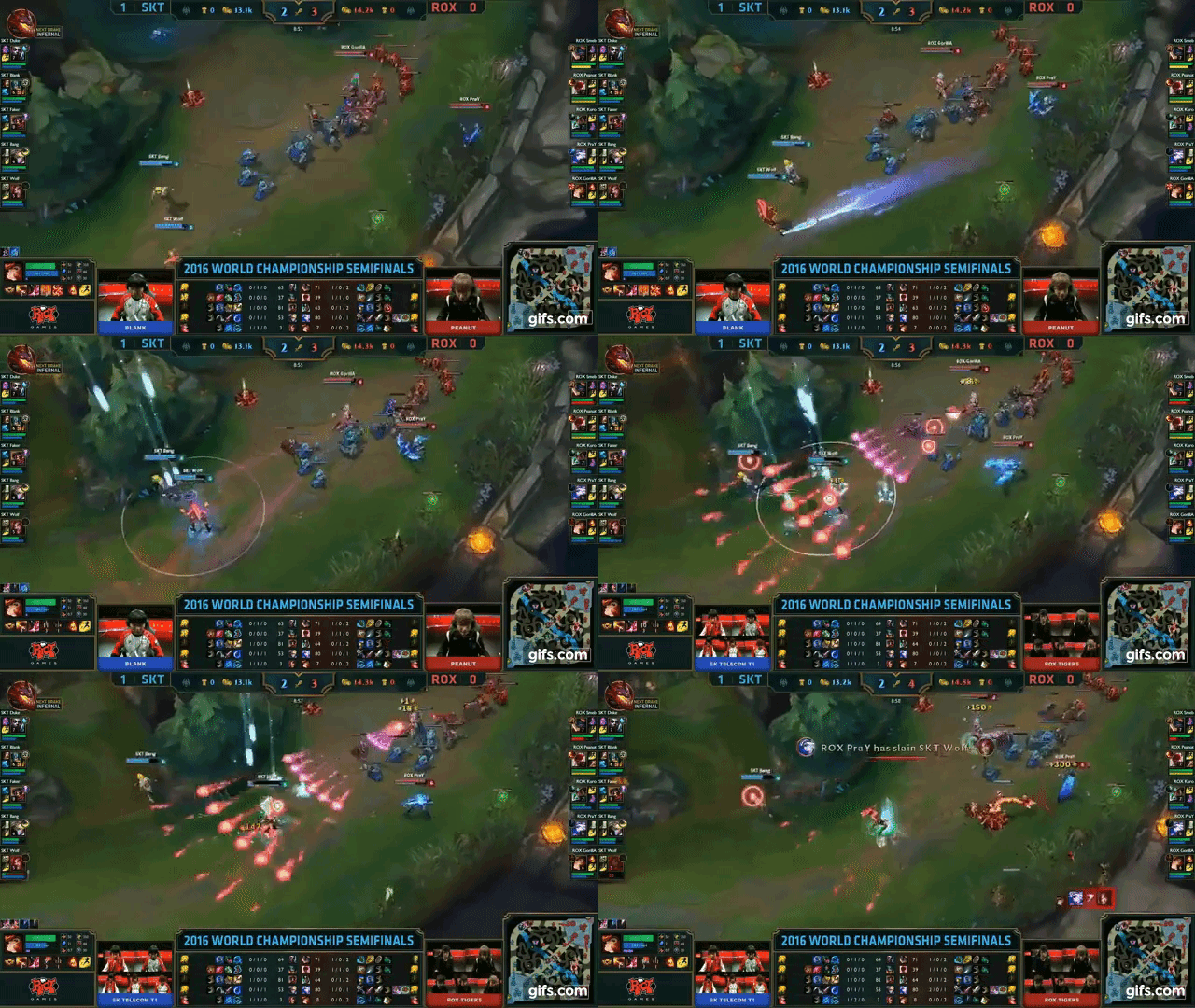
Leading up to Season 7, Riot has tried to make support more appealing than ever. Although controversial, the massive tower buff right before the 2016 World Championship brought back the standard 2v2 meta for competitive play. Fights were constantly breaking out down bot lane; with the pre-nerf Fervor of Battle keystone and a pool of extremely aggressive supports, kills were happening left and right. Watching professional supports now involved more action, as opposed to seeing them beat down towers for the first 10 minutes. People who mained support could finally watch a game and be interested in all the action; watching teams follow a script on how to properly 2v1 and rotate around the map wasn't good for viewership. For better or for worse, the new turret change also managed to bring out the infamous Miss Fortune support that would go on to plague solo queue for the next month.
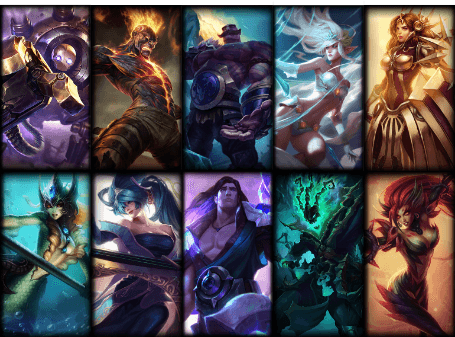
With all the exposure that support got during the tournament, as well as the new support items coming out for the preseason update, Riot tried to promote the role further by providing an extra 10 support champions to the free rotation. This move by Riot was rather well received by the community, with many players finding themselves enjoying the role. Even with the recent assassin update and jungle update making bottom lane even easier to gank, support has been better than ever. Granted, the new item Redemption and the reworked Locket of the Iron Solari seem a bit over-tuned, but they have a feeling of satisfaction when used; something Riot tries to accomplish with all of their items. If your playstyle involves roaming around the map, or if you'd prefer to just sit back and let your carries do the work, support now has a wide enough champion and item pool to fit your preferences.
Like our content? Support us by getting our merchandise in our shop