



Blogs
Breaking Down Hero Roles
Romalus
Sun 26th Feb 2017 - 12:05pm
Introduction
There’s more to creating a balanced and functional team than remembering to add in a token warrior and healer during the draft. The hero selection in Heroes of the Storm has evolved considerably since release and with the added heroes, narrower skillsets and specialized roles have emerged. In this article, we’ll take a look at some of the role subsets that are in Heroes of the Storm and how you should use this information to build a more balanced and focused team.
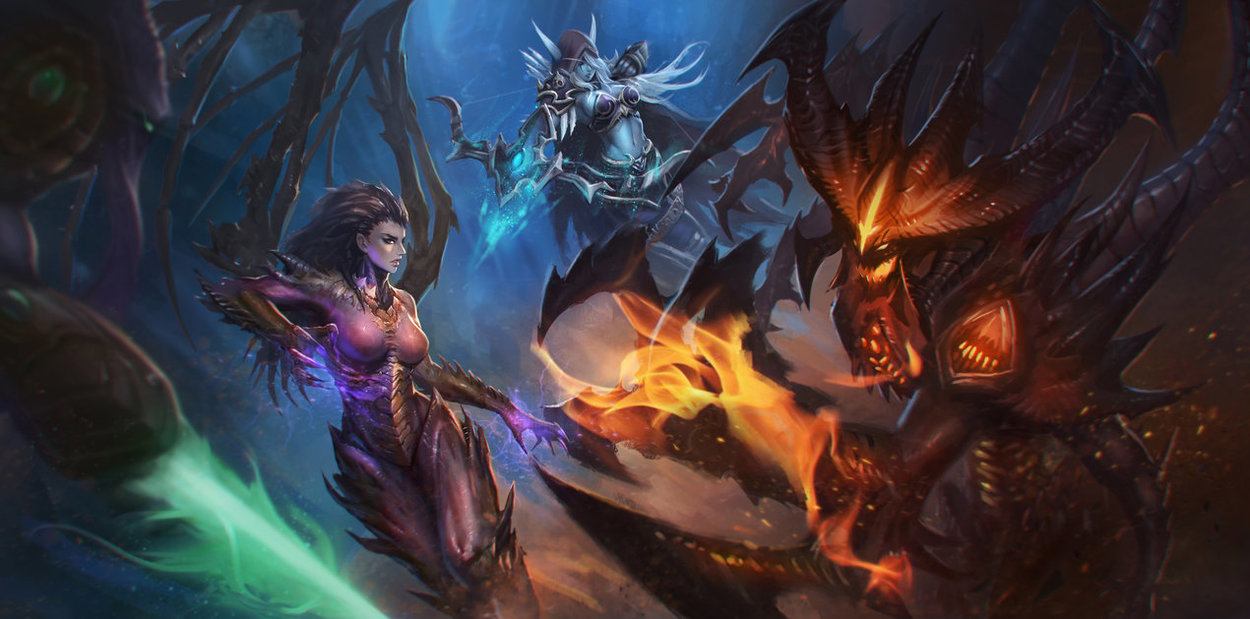
Heroes of the Storm by Chaosringen (Deviant-Art Page)
Understanding the Holy Trinity
Anyone who has spent any time playing an MMORPG will be very familiar with the concept of the holy trinity - A front lining warrior to soak damage and take the heat off of the back line; a support to keep everyone upright with heals and shields; and damage dealers to bring down the enemy. This trinity still plays a large role in HoTS, and in your early days of competition, it’s likely that you won’t need to look too much deeper at your compositions to have a reasonable level of success.
Once you move beyond ticking the boxes on warrior and healer in your compositions and filling out the remaining ranks with damage, it’s important to understand how to approach crafting a team that will best lend itself to pulling off a win. There are plenty of resources out there that can help you learn which heroes fare best on which maps – HoTS Logs is an excellent example - but I think it’s important to understand the role that these heroes end up playing and why it’s successful when used a certain way, rather than just knowing that Sylvanas has a high win rate on Haunted Mines and that she’s a good choice.
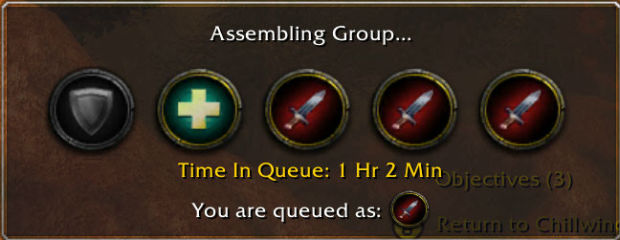
So as we go forward, keep in mind that the holy trinity is an institution and isn’t going away anytime soon. We’re going to look at the subsets that fall within the trinity, when and why they’re important, and take an even deeper look at some of the sub-roles that exist in ranked play. With the stage set, let’s dive in and get to know the sub-sets of these roles.
We Need to Go Deeper
If you’ve spent some time on HoTS Logs pouring through the information they have available there, you may have come across the team composition analysis section that they maintain. In this section, they break down each role into their own subsets:
 Warrior – Broken down into two subsets, Tank and Bruiser. Because so many warriors can build into a specialization that’s more defense or offense oriented, there is considerable overlap here. Though there are certainly perennial bruisers like Sonya and clear-cut tanks like Johanna.
 Support – Support is effectively split up into two groups as well, Healer and Support (which is closer to a Utility Support playstyle.) This differentiates between your classical healer characters such as Lt. Morales, and the utility oriented supports such as Tassadar.
 Assassin – There are three assassin sub roles, Ambush, Burst Damage and Sustained Damage. Assassins are divided along several different lines based upon playstyle and how damage is pushed out, so there’s certainly some overlap here – especially among the Ambush and Burst categories.
 Specialists – Finally the specialist role, I think this was probably a tricky category to try to breakdown since the number of specialists in the game is fairly low, and while they all have different abilities, the end goal is the same. HoTS Logs has separated them into Siege and Utility roles, although I really don’t like using Utility here - the heroes listed here feel more like an ‘Other’ category to me.
With a more granular view of hero roles in HoTS, let’s look at some of the popular team compositions and how they’re meant to function.
Popular Team Compositions
Dual tank compositions have been extremely popular lately, as seen in the ongoing Heroes Global Championship. An example of this composition could be seen in the Tempo Storm vs. Gale Force eSports matchup. Both teams selected dual tank compositions in the first match. Because Gale Force ultimately came out on top, and because I think their comp was a more interesting example, we’ll take a closer look at them.
In this matchup, Gale Force selected ETC and Dehaka as their two tanks, with Lt. Morales and Tassadar as support, and Gul’dan as the lone assassin on the team. This is a different take on the dual tank composition in that Gale Force opted to run dual support as well, instead of the normal double assassin.
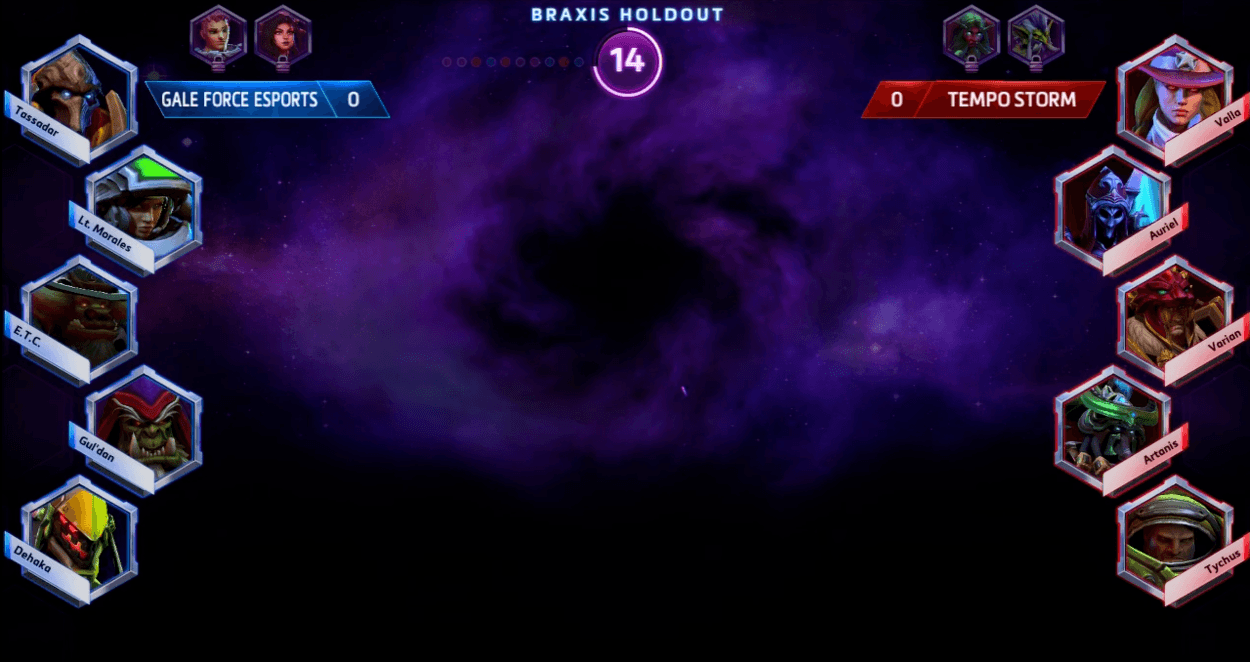
Gale Force used Tassadar’s shields to allow Gul’dan to get away with more aggressive positioning and Lt. Morales mitigated the negative impacts of the Life Tap dependent, glass-cannon Fel Flame build to great effect. Finally, the warriors selected by Gale Force excel at peeling and controlling enemy hero movement, preventing enemy heroes from breaking into the backline and derailing the support system that was keeping Gul’dan afloat.
I’ve mentioned the dual warrior, dual assassin build a few times, so we’ll also check out one of the more popular examples of that composition: Artanis in the bruiser role, Diablo as the tank/peel, Li Ming as burst, Malfurion in the heal/utility role and Valla for the sustained damage output. The playstyle here would revolve around harder engages from Artanis and Diablo, with careful attention to peeling and preventing enemy heroes from moving into the backline. From there it’s a matter of controlling the field and making smart use of Apocalypse, Rain of Vengeance and Twilight Dream to interrupt enemy crowd control and prevent healing.
Circumstantial Character Roles
HoTS Logs has their own character sub-roles, but I have a few others that I believe are a bit more specific and circumstantial.
Finisher/Flanker – An interesting strategy that I recently saw during the Heroes Global Championship was the use of a stealth hero to flank an enemy team and go in for a one to one kill trade. The idea here was to utilize a hero like Zeratul to flank and kill the enemy support, and while this almost always ended in the Zeratul also dying; it ultimately gave the team fight advantage to his team.
Race DPS - High burst DPS to quickly burn down an objective; not necessarily focused on killing an enemy hero. These are heroes who stand out on maps like Battlefield of Eternity or Tomb of the Spider Queen where objective damage is paramount. Sylvanas is an obvious example with Barbed Shot, but Valla and Li Ming are also great examples of heroes who have the power to completely melt an objective monster or boss.
Control Heroes - Heroes with high levels of character space manipulation, which allow a team to engage/disengage more readily. Falstad is an excellent example as a character that lets your team pick when and where to engage and disengage. Diablo and Artanis work as well, but in a much more limited sense because they’re only impacting one hero at a time.
Putting It Together
There are more possible team compositions than we could ever hope to go through, but putting together a cohesive unit is more about understanding your strengths and weaknesses in a role and building a team around what works for you. Just remember that context matters, and a good team on a bad map might not be the right team.
Like our content? Support us by getting our merchandise in our shop