




Blogs
How to Play Smarter and More Efficiently

Knowing how to play smarter and more efficiently will set you and your team up for more victories. However, the strategical aspect of Counter-Strike is a skill which requires practise to learn and understand. In this article we will examine important theoretical ideas and look at ways we can put them into practise!
FOUR LEVELS OF COMPETENCE
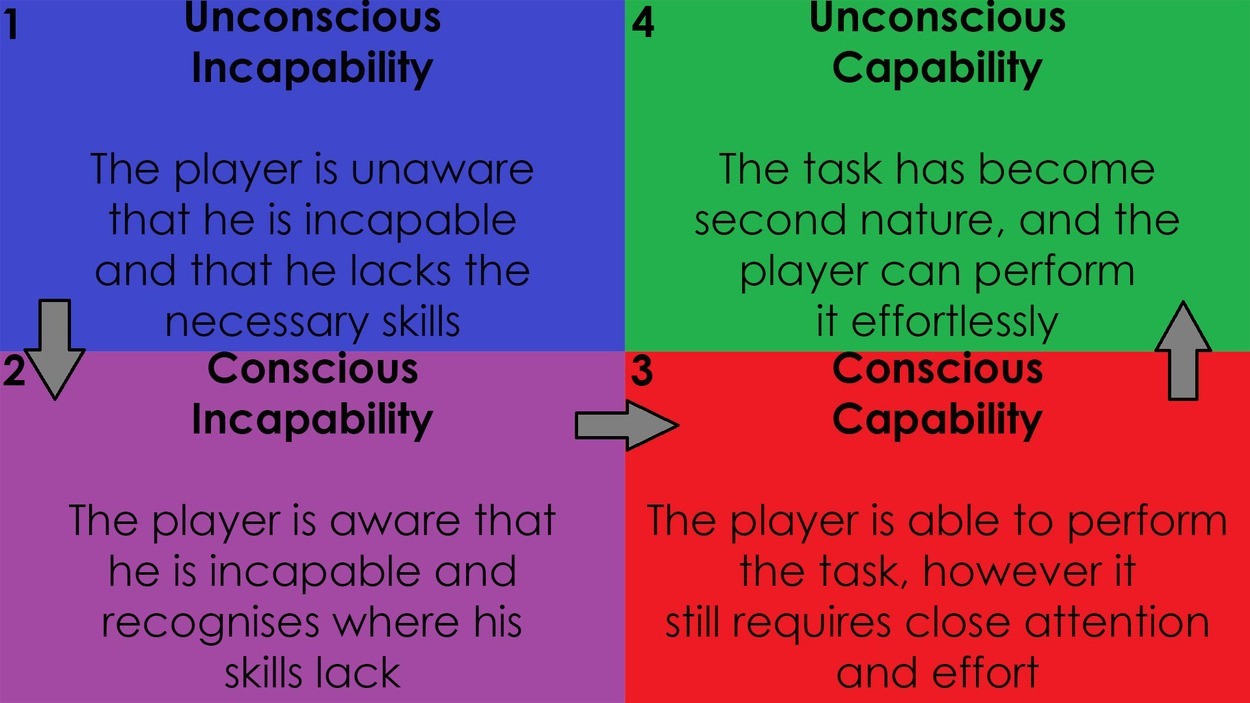
Unconscious incapability: The first stage of competence. In this stage the player is unaware that he is incapable. He fails to recognise his own lack of skill, and may not be able to identify his shortcomings. Learning to understand the value, importance and usefulness of particular skills will allow the player to overcome this stage.
Conscious incapability: The second stage of competence. In this stage the player recognises where his skills lack and understands why learning these skills is important. This is the stage of trial and error, where repetitively practising basics and learning from mistakes will aid the player in overcoming this stage.
Conscious capability: The third stage of competence. This is the stage in which the player understands how to perform, however putting it into practise still requires close attention and effort. Repeatedly practising and carrying out will allow the player to move on to the final stage.
Unconscious capability: The fourth and final stage of competence. This is the stage in which the action or skill has become second nature to the player, allowing him to execute it without forethought or effort. Having practised the skill so much, the player can now apply it while remaining conscious of other things rather than of the application itself.
REVIEWING DEMOS
Reviewing your demos is key to becoming a smarter player. This will make you more aware of mistakes that can be found in your play, and help you to improve upon them. Things to look for when reviewing your demos include your positional play, how and when you rotate, how you react to executes, how you manage your money and how you put your utility to use, among others.
Using the large demo archives available online we can download demos of professional teams and players and analyse how they play. For instance, if you would like to learn to play A site on Mirage, reviewing how professionals handle situations in this area will assist you in handling the same situations better. Remain conscious of actions the players make, and compare them to actions you make to find areas where you can improve.
ANALYSING THE OTHER TEAM
"There is nothing new under the sun." This statement holds true to Counter-Strike as well, as just about everything has been done before. Players and teams are theoretically limited in what is available to them, and paying attention to this along with how players move and think will give you a leg up in predicting the game.
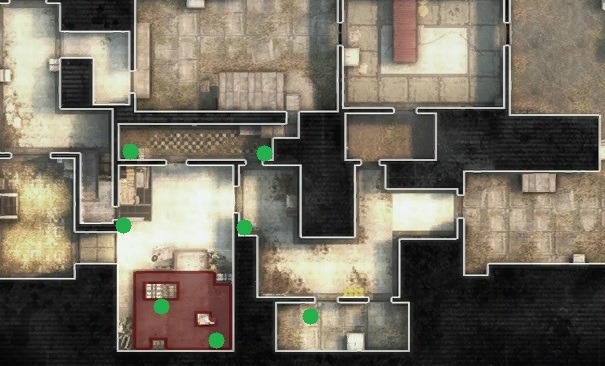
Looking at the picture of Cache B site, I have highlighted some common areas for Terrorists to be while defending the afterplant. The player should remain conscious of areas like these and use them to his advantage when predicting the enemy's movement or positioning. Put yourself in the other team's shoes and speculate what the best plays would be in their situation, and use this information to anticipate their next move.
Keep track of the enemy team's finances. Knowing what their economic situation is like will help you to predict what they are likely to do. Players will execute differently based on the available utility, their weaponry, and so forth. For instance, if a team is hard ecoing it is likely they might try to rush a bombsite, and being aware of possibilities like these will help you to prepare yourself accordingly.
TEAM DEFAULTS
A default refers to the default setup for teams at the start of a round. Understanding their usefulness and situational viability, the player can easily begin to discern how he can be more efficient.
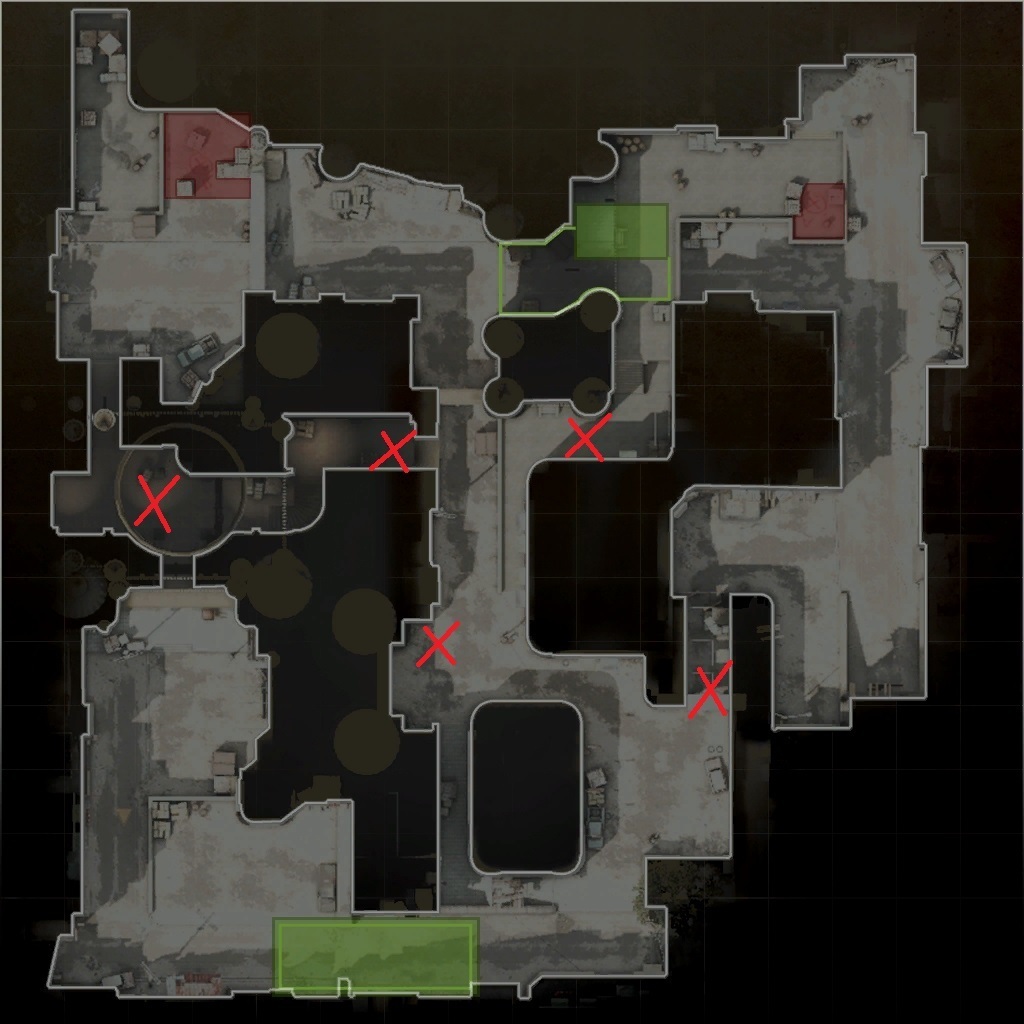
Taking a look at a Dust2 Terrorist default, we can determine which areas of the map are going to be under whose control at which point in the round. Knowing defaults and how to use them is important to becoming a smarter player because of how effective they are at gathering information.
It is unfavourable for a whole team/majority of the team to stack up and stagnate at a particular area of the map, as they'd be giving up control of other parts of the map. Presuppose the entire attacking team is in Long on Dust2, and the B defence elects to push into Tunnels. They will gather crucial information on the Terrorists' whereabouts and begin rotating early. If the attackers had someone holding Tunnels as well, they would have shown presence to the aggressive defence and delayed rotations.
POSITIONING
Good positioning relies on holding favourable angles or areas, or being in the right place at the right time—by choice! A favourable angle is one where you can either inflict damage/get a frag, or at the very least get information and have the option to retreat. Favourable areas allow for you and your team to gain map control, have a positional advantage or even just allow for surprise frags. Understanding the information your team has and interpreting it correctly should help you determine which areas are advantageous to your team, and where the enemies are likely to be and not to be.
Bad positioning comes down to playing angles or areas incorrectly, misinterpreting information or plainly being aggressive for no reason or without coordination. Taking note of where you lose and win and aim-duels, and practising these areas more or less, reviewing demos and learning to play the positions properly, will all help the player to be better at positioning.
Patience is key to positioning. It may not feel that way, but a lot can happen in the time of a round. Properly interpreting information but over-extending is something to look out for and avoid. Knowing which areas to hold and where not to push is something the player must consider before changing positions.
EFFICIENTLY PLAYING CT-SIDE
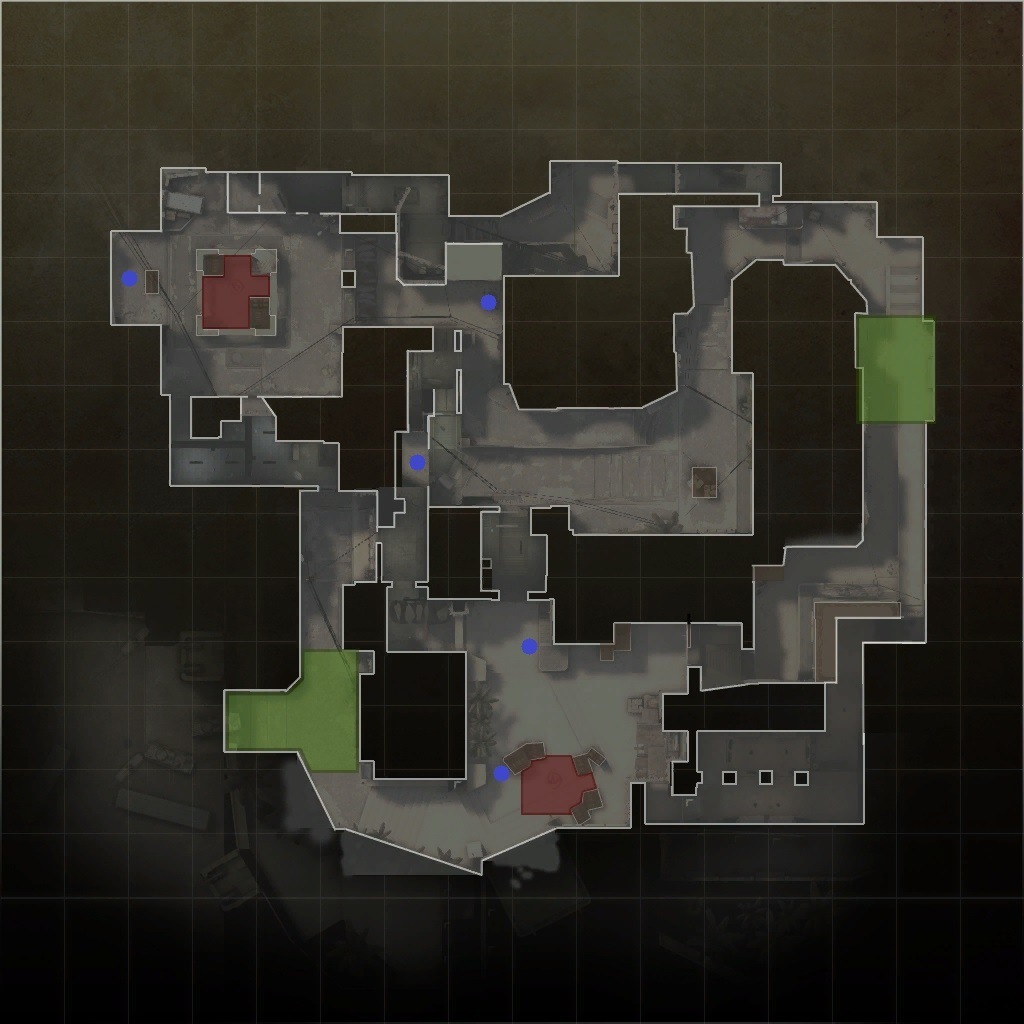
Here we have a typical Mirage default. The player in Middle is called the Mid Player. The players on Catwalk and Stairs are called the Rotates. The two players on the sites are called the Anchors.
The duty of the Mid Player is to spot info in Middle, and to rotate to a site when there is enemy presence. When he leaves Middle, the Rotate from the opposite site should go into Middle, effectively turning the defence into a 3-1-1. Only when the execute is certain should the other Anchor rotate. He is the last line of defence on the site in case the attackers execute on the site where he defends.
Players can make educated guesses of enemy movement and position themselves accordingly by focussing on the information at hand. Assume the B player pushes inot B Apartments and sees nobody, it is certain that the attackers are in one of the other lanes. Rotating efficiently relies on good communication and understanding of the information.
CONCLUSION
Becoming a smarter player is a priority for anybody who wants to become a better player. Game understanding and situational understanding comes from effort and by paying attention to certain details while you play the game.
Get your own AKRacing Chair here and support our players, all profit goes towards the teams!