




Blogs
Cutting Losses: How to successfully damage control in CS:GO

ElCloudo
Fri 8th Jan 2016 - 1:24pm
The map's Inferno. The score’s 13-5. Team Question Mark (TQM) are running away with the game against Counter Logic Gaming (CLG), and have just won the opening gun round of their CT half. With CLG’s economy broken, they are forced into a ‘quasi’ buy (Quasi meaning buying a pistol alongside maybe light armour and/or nades. Have a look at this excellent article explaining it in further detail.) Deciding to go into the round without nades, against a fully equipped TQM, should have left CLG with a very slim chance of winning the round or even causing damage to TQM’s economy. Despite this, CLG actually managed to win the round as a consequence of TQM’s inability to cut their losses. Ultimately, the round’s impact on the end result was very little as TQM won the game 16-6, but it was a great example of the common mistake around trading that takes place even at the very highest level.
To explain what I mean by ‘Cutting your losses’, I’ll continue to use the above example. At the start of the round, TQM were holding what is generally a default A site CT set-up on Inferno: one Long corner, one Short corner, and one holding Balcony (see the map below).
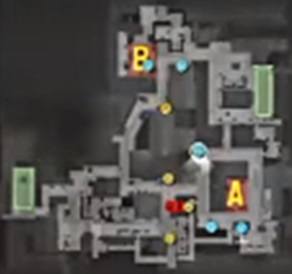
It was around this point when CLG began their strategy. Leaving one player to lurk at Banana, CLG 3 man pushed Mid, one via Boiler and 2 via Top Mid. By doing this, as well as succeeding on damaging the player on Short, they forced the Short player back, and trapped the Long player in the corner (See the map below).
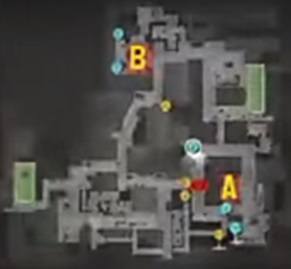
After one of their players became trapped long, TQM should have cut their losses, and allowed the long player to get over run whilst doing the best damage he could. In this scenario, even assuming the long CT player failed to do any damage, it was still a 4 v 5 situation for TQM, who had the equipment advantage. It would have also allowed them a 2 v 1 against the CLG player pushing out balcony, whilst maintaining control of the actual site. However, the short player instead chose to repeek, instigating a series of 1 v 1 battles across the map. (See the map below)
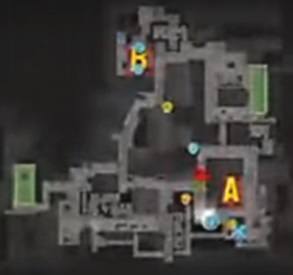
Whilst doing this may not always be punished if you win the aim battles, it prevents you from swaying odds in your favour. In this scenario, TQM obviously got punished as the pit player lost the fight balcony (see above), allowing the short player to get surrounded whilst the long player lay trapped in the corner. Ultimately, CLG managed to take A site with just 1 player death, leading to an easy victory in the round. And while, as I said earlier, it had little impact on the end result, cutting your losses is something that you and your teammates should seek to add to your game.
A common misconception about trading is the need to try and assist teammates in greatly disadvantaged positions. Trading is all about putting yourself in positions were trades are set up, to make for swift and easy site takes/holds, not about trying to peek in disadvantaged positions to avenge the deaths of fallen comrades. It’s important in times such as the example above to cut your losses and stop increasing the deficit your team is facing. It always may be worth dropping back and allowing the opposition greater map control in return for keeping your players alive. Always remember, a 4 v 5 is better than a 2 v 4, so cut your losses before it’s too late!
Are you into fantasy leagues? Then check out AlphaDraft and put together your allstar lineup!